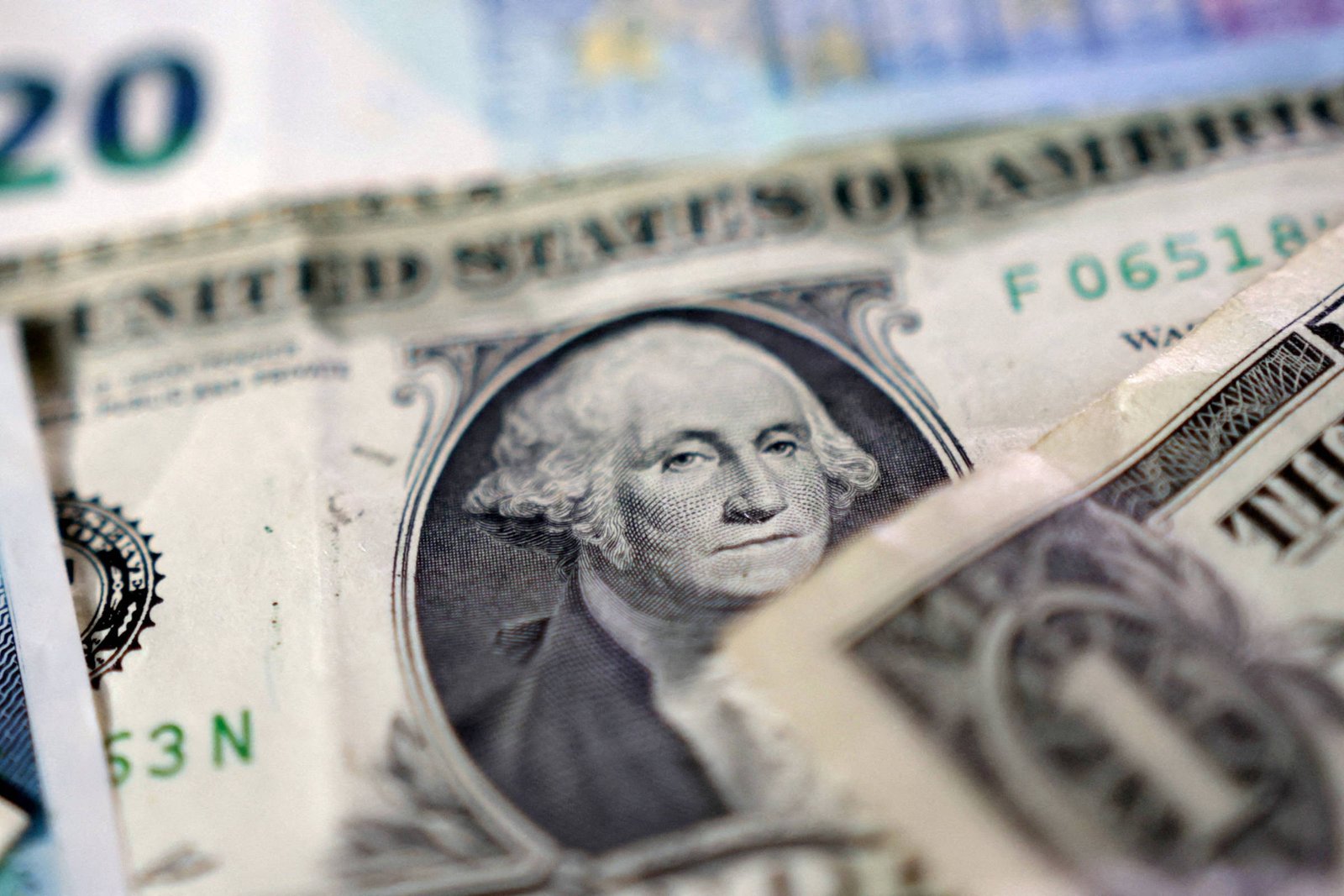
THE dollar broke the R$5 floor for the first time in two years in this Monday’s session (13), with investors reacting to new developments in the war in Iran.
The final price was R$4,997, a drop of 0.26% compared to Friday (10). This is the lowest value for the North American currency since March 27, 2024, when it reached R$4,980.
The currency returned to operating below the level of R$5 in the early afternoon, after the president of the United StatesDonald Trump, states that Tehran wants to make a deal to end the conflict that has been going on since the end of February. Even though the Iranian government did not confirm the initiative, global markets interpreted the Republican’s statement as a sign of a future truce, reducing fears of a new escalation in attacks.
The relief also benefited the Brazilian Stock Exchange, which closed up 0.34%, at 198,000 points — a new historical record. At the peak of the day, the Ibovespa reached 198,173 points, renewing its high during the trading period.
“The United States once again talked about an agreement and that negotiations will continue, which was already expected. It would be difficult for the two countries to reach a consensus in the first negotiation”, says Gustavo Cruz, chief strategist at RB Investimentos.
“Foreign flow has been very positive for Brazil for some time now. The market is optimistic about the country, whether to invest in the stock market or to invest in other assets, and this helps to appreciate even more the exchange.”
The sum of factors pushed the dollar down last week. On Friday, for example, the currency tested the R$5 level for the first time since it was raised to that value, piggybacking on optimism with a definitive truce in the Middle East and the opportunity cost of investing in Brazil.
The failure of negotiations between the United States and Iran at the weekend, it imposed caution on the markets in the morning, with the currency reaching a maximum of R$ 5,039, and the Stock Exchange, a minimum of 196,222 points.
The trend was reversed in the afternoon, when Trump told reporters at the White House that Iran had reached out to the Republican government for a ceasefire.
Until then, there were few signs that negotiations were back on track. Investors even feared a resumption of attacks amid the impasse and escalation of tone between authorities in both countries.
Iran blamed the US for the collapse of negotiations and did not confirm further talks on Monday.
“We were contacted this morning by the right people, the appropriate people, and they want to reach an agreement,” Trump said, without elaborating on who participated in the conversation.
The declaration comes amid the blocking of the Strait of Hormuz at 11 am, Brasília time, as a measure determined by Trump on Sunday (12) after the delegations failed to reach an agreement.
The blockade had also been in response to the charging of a toll for vessels. Instead of reopening the crossing as agreed in the truce, Tehran established a route which claims to avoid mines placed by the theocracy and passes through its territorial waters. An oil tanker would need to pay $1 in cryptocurrencies for each barrel of oil transported.
“The blockade will be carried out in an impartial manner against vessels from all countries entering or departing ports and coastal areas of Iran,” the US military said, stating that it will not impede the navigation of boats “crossing the Strait of Hormuz from or bound for non-Iranian ports.”
In this scenario, the oil Brent once again crossed the US$100 per barrel level, up more than 7%. In the afternoon, with the sign of a truce, gains slowed to 3%, at US$98 a barrel. European and Asian shares closed lower, and US stock indexes rose up to 1.2%.
“Markets are trying to filter through the whirlwind of headlines. So far at least they are coping relatively well with the news as we are yet to see a return in prices to pre-ceasefire levels,” says Matthew Ryan, head of global market strategy at Ebury.
“This suggests that investors may view the breakdown in negotiations more as a bump in the road and a sign of a pressure game, rather than something that could necessarily derail the path to peace.”