In 2021, in the renowned American program 60 MinutesMr. Luis Elizondo, former Pentagon official, noted: “Imagine a technology that can withstand between 600-700 G forces, can fly at 13,000 miles per hour, can evade radars, and travel through air, water, and possibly space. And by the way, it shows no means of propulsion, has no wings or control surfaces, and yet can defy the natural effects of gravity. That is precisely what we are seeing.”.
Sixty years earlier, in an article by The New York Times On February 28, 1960, Vice Admiral Roscoe H. Hillenkoetter, former director of the CIA, stated: “Behind the scenes, senior Air Force officials are seriously concerned about unidentified flying objects. But, through official secrecy and ridicule, many citizens are led to believe that unknown flying objects are nonsense.”
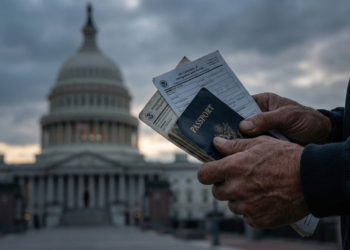
This marked difference between the public position and the private position It has been maintained for more than 70 years, although recently it has generated greater concern in the US Congress in the interest of transparency.
Serious and influential senators like Chuck Schumer, Mike Rounds, Marco Rubio (now Secretary of State) and Kirsten Gillibrand have promoted surprising legislation that challenges our imagination: it contains references to non-human intelligencetechnologies derived from non-human intelligence and controlled disclosure campaigns, among others.
When figures at such a high institutional level and from both political parties in the United States promote these legislative initiatives, a legitimate uncertainty is created: if such references respond only to hypothetical scenarios and are putting their professional credibility at risk, or if, on the contrary, reflect a serious and well-founded concern about the existence of undisclosed information.
This uncertainty It was already captured by the Swiss office of the Deloitte company, one of the four most influential auditing firms in the world, which recently incorporated as an example of “black swan” – that is, a highly improbable event but with systemic impact – the eventual revelation of non-human intelligence under the following context: “An example of a future black swan would be a scenario where certain parts of governments have become aware of non-human intelligence (NHI) and have kept this information away from the public. Global financial markets could face disruption as paradigms shift and investment strategies and scientific research are refocused. Society as a whole would have to assimilate the profound consequences for humanity.”
Without analyzing the reality, origin or particularities of the phenomenon attributed to non-human intelligence, the exercise reveals the growing need to expand the margins of what is thinkable in strategic analysis. It is not a merely theoretical concern: the covid-19 pandemic, the 2008 crisis or the 9/11 attacks (September 11, 2001) constitute a tangible reminder of how An event considered a “black swan” can materialize with global systemic effectsaltering economies, institutions and ways of life in a matter of months.
In all these cases, the main lesson was to underestimate systemic risksthat is, the lack of preparation and action in the face of high-impact risks.
The theoretical exercise is, in essence, a warning. For decades, governments, companies and institutions have operated under risk models that privilege continuity and extrapolation from the past. However, Transformative events do not arise from the foreseeable, but from the unexpected, And thus, the hypothesis of a non-human intelligence functions as a case that would test the response capacity of our political, economic and cultural structures, since its implications are difficult to exaggerate.
It would not only be a scientific discovery, but a civilizational turning point. Confidence in institutions could be strained, markets would react with extreme volatility and Fundamental narratives about humanity’s place in the universe would come under review.
But perhaps the most relevant contribution of the Deloitte Switzerland approach lies not in the scenario itself, but in challenge our way of thinking. Let’s be clear: the biggest risk is not that a disclosure event occurs, but that the event occurs while we are intellectually unprepared, without us having thought about it and analyzed it previously. And in that process, prudence no longer consists of discarding the extraordinarybut in recognizing that, in an increasingly uncertain world, even the extraordinary deserves to be the object of analysis.
Esteban Carranza Kopper is a lawyer.