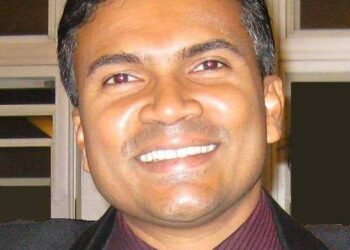
German Ambassador Dr Christophe Eick points to German involvement in Point Lisas, continued participation in the energy sector, and growing interest in renewable energy, food exports and trade diversification as evidence of an economic relationship that continues to evolve beyond its traditional foundations.
For more than six decades, Germany and Trinidad and Tobago have maintained close diplomatic and commercial ties, with the relationship rooted largely in industry, energy, and trade. While petrochemicals remain a central pillar, the focus is increasingly shifting towards renewable energy, climate resilience, technology, and expanding market access between Europe and the Caribbean.
The long history of German investment is perhaps most visible at Point Lisas Industrial Estate, where many of the ammonia and methanol plants that helped establish the country as a global energy exporter were designed and constructed by German companies.
“Historically, we’ve been one of the biggest investors,” Eick reflected during a sit-down interview last Wednesday with the Sunday Business Guardian.
Although ownership structures have changed over the decades, Germany’s industrial footprint remains visible throughout the energy sector. Companies such as Siemens Energy continue to provide maintenance, certification, and technical support services to major industrial facilities, preserving a connection that stretches back generations.
The ambassador views that legacy as a foundation for future growth rather than simply a reminder of past achievements.
For Eick, the relationship between Germany and T&T extends beyond economics and diplomacy.
His connection to the country spans more than three decades. He first arrived in 1993 as a junior diplomat on his first overseas posting and later returned as ambassador for the final chapter of a diplomatic career that took him around the world.
His wife is Trinidadian, and the family maintained close ties with the country throughout the years, returning regularly even while stationed elsewhere.
“I learned the ropes here in Port of Spain,” he recalled.
As he prepares to conclude his assignment on June 30, the ambassador remains confident that the relationship will continue to evolve.
Trade and investment
Germany remains one of Europe’s leading exporting nations, and its companies continue to explore investment opportunities around the world. Eick described overseas investment as part of Germany’s economic DNA, noting that businesses are constantly searching for new markets, partnerships and commercial opportunities.
That search increasingly includes the Caribbean.
One area attracting growing attention is food imports and distribution. German companies are examining opportunities to supply products to Caribbean markets as businesses reassess supply chains and seek greater diversification.
The discussion has become more relevant amid continuing uncertainty in global trade and concerns about tariffs affecting traditional trading routes.
“There are some things ongoing,” Eick noted, when discussing potential commercial opportunities between Germany and the region.
Trade relations are also supported by the Economic Partnership Agreement between Cariforum states (Caricom plus Dominican Republic) and the European Union. The arrangement allows tariff-free trade between member countries and Europe, creating opportunities for greater exports and imports on both sides.
While the framework exists, Eick acknowledged that implementation remains a work in progress. Administrative procedures, legislation, and regulatory requirements can slow the pace of commercial expansion even when trade agreements are already in place.
“There should be a free flow of goods and services between our two regions,” he remarked.
He expressed optimism that the remaining obstacles can be addressed over time, creating stronger commercial links and increasing trade volumes.
German products already enjoy strong visibility in the local market. Luxury and premium automobile brands such as BMW, Mercedes-Benz, Audi, and Volkswagen continue to command significant recognition among consumers, reflecting Germany’s reputation for engineering and manufacturing quality.
Beyond consumer products, bilateral agreements have helped facilitate business activity. Tax information and mutual assistance agreements are designed to prevent double taxation and create a more predictable environment for companies operating across jurisdictions.
The ambassador believes these arrangements contribute to a stronger investment climate and encourage long-term commercial relationships.
The next energy chapter
While Germany’s historical contribution to the country’s energy sector centred on petrochemicals, future cooperation may look very different.
Eick believes the global energy transition presents opportunities for deeper collaboration in renewable energy and emerging technologies. Germany has invested heavily in wind power, solar energy and green hydrogen and has become one of the world’s leading producers of renewable energy technologies.
As Caribbean countries seek to diversify their energy mix, German companies are paying close attention.
“I know that T&T is looking in particular at wind energy as one of the sources in the future of renewable energy,” he observed.
The potential for green hydrogen also remains an area of interest.
Hydrogen produced through renewable energy sources is increasingly viewed as a critical component of global decarbonisation efforts. Germany has positioned itself at the forefront of that sector and sees opportunities to share expertise and technology with international partners.
“If the opportunity arises, I’m sure that German companies would be looking at that area,” Eick stated.
Recent geopolitical conflicts have reinforced the importance of energy diversification. The ambassador pointed to the impact international tensions can have on energy prices and global supply chains, arguing that countries should continue exploring alternatives that reduce dependence on fossil fuels.
“The (US/Iran) war and the effect it had on oil and gas actually showed that you should not be dependent on fossil fuels,” he maintained.
At the same time, he acknowledged that energy transitions are complex and influenced by economics, infrastructure and national priorities.
For Caribbean countries with established oil and gas industries, balancing traditional energy production with investment in renewables will remain an ongoing challenge.
Beyond diplomacy
While trade and energy dominated much of the interview, Eick identified climate change as one of the defining issues of his tenure.
Germany’s embassy in Port of Spain serves as a regional mission covering ten countries, including Guyana, Suriname, Barbados, Grenada, St Lucia, and St Kitts and Nevis.
That role provided a broad perspective on the challenges confronting small island developing states.
“I would say one of the main issues is climate change,” Eick reflected.
He believes one of his most important contributions has been helping raise awareness in Germany about the realities facing Caribbean countries.
The region’s vulnerability to extreme weather events, coastal erosion and environmental degradation has become an increasingly important part of diplomatic discussions between Caribbean governments and international partners.
Germany has supported a range of climate-related initiatives throughout the region.
Among the most significant are biodiversity and marine conservation projects valued at approximately €30 million. These programmes are being implemented through partnerships involving governments, regional organisations, and the German development agency GIZ.
Protecting marine ecosystems, preserving biodiversity and strengthening climate resilience remain central priorities.
The ambassador also highlighted Germany’s support for regional security initiatives. Working alongside the Caribbean Community Implementation Agency for Crime and Security (IMPACS), Germany has assisted programmes aimed at reducing small-arms proliferation and strengthening regional responses to crime.
Crime remains an important issue for investors evaluating business opportunities, Eick acknowledged.
“The business environment is also impacted by crime,” he noted.
Efforts to improve security can therefore support both economic development and investment attraction.
The foundations built through decades of investment in energy and industry remain strong, but new opportunities are emerging in renewable energy, climate resilience, technology, tourism and trade.