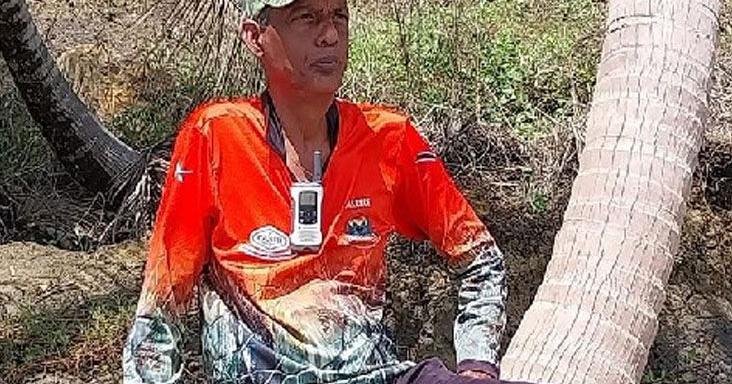
Despite a decline in the number of teenage girls reported missing so far this year, Hunters Search and Rescue Team (HSRT) leader Vallence Rambharat is anticipating an increase in cases following the conclusion of the Caribbean Secondary Education Certificate (CSEC) examinations.
The examinations ended on June 19.
Speaking to the Sunday Express last month in Chase Village, Rambharat said the prediction is based on patterns observed by the HSRT around periods such as Christmas, Carnival, Point Fortin Borough Day and the August school vacation.
“We have noticed also that there is a marked drop in the number of teenage runaway females that kept the numbers high every year. In 2022, teenage runaway females accounted for 38% of all the missing persons in Trinidad and Tobago, and currently we are down to 14% in 2026,” he said.
According to Rambharat, the team has also seen a significant overall reduction in missing persons reports this year, averaging about 22 cases per month.
However, he said teenage girls remain one of the most misunderstood categories of missing persons.
Rambharat criticised the Trinidad and Tobago public for carrying preconceived notions and drawing premature conclusions about teenage girls who go missing. He described that demographic as the most misunderstood, and said: “I’ll say it bluntly, most of the comments you get is that they run away with man. And that is not true. That may be the end result, but these persons more or less have a tumultuous time at home.”
He continued: “They’re probably victims of different types of abuses and relationships are not healthy in that home. And they’re looking for a way out. So the way out causes them to run away, trying to seek an outlet for what’s happening at home. Most of the time, it’s a mess. It’s not a well-built nest for a 16-year-old, 17-year-old girl.”
Asked to elaborate, Rambharat said domestic problems such as abuse, neglect, incest and other socio-economic issues were some of “the causes that made the nest uncomfortable at home”. He admitted, though, the teenagers’ problems were sometimes compounded by what he called “responding to false love” outside the home.
He said it was for that reason that his team sometimes contacted the Children’s Authority and Child Protection Unit (CPU) to take a deeper look and not dismiss a case as an ordinary missing persons report because teenagers often confided in them when they met.
Most concerning cases
Rambharat said the category that concerns the HSRT most is adults between the ages of 20 and 50, many of whom deliberately do not want to be found.
“It’s usually females who enter into relationships and decide to leave quietly. Sometimes we locate them and we don’t ever say they are found. We honour their request to remain in their safe space and continue their lives,” he said.
The second most misunderstood group, he added, is the elderly, particularly those suffering from undiagnosed dementia.
He urged families to educate themselves about the early signs of dementia and seek medical attention when behavioural changes are observed.
“Once they hit 60, you have to begin to ensure that the persons have medical attention and medical care,” he said. “Please be on the lookout for these early signs and take them to a medical institution for diagnosis.”
Call for dedicated unit
Asked whether Trinidad and Tobago had a hidden missing persons crisis, Rambharat said he would describe it as a problem rather than a crisis.
He credited the HSRT with helping to bring attention to the issue through its extensive use of social media to publicise missing persons reports.
To improve the response to missing persons cases, Rambharat called on the Government to establish a specialised unit that would bring together the resources of the Police Service, Fire Service, Coast Guard and Defence Force.
“I would really like to see the Government look at establishing a group of persons who are capable of looking for missing persons under one roof,” he said.
He argued that the current system operates in silos, leading to delays and coordination challenges. He also called for greater investment in specialised equipment, including improved drones, sonar technology, utility vehicles, and a dedicated emergency-response helicopter.
According to Rambharat, such resources would significantly improve search-and-rescue operations and reduce response times in critical cases.
He recalled a recent incident in which a hiker with a broken leg had to be extracted from a remote area, saying a helicopter could have reduced the time taken to transport the injured man to medical care. It took the Defence Force about 48 hours before assistance could be rendered, he added.