And if the next victim of deepfakes was neither a election nor a public figure, but the truth itself? This is the warning issued by several African experts from artificial intelligencegovernance and media during the session “Defending the Truth: Deepfakes, Misinformation & Social Cohesion”, organized with the participation of Policy Center for the New South (PCNS). Their observation is clear: as artificial intelligence becomes capable of producing images, videos and voices indistinguishable from reality, it is the very foundation of collective trust that becomes fragile.
“Before, we wondered if a source was credible. From now on, we wonder if we can still believe what we see, hear or read,” summarized Mohamed Benabid, professor of practice at the Mohammed VI Polytechnic University (UM6P). A rupture that he describes as not only a technological change, but also a societal and even epistemological one. According to data cited at the meeting, only 40% of the world’s population now says they trust the news, while a similar proportion say they voluntarily avoid the news. An unprecedented phenomenon which reflects a profound crisis in citizens’ relationship to information.
When the truth becomes suspect
The debate highlighted a worrying paradox: deepfakes are no longer content to spread false information; they create an environment in which the evidence itself becomes questionable. “We no longer doubt only what is false, we doubt everything, including what is true,” underlined Imad Hashtagi, Program Officer at the Policy Center for the New South (PCNS).
This development fuels what experts call the “liar’s dividend”: the possibility for a political actor, an institution or a public figure to reject authentic content by presenting it as a deepfake. In such a context, the truth becomes negotiable and the boundaries between reality and manipulation blur.
For Karen Oakley, specialist in electoral processes, this situation constitutes a major challenge for democracies. Election management bodies must no longer only guarantee the regularity of ballots, but also ensure the security of the information space. Because a viral rumor or a falsified video can be enough to cast doubt on an entire electoral process even before the facts are verified.
An explosion of synthetic content
The scale of the phenomenon is dizzying. According to figures discussed during the session, the number of deepfakes distributed on social networks has increased sixteen-fold in two years. Now, new fake content is generated every two minutes. Their uses go far beyond the political field. Speakers cited several examples of sophisticated financial fraud, including that of a British company that allegedly lost $25 million after a videoconference meeting entirely simulated using artificial intelligence.
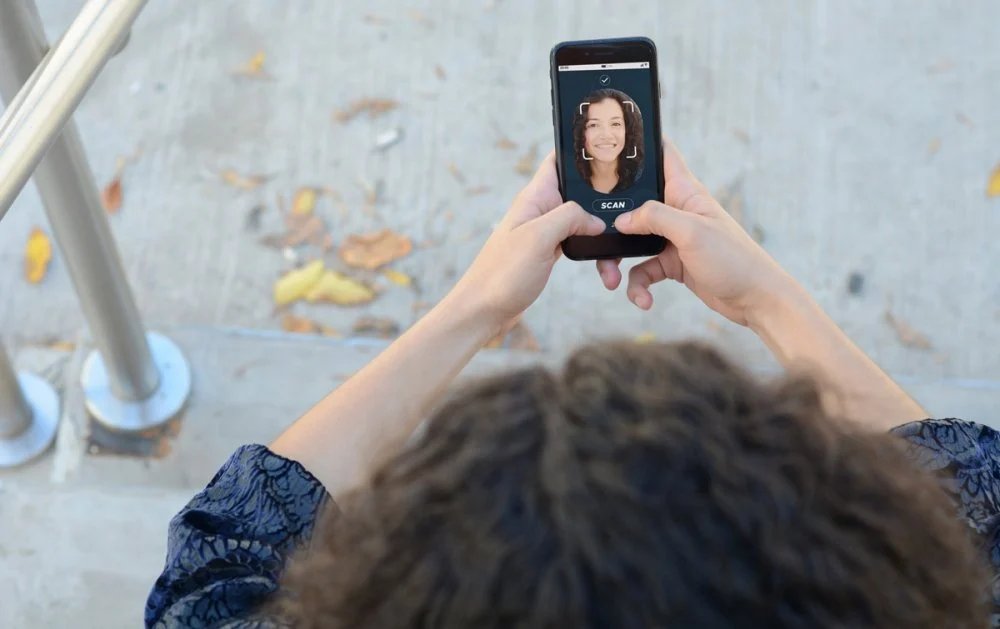
Even more worrying, experts pointed out that current detection tools are struggling to keep up with the pace of improvement in generative technologies. Once shared on social networks or messaging applications, images and videos are compressed, which gradually erases technical clues allowing identification of manipulation.
The speakers also insisted on the particular vulnerability of the African continent. Most deepfake detection systems are trained on Western databases and struggle to recognize African faces, accents, languages or even local dialects such as Darija or Hausa. For the PCNS and several experts present, this situation reinforces the urgency of building true African digital sovereignty. This involves the development of local databases, research capabilities specific to the continent and artificial intelligence tools capable of taking into account African cultural and linguistic realities.
Slow down to regain critical thinking
Faced with this crisis of confidence, the specialists gathered in Rabat pleaded for a response that is not solely technological. Media education, strengthening critical thinking, empowering digital platforms and supporting public interest journalism were presented as essential levers. Mohamed Benabid notably called for “slowing down” the circulation of information. An idea which may seem paradoxical in the age of social networks, but which appears, according to him, to be a democratic necessity. Because in a world where the image is no longer proof and where the video can be fabricated from scratch, the time for verification becomes a civic imperative.
The challenge of deepfakes therefore no longer consists only of unmasking the fake. It is now about preserving the ability of societies to agree on what is true. And without this minimal confidence in facts, participants warned, it is social cohesion itself that risks becoming the next victim of artificial intelligence.