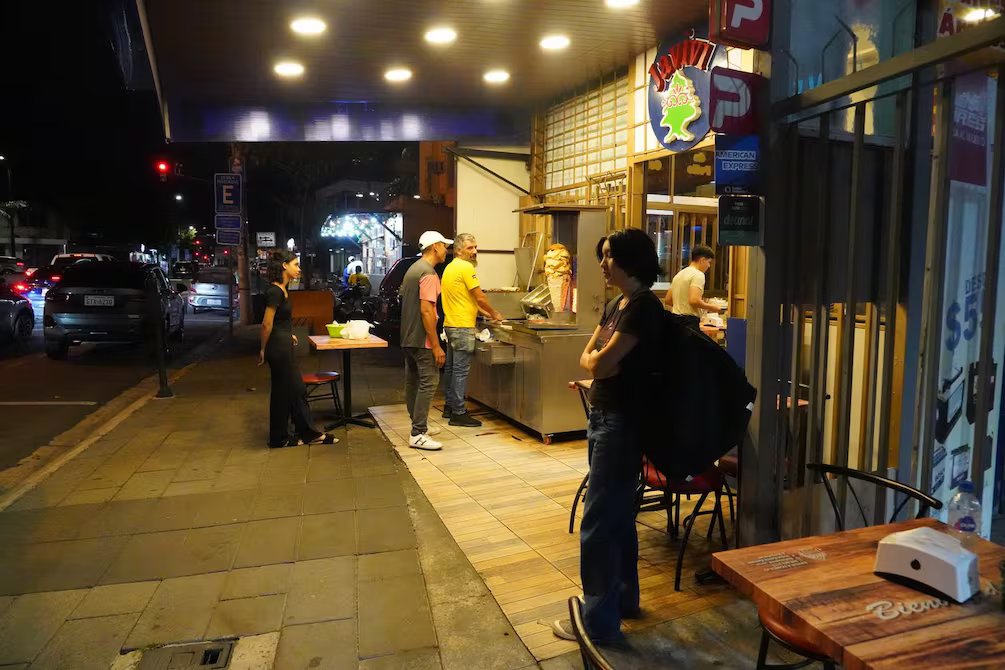
Marcela Tapia Wipe the tables and check the clock. It is around 9:00 p.m. on Monday and the closure has already begun at the food and pastry restaurant where he works, in Urdesa. It is not the usual schedule. Every minute counts because, if she is late, she misses the transportation that picks her up to return home.
She is 21 years old and that night she had to take charge alone. “At nine I start closing. I clean, organize and leave everything ready,” he explained as he moved between the tables.
The work doesn’t end when the last customer gets up. Cleaning, order and cash are part of a process that is now carried out in less time.
The margin is short. The transport passes between 22:00 and 22:15 and it must be ready. “I have to be there at that time,” he said. If something is delayed, the return is complicated. In previous days, the closure could be extended longer, but now the time is adjusted to avoid inconveniences on the street with the curfew.
The problem appears when clients arrive close to closing. “Sometimes they arrive in groups before nine and that delays the cleaning; then, it becomes complicated against time,” he said.
Although they are cared for, the impact is felt in the staff departurewho must accelerate each task to meet the schedule.

Other locations adapt to the new schedule
In other locations in the area, the closing is also early. In Shawarma JabibiJulio Vargas, 31, explained that the process begins earlier than usual. “At 10:00 p.m. we start collecting and at 10:30 p.m. we have to close,” he indicated.
Attention changes as the night progresses. “Maximum until 22:00 We serve, but the last orders are to go. We can’t let them stay because it’s getting late,” he said. The adjustment involves changing the way orders are received at the last hour.
Closure also requires internal coordination. “There are colleagues who leave earlier, about 20 or 30 minutes, but you still have to calculate the time well,” he added. This depends on the distance to your homes and the transportation options available.
The mobility It has become a difficulty for some of the staff. Vargas explained that not everyone has their own vehicle. “There are people who have no way to leave and that’s where it gets complicated, because they can stay on the street,” he said. The schedule limits transfer options.
Restrictions and safety for staff
At the barbecue place Thick, Long and Kbzonthe schedule was also adjusted. Cristian Delgado, owner of the business, indicated that the closing went from 11:00 p.m. to 21:30. “Until 9:15 p.m. we serve normally. After that, if customers arrive, it is only take-out,” he explained.
The goal is for staff to leave on time. “It takes the kids about 30 minutes to close and at ten they are already leaving,” he said. This margin allows each worker to start their journey before the restriction.

The change coincides with a strip in which it was previously concentrated greater movement. “Between nine and nine thirty more people began to arrive, but now we have to close,” he said. This has changed the way sales are distributed during the day.
To avoid delays, the consumption on the premises. “Before we let them stay longer, but that made the staff late. Not anymore,” he said. Service at the table is reduced in the last part of the schedule.
Some workers return by bus, others walk or rely on contracted transportation. The early departure seeks to reduce the risk of running out of transportation options at night.
Back at the restaurant, Marcela Check that everything is in order before leaving. The closure of the premises does not depend only on demand, but on the time available to complete the day.
When she finishes, she heads to the point where the transport picks her up. Like her, other workers in Urdesa They adjust their schedules to comply with the early closure and be able to return home without setbacks. (YO)