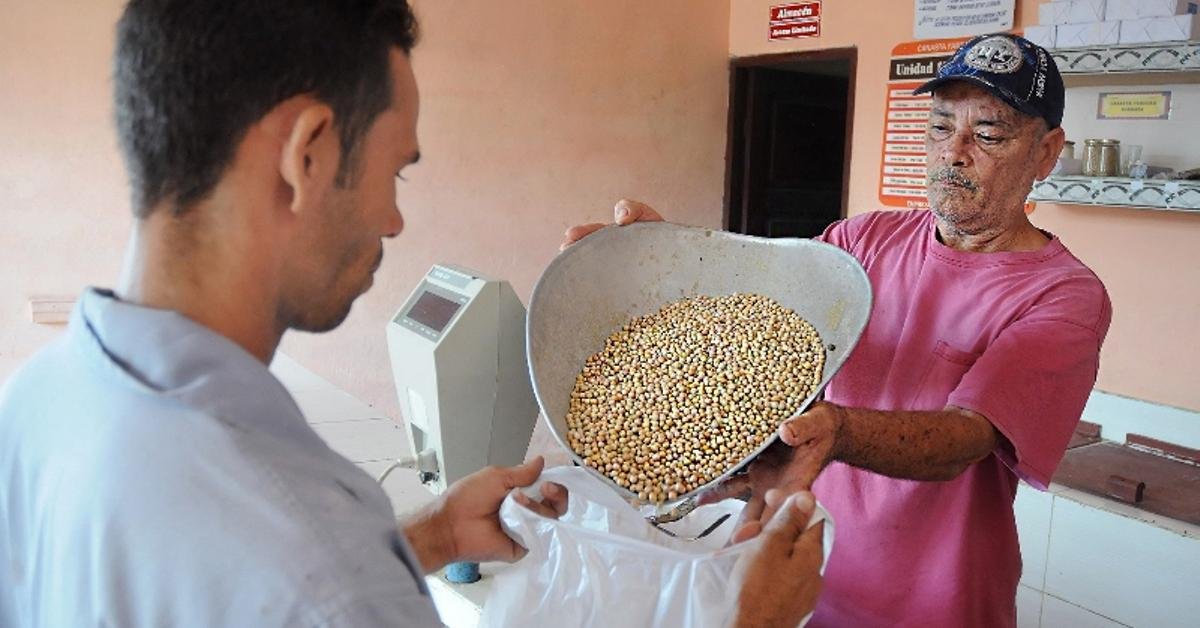
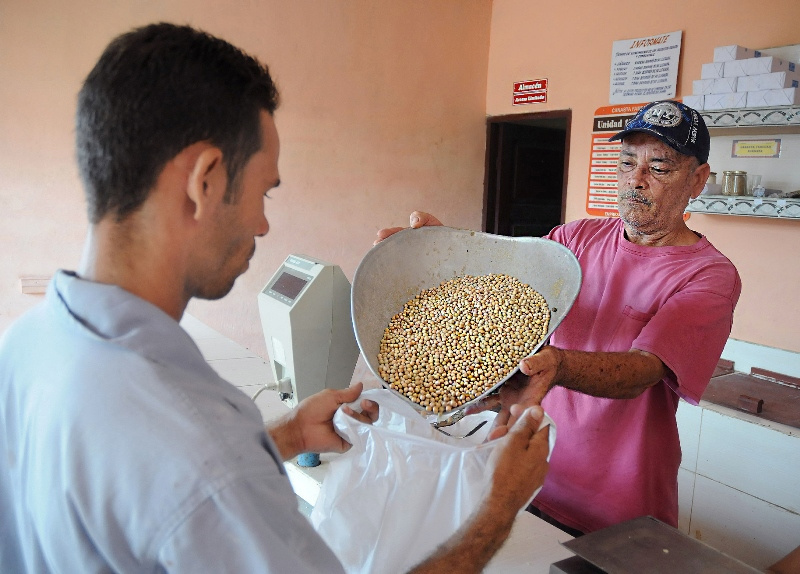
Guantanamo/The winemaker opens the door with a slowness that seems practiced. It is eight in the morning and there are already a dozen people waiting in front of the small establishment on Crombet Street, in the heart of the city of Guantánamo. Some carry the supply book folded in their back pocket; others, an empty bag hanging from the forearm. The scene repeats itself every month, but each time with less products to pick up and more doubts about what will or will not arrive on the table.
The regulated basic basket, that system that for decades supported the minimum nutrition of Cuban families, is experiencing chronic exhaustion in Guantánamo, as in the entire country. The food list has been reduced over the years and the irregularity in distribution has ended up turning what was once a monthly routine into a lottery marked by delays, substitutions and silences.
“The little that is arriving is donated, but a market of this type cannot be sustained because it is not known when any country is going to donate or how much”
In line, Donato leans on his cane as he watches the movement of the sacks being unloaded from a dilapidated truck. At 78 years old, he remembers times when the winery was a bustling and predictable place, where you knew exactly what day the rice, sugar or oil was due. Now, he says, everything depends on availability and external help.
“The little that is arriving is donated, but a market of this type cannot be sustained because it is not known when any country is going to donate or how much,” he assures with a tone that mixes resignation and skepticism.
Reliance on international donations has become an increasingly visible feature of the supply system. In recent months, various products distributed in Guantánamo, from grains to oil, have arrived through cooperation or humanitarian aid programs. However, these deliveries do not follow a stable schedule, causing frequent disruptions in the distribution of essential foods.
Inside the winery, the shelves exhibit an emptiness that is difficult to conceal. An open sack of rice on a pallet and some boxes of children’s compotes constitute the main inventory. The warehouseman reviews a list posted on the wall where the products pending distribution are noted: coffee, oil and salt. None have a confirmed arrival date.
“You live with the constant worry about whether tomorrow there will be something to give the child,” he says while stirring the hot liquid.
For many families, the biggest concern revolves around powdered milk intended for children. Supply, once relatively stable, has become erratic in recent years. In some months it is delivered late; in others it is postponed without explanation.
In the San Justo neighborhood, in the north of the city, Maribel prepares her four-year-old son’s breakfast with the little she has on hand: a small bread and a cup of herbal infusion. The powdered milk corresponding to the previous month has not yet arrived at your warehouse.
“You live with the constant worry about whether tomorrow there will be something to give the child,” he says while stirring the hot liquid. “Before, at least, we knew that milk was guaranteed. Now you can’t count on that.”
The instability in the delivery of basic foods has forced many families to turn to the informal market, where prices are prohibitive for most. A kilogram of powdered milk can exceed 2,000 pesos, a figure that is equivalent to several days of salary for a state worker.
“The peas they distributed last month were full of bugs,” he says indignantly. “I had to pick them one by one and throw away half”
The quality of the products has also generated frequent complaints among consumers. Graciela, a 66-year-old retiree who lives in the Caribe neighborhood, remembers the last grain delivery with disgust.
“The peas they distributed last month were full of bugs,” he says indignantly. “I had to pick them one by one and throw away half.”
This deterioration in quality is added to the reduction in the quantities distributed. In some months, rations of rice or sugar have been lower than expected, while other products, such as oil or coffee, have temporarily disappeared from the notebook.
The problem is not limited to the availability of food, but also to the logistics of distribution. In several warehouses in Guantánamo, delays in the arrival of goods have caused long lines and arguments between neighbors who fear being left without their quota. Uncertainty has become part of the daily routine.