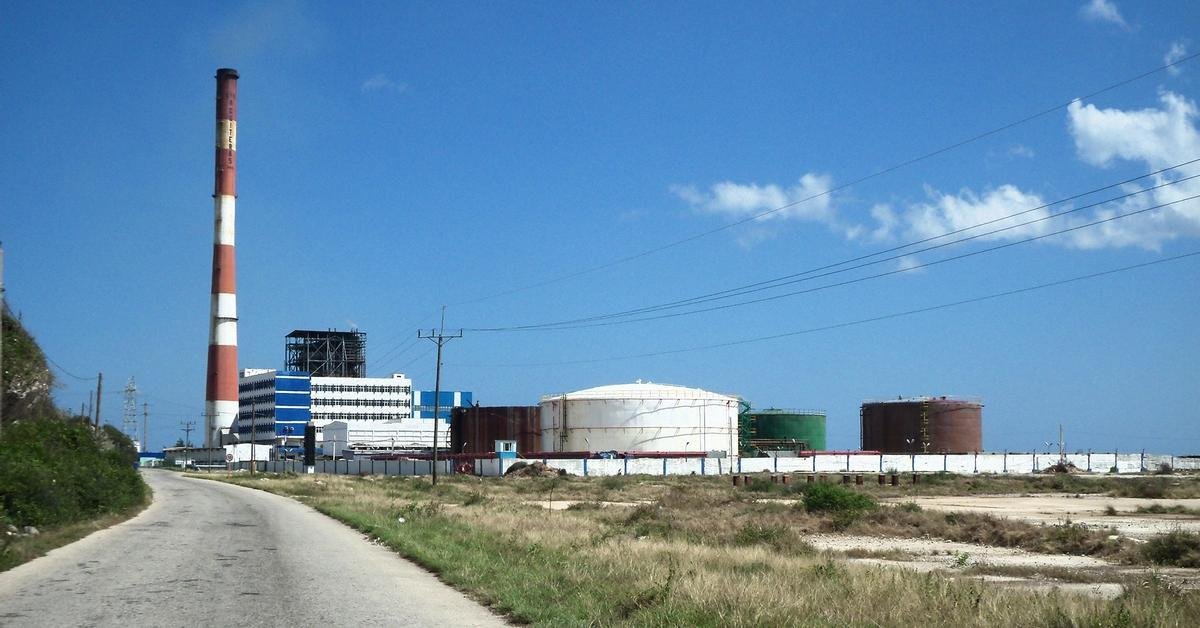
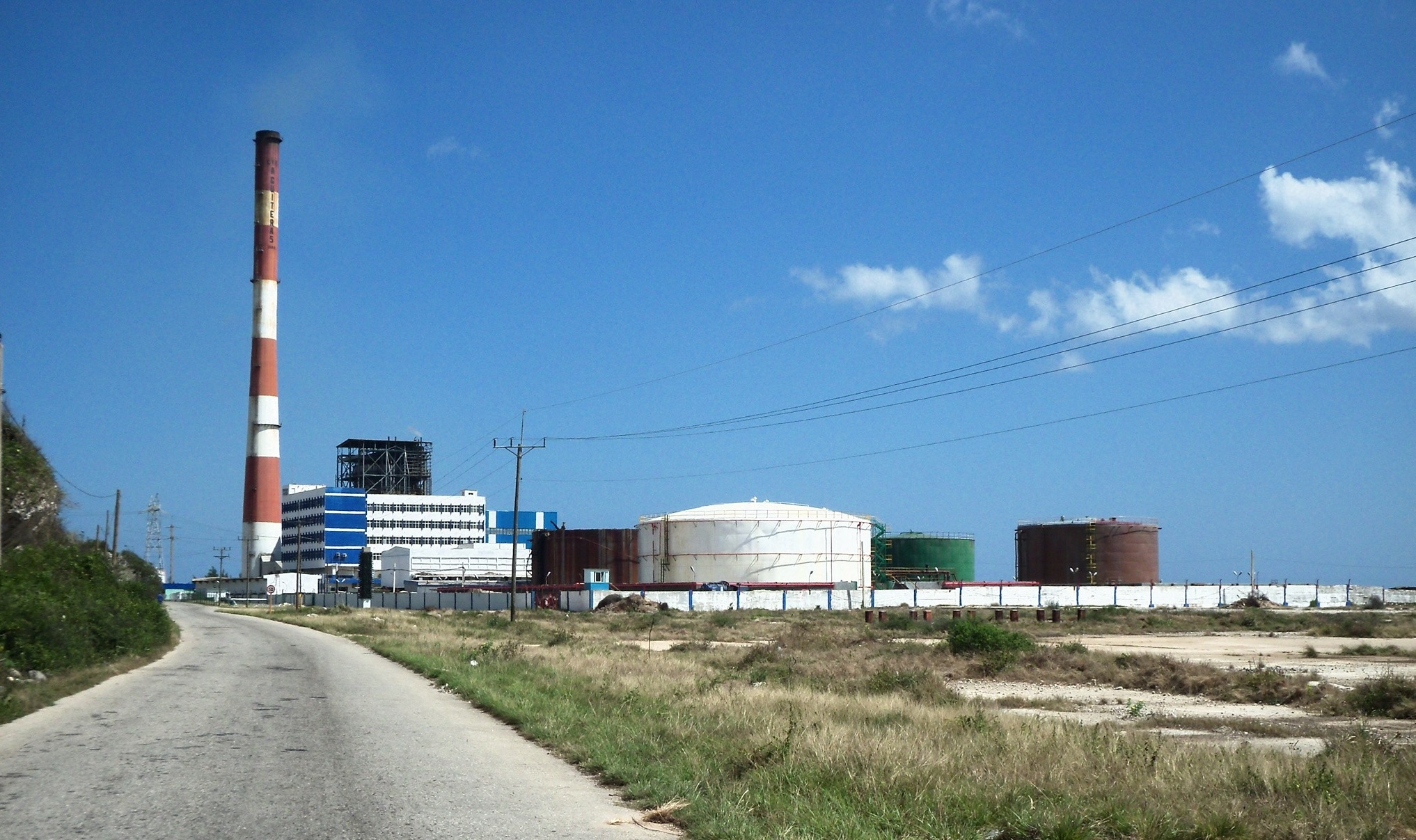
Madrid/“They already secured their May Day; Mother’s Day doesn’t matter to them,” says a mother from Holguín, exhausted by blackouts that once again disrupt family life. The new output of the Antonio Guiteras thermoelectric plant, the largest unitary generation block in the country, occurred this Tuesday, May 5, at 9:12 in the morning, according to the Electrical Union (UNE). The state company presented it as a shutdown “as planned,” but in the report itself it is admitted that the unit was shut down due to a boiler failure and that the system would lose about 140 megawatts. The official forecast was that he would be gone for about four days.
On Saturday, while speaking before foreign delegates, President Díaz-Canel admitted that the Russian oil from the tanker Anatoly Kolodkin –which alleviated the electricity crisis for just two weeks– was about to run out. He also acknowledged that the Government does not know when fuel will enter the country again. Seventy-two hours later, Guiteras left the system again.
In Havana, this Wednesday smoke was observed in the Regla lake, a sign that it continues to operate. This suggests that the floating plant still has fuel oil, although it does not allow us to calculate how much fuel it has left or how long it will be able to sustain generation.
“Today we only had electricity from 2:45 in the morning until 6:25 in the morning”
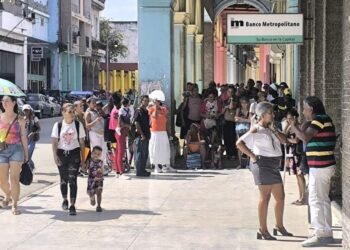
In the Cuban capital, where for years blackouts have been less prolonged than in the rest of the country, the crisis also hit this Wednesday. “Today we only had electricity from 2:45 in the morning until 6:25 in the morning,” a resident of Plaza de la Revolución told this newspaper. On the way to work, he added, he found “the entire part of El Vedado” in darkness, with traffic lights turned off, banks closed, and paperwork offices without service.
The last time Guiteras had left the national electrical system (UNE) was on April 6, also due to a boiler breakdown, described by the official press as a “flat.” The plant synchronized again on April 10, after four days stopped. That is, between that reinstatement and the new breakage, the plant operated for less than 25 days.
In Holguín, where power outages are now part of the routine, the news was received without surprise, but with more irritation. A retiree from the Vista Alegre neighborhood assures that his block is being “more affected than normal” by the May Pilgrimage, the cultural festival held in the city. from May 2 to 8. “They always prioritize their things. Now they are dedicating the Pilgrimage to Fidel Castro, who is already dead and never suffered a blackout. They have to guarantee lights and audio for their concerts and tributes and the result is more blackouts for us,” he complains.
Meanwhile, offstage, electricity remains an intermittent luxury. For peak hours on Tuesday, the UNE calculated a deficit of 1,650 megawatts (MW) and an expected impact of 1,680 MW. That is, more than half of the national demand was left without support. For peak hours this Wednesday, an even larger deficit is expectedof 1,720 MW and a planned impact of 1,750 MW.
The woman from Holguin who sees Mother’s Day approaching without power is not talking about megawatts or boilers, but about frustration
In addition to Guiteras, they are damaged unit 6 of the CTE Diez de Octubre, unit 2 of the Lidio Ramón Pérez –Felton– and units 3 and 5 of the Antonio Maceo –Renté–. Added to this are three blocks under maintenance: unit 5 of Mariel, 6 of Renté and 5 of Nuevitas. As if that were not enough, thermal generation dragged another 254 MW out of service due to “limitations”, an additional burden for a system unable to cover demand during peak hours.
In 2025 the plant suffered half a dozen technical shutdowns and short breakdowns, especially due to recurring boiler problems. From January 2025 until now, the plant has accumulated more than a dozen relevant SEN interruptions, a conservative figure because not all brief events are documented in the same detail.
For the residents of Holguín and the rest of the provinces, the statistics translate into unlit refrigerators, lost food, phones without charge, suffocated elderly people and half-asleep children. The woman from Holguin who sees Mother’s Day approaching without power is not talking about megawatts or boilers, but about frustration. The retiree from Vista Alegre does not dispute the engineering of Guiteras either, he denounces that, while platforms and tributes are illuminated, his entire block remains in darkness. The Government’s political calendar seems to have guaranteed electricity; the domestic one, almost never.