- Cuba’s National Assembly has passed the most comprehensive economic reform in decades.
- The 176-point plan calls for the dismantling of regulations and the introduction of market economy mechanisms.
- Private investors should be allowed to buy apartments and Cubans and foreigners should be able to buy shares in state-owned companies.
«Cuba, our beloved Cuba, lived through currently the most difficult hours This century, and we have the historic responsibility to save it,” said President Miguel Díaz-Canel after a historic vote in Cuba.
Against the backdrop of severe political tensions with the United States, Cuba’s National Assembly has passed the most extensive economic reform in the country socialist Caribbean state for decades adopted. It initially remained unclear whether the measures correspond to the demands of US President Donald Trump’s government for economic opening in Cuba.
“No renunciation of socialism”
The 176-point plan provides for a greater opening of the previously state-controlled economy. Regulations should be dismantled and market economy mechanisms introduced.
The reform plans, supported by former President Raúl Castro and the Communist Party, were previously presented by Prime Minister Manuel Marrero Cruz in a special session of Parliament. They “do not mean giving up the construction of socialism, but are a prerequisite for its preservation,” said Marrero Cruz.
“National decision”
The Cuban embassy in Washington spoke of the “most comprehensive reform package since the 1990s”. At that time, Cuba had lost its most important ally with the collapse of the Soviet Union, which plunged the island into a deep economic crisis.
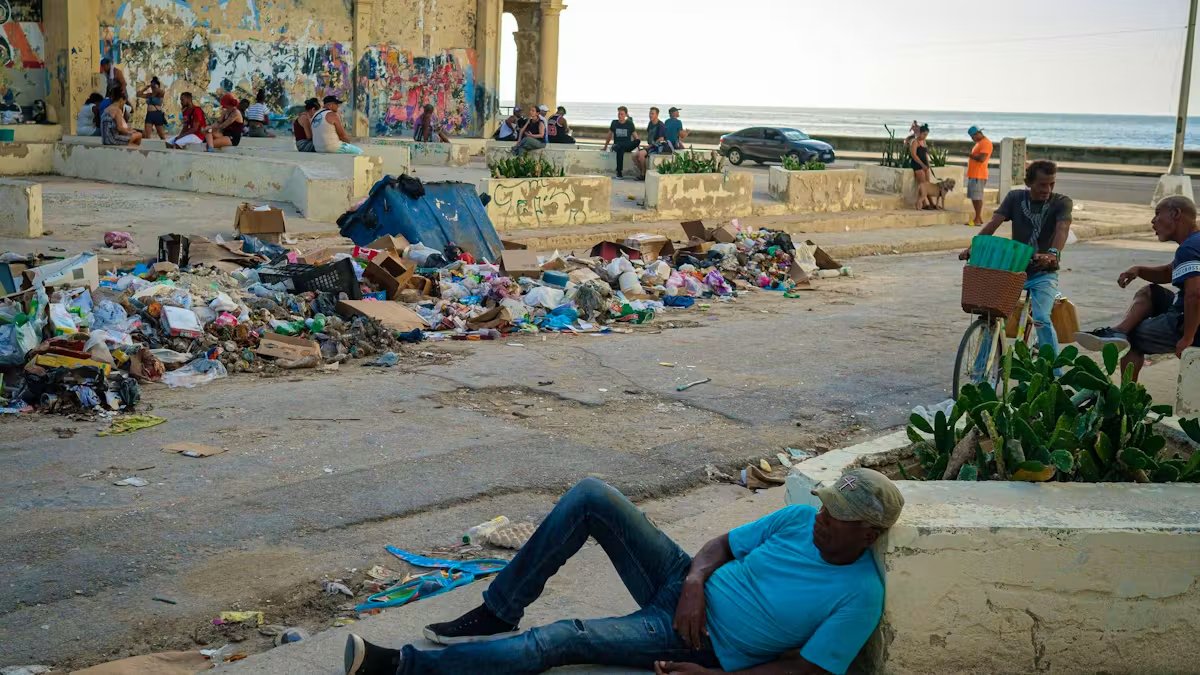
The population of the communist-ruled island has been suffering from a severe economic and energy crisis for years, which has recently worsened significantly due to sanctions by the US government. With an oil embargo and other pressure measures, Trump is trying to force the Caribbean country to open up economically and politically in accordance with his wishes.
Cuba remains ready for talks with the USA, said Díaz-Canel. However, the economic plan is a national decision and is not related to negotiations. “We send the following message to the government of the United States, without hate, but also without fear: If you really want to help the Cuban people, let us live!” He called on the US government to allow Cuba to trade freely and not to block the import of medicines and fuel.
Will there soon be McDonald’s and Subway branches in Cuba?
Private investors should be allowed to buy and sell apartments, and Cubans and foreigners – including Cuban exiles – should be able to buy shares in state-owned companies. It was not initially announced which state-owned companies were involved.
It was explicitly mentioned that foreigners are allowed to invest their capital in the Cuban tourism sector, banking, real estate, gas stations and restaurants. Even global fast food chains should be able to benefit from the economic opening.

Marrero Cruz did not speak of economic reforms, but of “economic and social changes” with strategic importance. The economic model will be transformed without abandoning the principles of the 1959 revolution led by Fidel Castro.
Have you been following on Whatsapp for 20 minutes?
A news overview in the morning and at the end of the day, surprising stories and breaking news: Subscribe to the 20 Minutes WhatsApp channel and you will receive regular updates with our best stories directly to your cell phone.

Simon Misteli (sim), born in 1995, has been working as an editor at the news desk since 2024. He writes about a wide variety of topics with a focus on foreign stories.