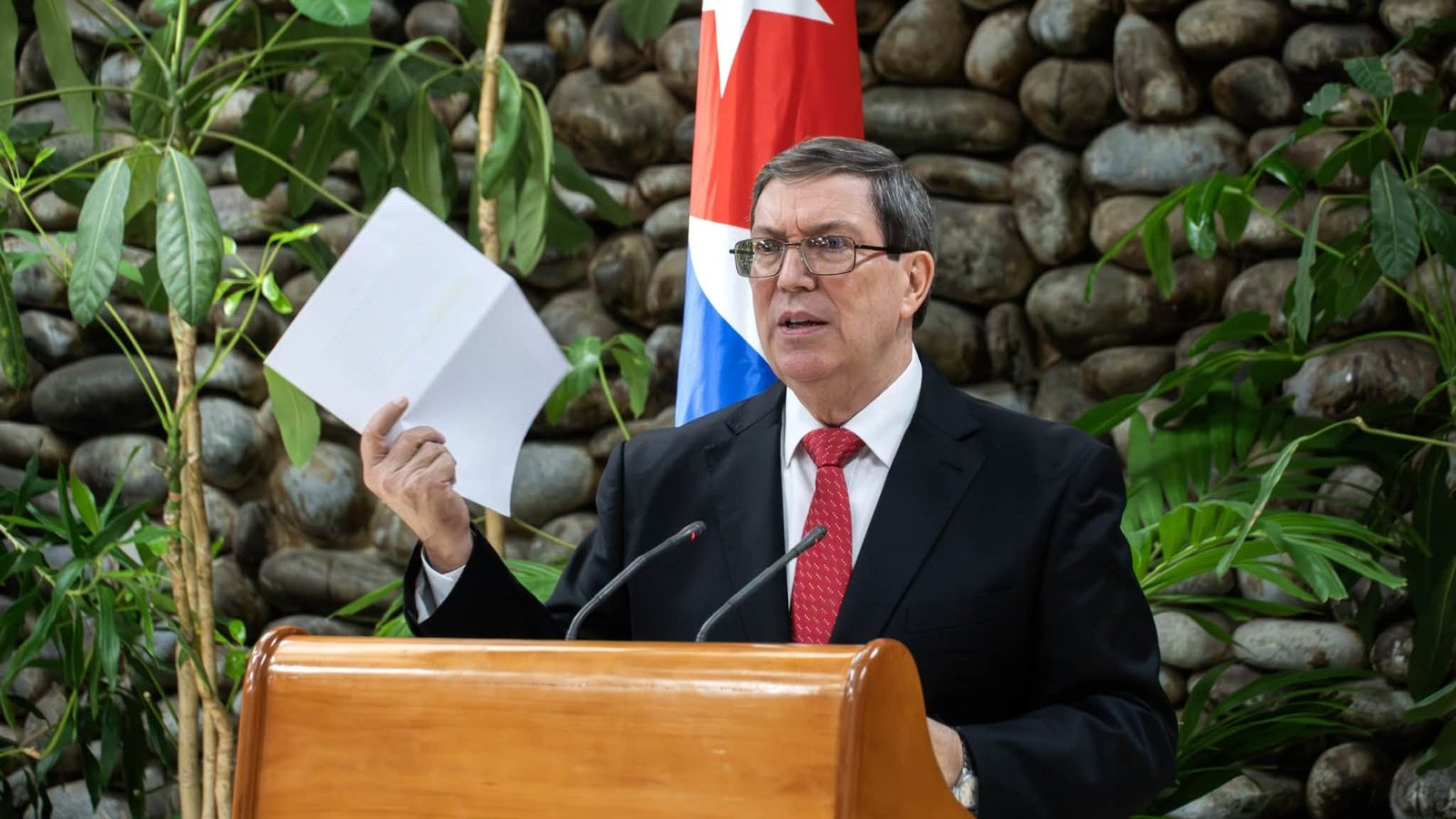

Cuban Foreign Minister Bruno Rodríguez today denounced the extreme and unprecedented pressure being exerted by the United States on sovereign nations to change their votes during the presentation of the report on the U.S. blockade against Cuba on October 27 and 28.
During a press conference, Rodríguez explained that this will be the 34th time the United Nations General Assembly has examined the report titled “Necessity of Ending the Economic, Commercial, and Financial Embargo Imposed by the United States of America Against Cuba.”
He noted that the discussion is taking place against a backdrop marked by an unprecedented intensification of that policy and by an energy blockade that he described as collective punishment against the Cuban people.
The foreign minister emphasized that, despite pressure from Washington, this will be the first time the General Assembly will issue a resolution explicitly condemning the extreme tightening of the embargo.
He stated that this year has seen a convergence of the intensification of the economic blockade, political coercion, and the obstruction of trade and supplies destined for Cuba, accompanied by an unusual series of actions by the State Department.
Rodríguez presented documents that provide evidence of the efforts made by the United States in recent months to influence the positions of various countries—efforts often led by Secretary of State Marco Rubio himself.
Among the materials presented is a document from the aforementioned department urging foreign governments to reject “Cuban propaganda.”
According to the minister, that text attempts to hold the Cuban government responsible for the humanitarian impacts resulting from the blockade.
“These damages are not collateral, as Washington often claims, but rather deliberate consequences of a policy designed to cause suffering, despair, and instability among Cuban families,” he stated.
The head of Cuban diplomacy also referred to another document addressed to foreign dignitaries that contains explicit threats of sanctions and urges them to carefully analyze the consequences of supporting the Cuban resolution. Such measures could be directed against governments, companies, or individuals.
He also mentioned a third document circulated in Europe that seeks to justify pressure on Cuba by citing the island’s alleged links to the conflict in Ukraine—an accusation that, he asserted, has been refuted.
According to Rodríguez, these pressure tactics include threats to suspend cooperation programs, visa restrictions on officials and their families, interference in electoral processes, encouragement of destabilizing actions, and potential harm to economic and financial interests.
The Cuban foreign minister stated: “No one in the world today will be able to say, when history passes judgment—and it will do so severely—that they did not know, that they were unaware, that they looked the other way, that they did not see. The entire world knows what is happening today against our people. It knows that the deliberate effect of this policy results in long hours without electricity for our families; days and weeks without a supply of drinking water; a breakdown in health services; deaths that should not have occurred, which are due to the blockade, such as those resulting from the doubling of the infant mortality rate, due to a lack of appropriate medication, a lack of the latest technological equipment for treatment, the failure of medical equipment, a lack of parts, or a lack of power.”
The Cuban diplomat thanked the States that have voted, for nearly 30 years, in favor of a resolution that merely calls for an end to the blockade and respect for international law and international humanitarian law, and expressed his confidence that the international community will once again broadly support the Cuban resolution.
Cuba is not a threat; the blockade is.
EMBACUBADOMINICA