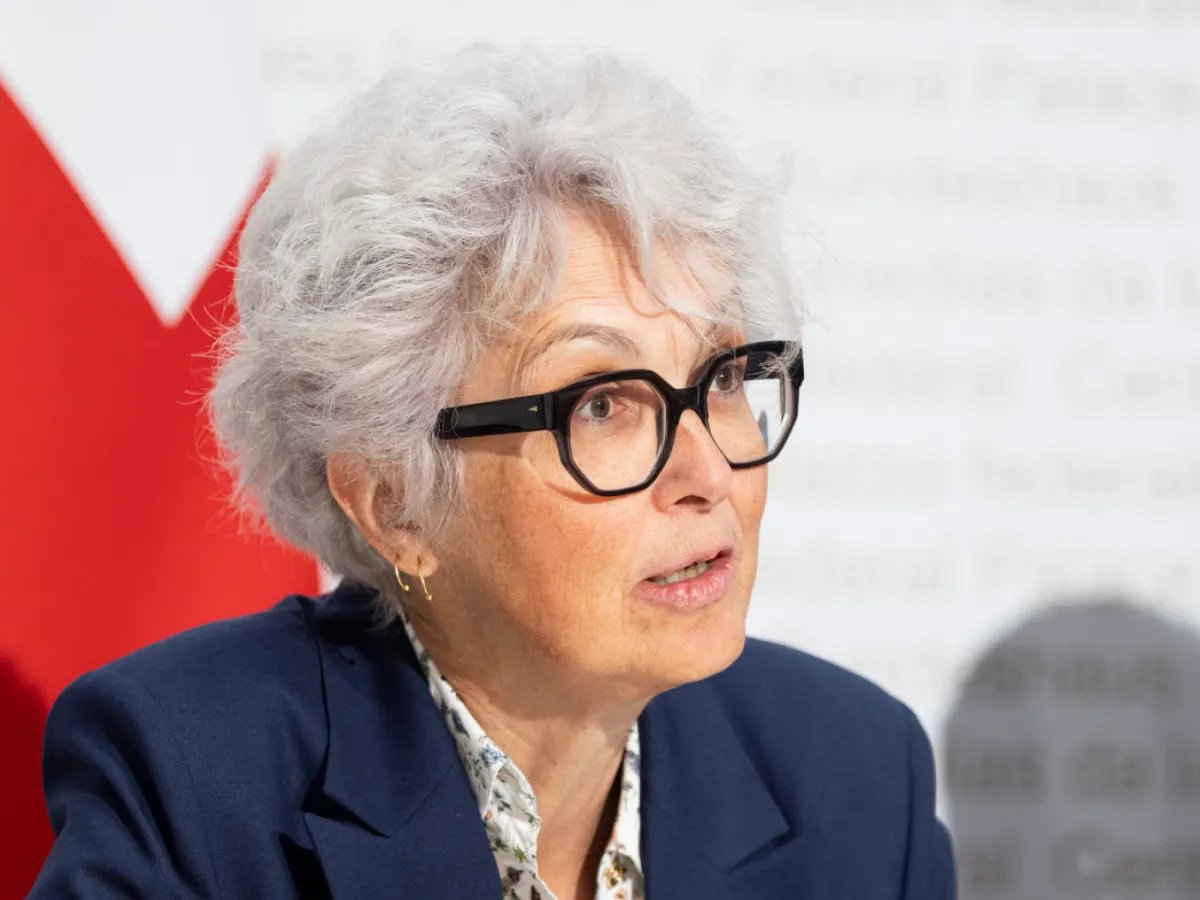

The agreement reached at COP17 is a positive outcome, according to Katrin Schneeberger, director of the Federal Office for the Environment.
Keystone-SDA
At the 17th Conference of the Parties to the Convention on Biological Diversity, dubbed COP17, states have agreed on measures designed to speed up the implementation of decisions taken in 2022.
These include setting aside at least 30% of the world’s land and marine areas for biodiversity.
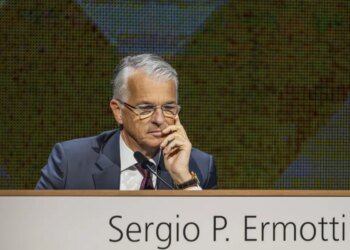
“The agreement represents a positive outcome that demonstrates the willingness of countries to work together to achieve the objectives of the (so-called) Global Biodiversity Framework and to accelerate its implementation”, said Katrin Schneeberger, director of the Federal Office for the Environment (FOEN), who represented Switzerland during the final phase of the summit. The conference took place in Yerevan, Armenia, between October 19 and 30.
The parties to the Convention on Biological Diversity had adopted the Global Framework in December 2022 at the United Nations Biodiversity Conference held in Montréal, Canada. It includes 23 targets to be achieved by 2030 and long-term goals extending to 2050, addressing the main causes of biodiversity loss. As stated, one of the main targets is to set aside at least 30% of land and marine areas for biodiversity by 2030 (“30 by 30”), by establishing protected areas or implementing other effective land-based measures.
More
More
Biodiversity loss in Switzerland in six graphs
“Switzerland is committed to ensuring that the targets are implemented through concrete measures and that biodiversity is effectively protected in the long term,” said Schneeberger in a press release.
In Yerevan, the parties carried out an initial mid-term review of progress made towards achieving the targets set in Montreal in 2022. According to the FOEN, businesses and financial institutions play a key role in their implementation. Through innovation, investment in nature and sustainable models of production and consumption, they can make an “essential” contribution.
More

More
One third of Switzerland’s animal and plant species under threat
In future, it will be necessary to raise awareness of the value of nature and, for example, the importance of insect diversity for agriculture. The countries intend to collaborate more effectively and, amongst other things, to learn from the experiences gained through greater regional exchange, with a view to improving their policies.
The parties also agreed on several other technical decisions. These include a commitment to examine the issue of aquatic and mountain habitats in greater depth over the next two years.
More
More
Species extinction: how Switzerland is working for global biodiversity
+ How we produce news in English
Translated from Italian, reviewed by an English Department journalist.