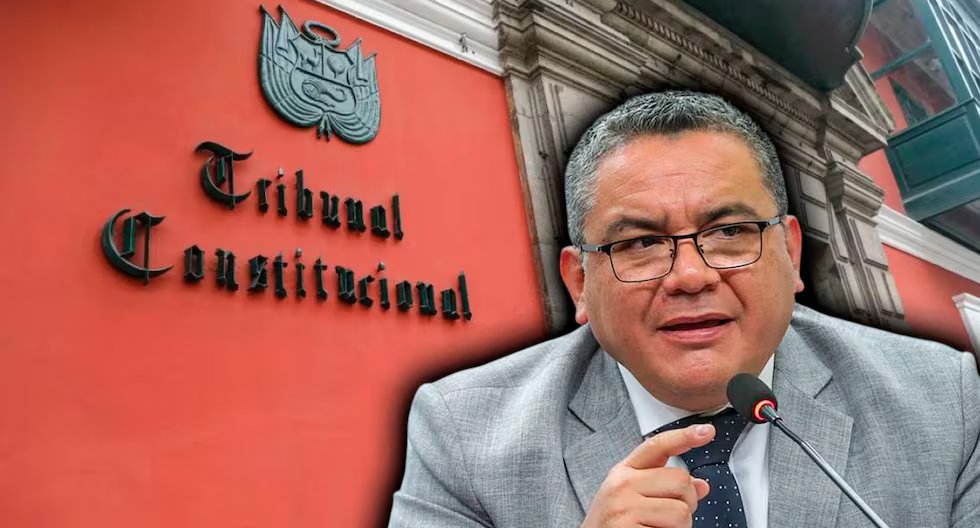
He Constitutional Court (TC) declared inadmissible the habeas corpus claim presented by the former Minister of the Interior and Justice, Juan José Santiváñez, against various proceedings of the Public Ministry.
The TC assured that “the actions of the Attorney General and other defendant prosecutors… do not determine any restriction or limitation on the personal freedom of the appellant, nor do they constitute any threat to said right.”
LOOK: Roberto Sánchez: ONPE fines Together for Peru for irregularities in 2021 campaign contributions
That is, the actions questioned by Santiváñez, such as the search requirements and the opening of the secrecy of the investigations, do not constitute an imminent or effective threat to the right to personal freedom.
Furthermore, the TC highlighted that the proceedings are supported by judicial resolutions, and that “the acts of the Public Ministry, in principle, are postulatory, and not decisive on what the judiciary resolves.”

Supreme Court rejects lifting banking and telephone secrecy from former Minister Santiváñez. (Photo: Andina)
According to Santivañez’s lawsuit, fiscal actions such as “the disproportionate and arbitrary raid on his home responded to political pressure authorized more than two weeks in advance and executed just before a debate in Congress.”
Santiváñez stated that these proceedings were related to an investigation for influence peddling and that “the defendant prosecutor has been deploying a set of actions that do not correspond to objective, impartial and respectful conduct of due criminal process.”
LOOK: Corvetto: The judge’s arguments to dictate an impediment to leaving the country until October 2027
Furthermore, he pointed out that the media spread news about possible arrest warrants and arrests against him, which would have fueled a perception of persecution and affected his right to personal freedom.
For this reason, the former minister requested that various actions be declared null and void, including the request of February 12, 2025 for a search and the lifting of the secrecy of communications. In addition, he denounced that the Prosecutor’s Office allegedly transgressed functional duties and impartiality in the exercise of its position.
In turn, according to the lawsuit, these tax actions could imply an imminent violation of the right to personal freedom, given that “if the preliminary arrest warrant was issued and executed, his right would have already been violated, without there being a judicial procedure to question it.”