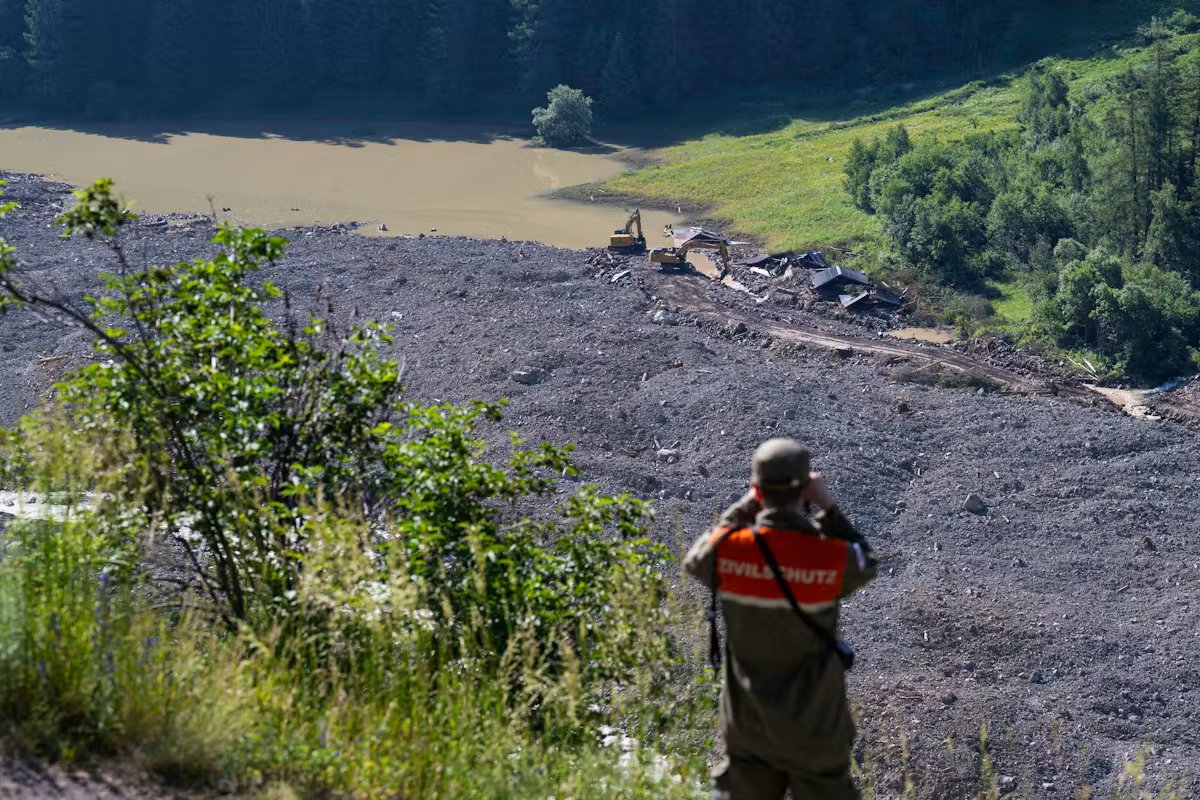
- The Federal Council is planning to combine community service and civil defense into a new disaster protection system.
- The cantons should be responsible for the new security service; the target number is planned at 72,000 people.
- Since the reform requires a constitutional change, the people have the final say – it will come into force in 2031 or 2032 at the earliest.
On June 14th, Switzerland voted a reform of the community service. A total of six tightening measures are intended to make it more difficult to “sneak” out of the army and into civilian service. But now Switzerland has a lot going for it more fundamental reform of compulsory service ahead.
Specifically, the community service and civil defense are to be merged into a new service. On Wednesday, under pressure from Parliament, the Federal Council laid down the key parameters and further procedure for the introduction of compulsory security service. In doing so, he wants to strengthen the protection of the population and secure the personnel of the army and civil defense in the long term.
While the civil defense already has too few people (57,000 instead of the necessary 72,000), the army’s stocks are at risk in just a few years, according to forecasts.
Disaster protection as an alternative to the army
In addition to the army, there should now be a civil protection service for which the cantons would be responsible. The new security service is to be created by merging community service and civil defense, with the services of today’s civil defense being expanded. A target number of 72,000 and an effective number of 96,000 people are planned for disaster protection.
The aim is to improve the way we deal with disasters and emergencies. In addition, the service should be more focused on dealing with armed conflicts. Similar to today’s community service, members of the civil protection service should also provide “support services” in the areas of health, social affairs and the environment.
What experiences have you had with compulsory service so far?
Only Swiss men should continue to be obliged to serve. They still cannot vote, but in the event of a conflict of conscience they must provide proof of the crime in the form of a longer period of service in civil protection.
While the cantons should in principle be responsible for planning and carrying out operations, the federal government would take on this task in the event of an armed conflict. The Federal Council also proposes that the federal government should be responsible for training and the procurement of materials in the future.
Today the federal government is responsible for community service. It is still unclear who will be responsible for the tasks in this area in the future.
The people have the final say
As a first step, the Federal Council commissioned the Defense Department to consult the cantons on the proposals. Based on this, he wants to develop a concrete template and send it for consultation.
The introduction of such a security service requirement requires a change to the constitution and thus a referendum. If the people and the cantons agree, the new compulsory service could probably be introduced in 2031 or 2032.

Delia Bachmann (dba), born in 1993, has been working for 20 minutes since 2024. As an editor in the politics department, she reports on what is happening in Federal Bern.