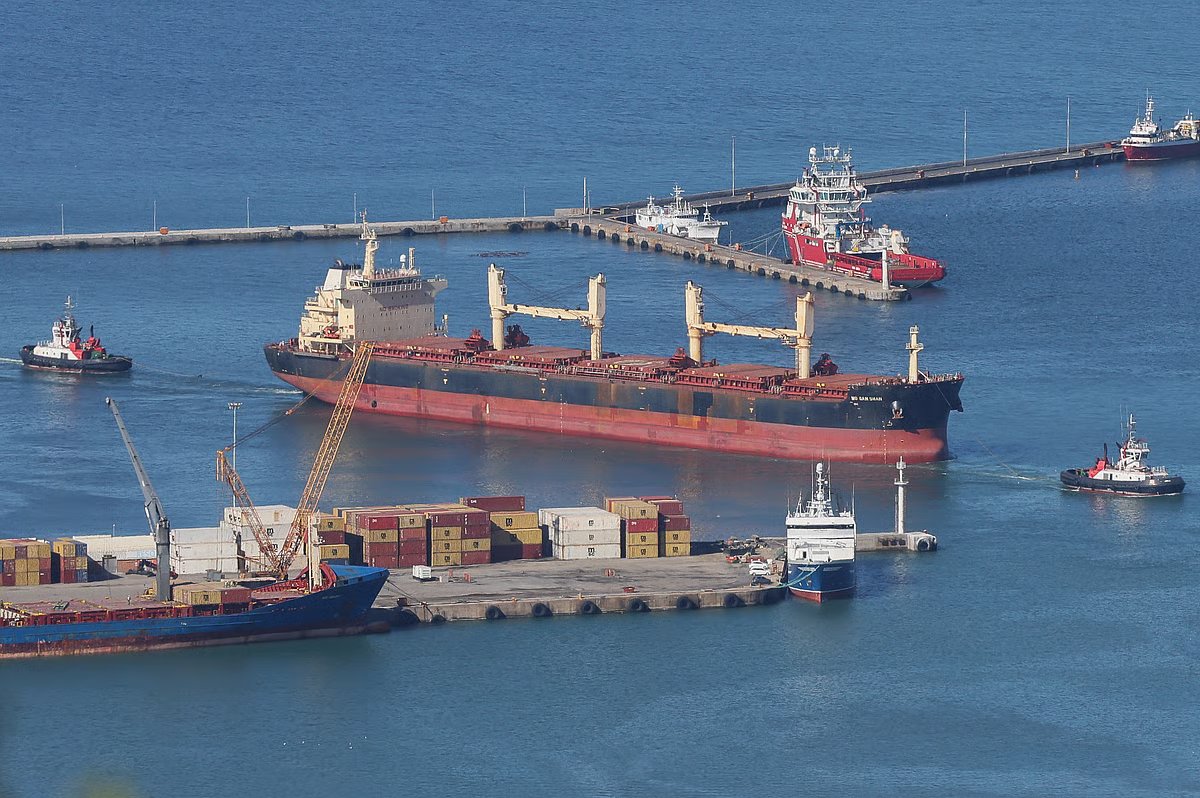
The Panama Canal Authority said companies have paid up to four million dollars (3.24 million euros) to send ships through the canal, given the effective closure of the Strait of Hormuz.
Although passage through the Panama Canal generally has a fixed price, upon reservation, companies without a reservation can pay an additional fee at an auction for seats, instead of waiting days offshore.
Auction prices and demand for these vacancies have risen sharply in recent weeks, as Iran and the United States blockade the Strait of Hormuz.
“With all the bombings, missiles, drones… companies are saying it’s safer and less expensive to go through the Panama Canal,” said Rodrigo Noriega, a lawyer and analyst in Panama City.
“All of this is affecting global supply chains,” he highlighted.
Noriega said the Panamanian government is “maximizing what it can gain from the Panama Canal.”
The average price to cross the canal varies between 300 thousand and 400 thousand dollars (between 257 and 340 thousand euros), depending on the vessel.
But Ricaurte Vásquez, the canal’s administrator, said a company, which he did not name, paid four million dollars when a tanker had to change destination due to ongoing geopolitical tensions.
“It was a ship that was transporting fuel to Europe, and they redirected it to Singapore because it needed to get there, because Singapore is running out of fuel,” Vásquez said.
Other oil companies paid more than three million dollars (2.57 million euros), in addition to the crossing fee, to speed up the passage in the face of rising oil prices.
Vásquez said ships were not piling up in the canal, but rather that the costs could be attributed to last-minute changes and the increased urgency of vessels as a result of widespread commercial chaos.
At the same time that it profits more from the new business, the Government of Panama also suffered a blow from the geopolitical dispute.
On Wednesday, the country’s Ministry of Foreign Affairs accused Iran of illegally seizing a Panama-flagged ship, owned by the Italian company MSC Francesca, in the Strait of Hormuz.
Panama, a country with one of the largest shipping registers in the world, said the ship was “forcibly taken” by Iran. It was not immediately clear whether the vessel still remained in Iranian custody.
“This represents a serious attack on maritime security and constitutes an unnecessary escalation at a time when the international community defends that the Strait of Hormuz remains open to international navigation without threats or coercion of any kind”, declared the Government of Panama.
Rodrigo Noriega said that the amount companies pay to cross the Panama Canal could increase even more if the conflict continues to drag on, as oil prices are soaring.
The price of a barrel of Brent crude surpassed 107 dollars (92 euros) this week, rising from around 66 dollars (57 euros) per barrel a year ago.
“No one really predicted the potential effects (the war) would have on global trade,” Noriega said.