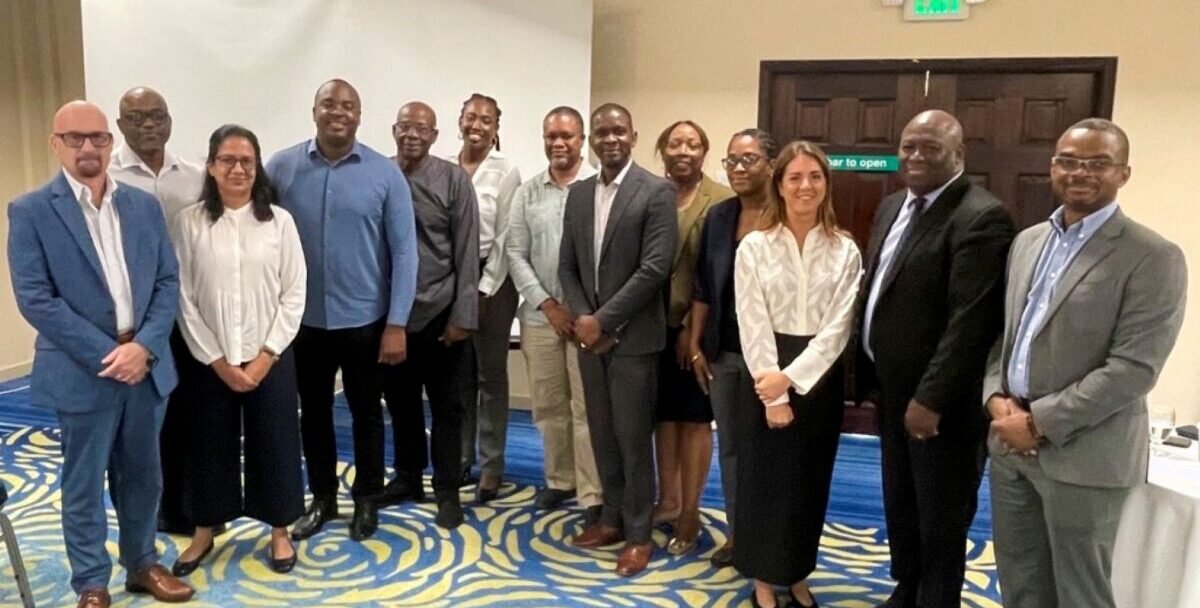

The Caribbean Development Bank (CDB) and the World Bank Group have wrapped up a joint review of Grenada’s development projects, with both institutions agreeing on a series of measures to improve implementation and ensure projects deliver stronger results.
According to a press release issued by the CDB, the Portfolio Review Mission brought together officials from both development institutions and representatives of Grenada’s Ministry of Economic Development, Planning, and Cooperatives; Ministry of Finance; Ministry of Mobilisation, Implementation and Transformation; line ministries and other agencies responsible for carrying out the projects. The mission concluded with discussions involving Cabinet Ministers.
The review looked at 11 active capital and technical assistance projects funded through the CDB, covering areas including coastal protection, water, healthcare, education, agriculture, renewable energy, and monitoring and evaluation.
The CDB said that among the projects examined were Grenada’s Geothermal Drilling Project, which supports the country’s shift toward renewable energy; the Southern St. George Water Supply Expansion Project, aimed at improving reliable access to water; and Phase 2 of the Grenada Education Enhancement Project, which is upgrading schools across the country.
The Climate Smart Agriculture Phase 2 project, which promotes more climate-resilient farming and supports rural livelihoods and food security, was also reviewed, along with the Health Sector Strengthening Project, which is focused on modernising healthcare services.
Project teams also discussed practical issues that can affect delivery, including procurement, environmental and social safeguards, monitoring, and risk management. The exercise took place alongside a separate World Bank Country Portfolio Performance Review.
Mr. L. O’Reilly Lewis, Director of the CDB’s Projects Department, said the discussions reflected strong cooperation between Grenada’s project teams and government ministries.
“There was strong engagement from the project teams and line ministries in Grenada during the portfolio review. Together with the World Bank, we believe this will translate into tangible development results and stronger resilience for all Grenadians.”
The mission also included visits to four priority projects. In Concord, officials reviewed progress on the Southern St. Georges Water Supply Expansion Project, which is designed to improve resilience to recurring water shortages in southern Grenada. The delegation also visited the Climate Smart Agriculture Phase 2 project to see how earlier investments in climate-resilient agriculture are being built upon.
World Bank Operations Manager for the Caribbean, Ms. Gail Richardson, said the joint approach is intended to speed up implementation and improve the impact of development investments.
“The World Bank has worked closely with the CDB through this joint review in order to expedite program implementation and the achievement of development results that advance Grenada’s resilience and growth agenda, while expanding opportunities for jobs and livelihoods.”
Permanent Secretary in Grenada’s Ministry of Finance, Mr. Mike Sylvester, welcomed the review and the continued partnership with both institutions.
“The Government of Grenada values this comprehensive review and its partnership with CDB and the World Bank. The mission has reinforced our shared commitment to delivering meaningful development outcomes and strengthening the implementation of projects that are critical to Grenada’s sustainable growth and resilience.”
The mission ended with agreement on actions to improve implementation and disbursement rates, identify opportunities for closer cooperation between the CDB and World Bank, and update the pipeline of upcoming CDB-funded projects for Grenada.
The CDB said that a joint management letter outlining the findings and agreed actions is expected to be sent to the Government of Grenada in the coming weeks.
The review forms part of the two institutions’ ongoing engagement with Grenada and supports the CDB’s Strategic Plan 2026–2035, which focuses on stronger institutions, deeper partnerships and ensuring development investments create lasting resilience and opportunities across the Caribbean.