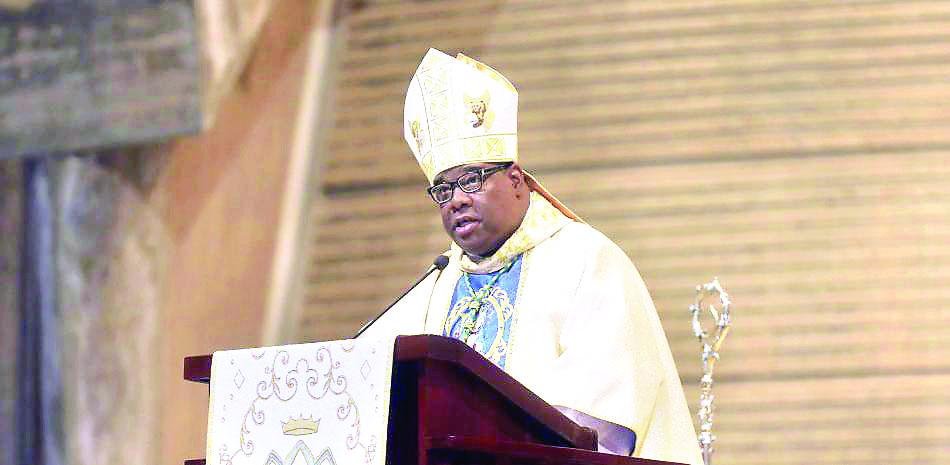
The bishop of the diocese of La Altagracia, Monsignor Jesús Castro Marte, pointed out that the entry into force of the new Penal Code, on August 3, will protect the “reputation and privacy” of Dominican citizens, who in his opinion are frequently violated on social networks and “some” media.
“There may be resistance groups in the different media, but the time has come to protect the reputation and privacy of human beings who are violated daily on social networks and other media. The attack on honor and honor, and the defamation of the people contemplated in Articles Nos. 208 and 209, will be a vector to go after the hitmen of morality and good customs,” said the bishop.
Article 208 of the new code states that defamation constitutes “the public allusion or imputation to a person, natural or legal, of a precise or concrete fact that affects their honor or consideration, good name, image, dignity and family integrity, by any public means, audiovisual or written, radio or television, streaming, electronic or in cyberspace.”
While 209 indicates that whoever makes a “public accusation to a person, physical or legal, of a precise or concrete fact that affects their honor or consideration, good name, image, dignity and family integrity, by any public means, audiovisual or written, radio or television, streaming, electronic or in cyberspace, with the purpose of obtaining for themselves or for a third party, a benefit of any nature, or for the victim or a third party to carry out, omit or tolerate an act that causes them a harm, and thereby forces or attempts to force the victim to give in to their demands, will be punished with a sentence of five to 10 years in prison and a fine of ten to twenty minimum wages in the public sector.”
Modernization of the judicial system
Through a publication on his X account, Castro Marte indicated that the new legal classifications for cyber and AI crimes allow the Dominican Republic’s judicial system to “modernize.”
“The country urgently needed to modernize its judicial system to classify cyber and AI crimes, toughen penalties against corruption and guarantee greater protection for women and minors to sustain a rule of law where healthy coexistence, governability and governance can take precedence,” said Castro Marte.
He himself stated that “there are no” perfect laws, but only the “possible law” according to the circumstances.