
Severe natural hazards—including hurricanes, floods, wildfires and volcanic eruptions—have displaced millions of people across the Caribbean in recent years, underscoring the growing urgency for stronger, more reliable data systems to guide emergency response and recovery. The increasing frequency and intensity of these events have exposed gaps in how displacement is tracked, limiting the effectiveness of efforts to protect lives and property.
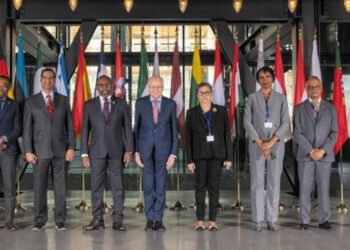
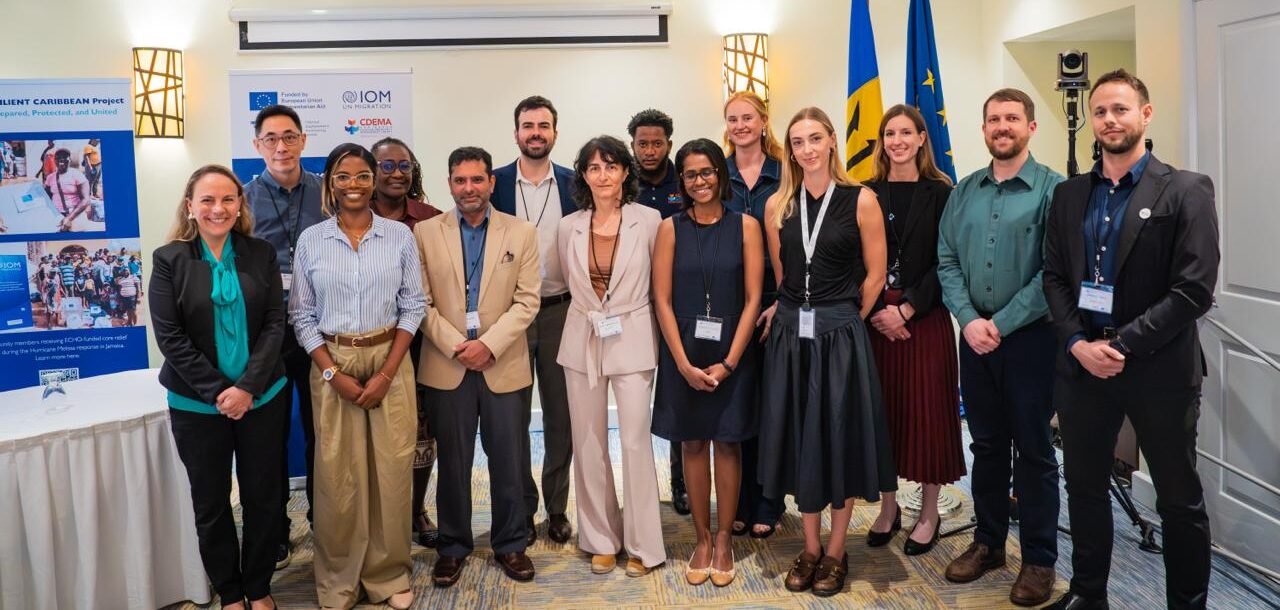
In response, the International Organization for Migration (IOM) brought together National Disaster Offices and regional partners for a two-and-a-half-day workshop in Barbados from April 23–24. A press release from the organization indicated that the meeting focused on improving the collection, analysis and application of displacement data across the region.
A key outcome of the workshop was progress toward establishing a harmonised Standard Operating Procedure (SOP) for displacement data, a framework that is being aligned with the Caribbean Disaster Emergency Management Agency’s Damage Assessment and Needs Analysis (DANA) system.
Once completed, the SOP is expected to enhance coordination and speed of response across 13 participating countries, while also supporting long-term recovery planning.
“For Barbados, the guiding principle is simple. Families first,” said Barbados’ Minister of Home Affairs and Information, Gregory Nicholls. “Good data helps responders locate families faster, match assistance with real needs, and protects dignity, especially when systems are under stress. Displacement data must always serve people and not processes.”
According to IOM Caribbean, during the sessions, participants engaged directly with a range of tools designed to strengthen data management. These included IOM’s Displacement Tracking Matrix (DTM), the IOM Shelter Portal and KoboToolbox for rapid field data collection. Advanced mapping and analytical tools, such as the Copernicus Emergency Management Service and MapAction, were also demonstrated to improve spatial analysis and planning capabilities.
Reportedly, insights drawn from CDEMA’s After Action Reviews following Hurricane Beryl and Hurricane Melissa, alongside country-level experiences, highlighted several shared priorities. These include the need for stronger baseline data before disasters occur, consistent definitions of displacement and shelter categories, and more efficient information-sharing between shelters, emergency operations centres and national systems.
“Preparedness is about learning from experience,” said Patrice Quesada, IOM Coordination Officer for the Caribbean and Chief of Mission for Barbados. “It is really about anticipating the next storm, not just responding to the last one. For that, we need to share experience with teams of experts who can trust and support each other when the time comes.”
Regional representatives stressed the practical advantages of adopting a unified approach to displacement data.
“We are very prone to various hazards, and we have a lot of vulnerable people,” said Sashagaye Vassell, Planning Analyst, The Office of Disaster Preparedness and Emergency Management, Jamaica. “With this SOP, Caribbean states can better coordinate among ourselves to support the vulnerable and find targeted solutions to respond efficiently and effectively.”
The workshop also addressed persistent challenges in identifying displaced individuals, particularly those who go unregistered.
“Sometimes displaced persons are not registered, making it very difficult to reach out to them,” said Livingston Pemberton, National Disaster Coordinator, National Emergency Management Agency, Saint Kitts and Nevis. “If you are not able to capture them within the system, it is very difficult to render the assistance that they need.”

He added: “The workshop clearly defines terms, gives us a methodology for capturing and analysing data, and allows us to provide the necessary information to national and regional mechanisms, so we can support displaced persons and bring them back to some semblance of normalcy as quickly as possible.”
As per the release, speakers also underscored the importance of ethical, people-focused data collection that reflects the diverse experiences of affected communities.
“Data collectors must understand the sensitivity of the situation,” said Yemi Knight Founder, AnchorBridge Environmental Inc. “A person has just gone through a disaster, and you may meet different types of people, so you have to have the cultural sensitivity to interact with them.”
Beyond immediate shelter needs, participants pointed to the wider societal implications of displacement.
“There are a lot of regional examples of people being displaced,” said Simon Alleyne. “It is more than just giving a person back a home. It is also ensuring that they can be reintegrated into society, including access to employment and their rights as citizens.”
It is reported that between 2012 and 2021, disasters led to an estimated 5.14 million new cases of internal displacement across the Caribbean. Over the past five years alone, approximately 2.6 million people have been impacted by hazards such as storms, flooding, wildfires and volcanic activity, reflecting the increasing complexity of disaster response in the region.
Supported by EU Humanitarian Aid through the Resilient Caribbean project, IOM Caribbean says that the workshop represents a major step toward strengthening data-driven disaster management systems.
Upcoming efforts will focus on enhancing the capacity of National Disaster Offices through training in data collection and analysis, vulnerability assessments, simulation exercises, and specialised instruction in Camp Coordination and Camp Management (CCCM).
Together, these initiatives aim to build a more coordinated, prepared and resilient Caribbean capable of responding effectively to future disasters.