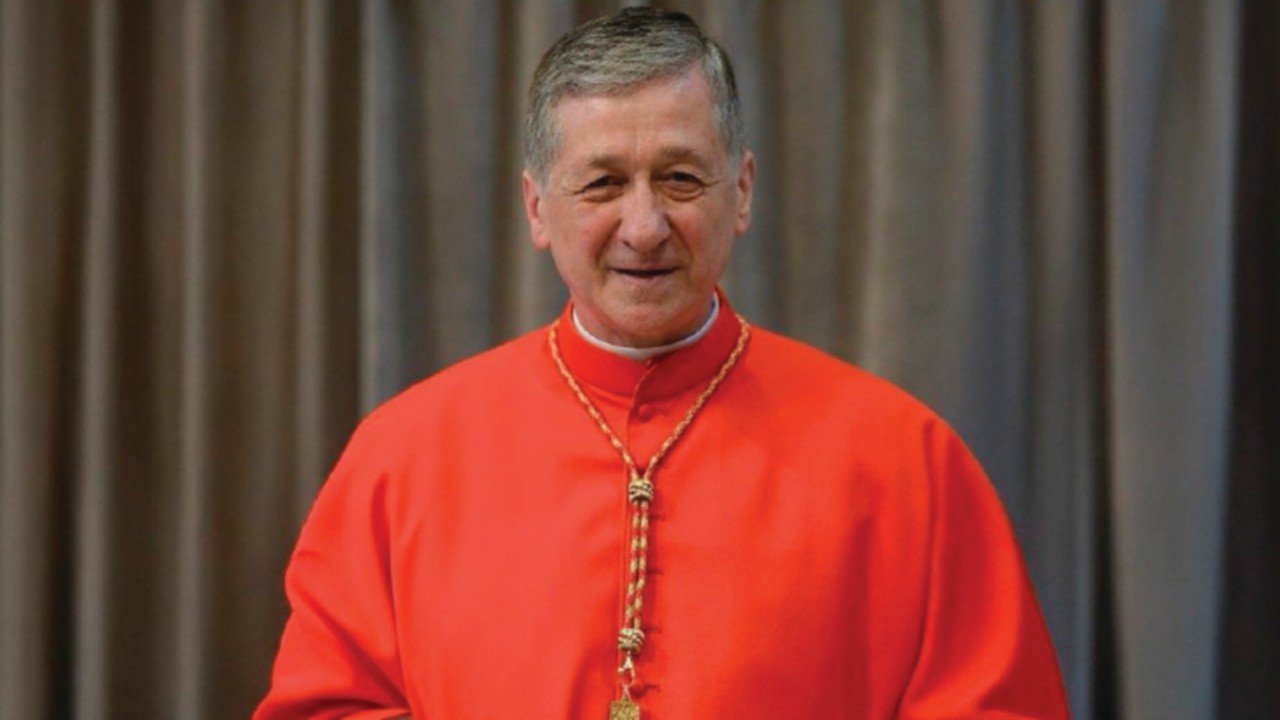
Of Davide Dionisi
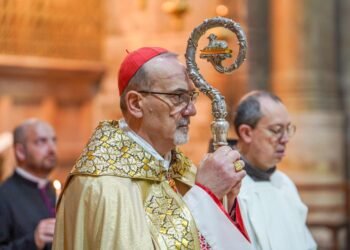
«The expression “peacemakers” is exceptional both for its linguistic rarity and for its provocative political context. The Beatitudes are the only time it appears in the Bible. And by calling peacemakers “sons of God”, Jesus subverts the Roman propaganda of Pax Romanawhich defines Caesar as a “maker of peace and son of God”. For Jesus, the true children of God are not the generals who pacify through conquest and military force, but rather those who enter into conflict for the sole purpose of re-establishing shalom, a Jewish concept of integrity and justice.” This is what Cardinal Blase Cupich, archbishop of Chicago, said during the ceremony awarding the “Blessed are the Peacemakers Award” of the Catholic Theological Union (CTU). This is the most prestigious annual award from CTU, considered the largest theology school in North America. Established in 1993, the award annually honors a leader who has distinguished himself for peace, unity and reconciliation. «Pope Leo I would listen: your hands are dripping with blood.” The cardinal noted with concern how, especially in the United States, the wartime reaction to the Gospel has been reduced to a technical debate to “reexamine, defend and refine the theory of just war.” «The first question is not: can this war be justified? The first question is the one that Jesus addresses in the Beatitudes: what does the Gospel ask of us today? What does it mean, concretely, to be a peacemaker?” he explained, underlining that «the Gaudium et spes teaches that peace is not the simple absence of war (…), but is precisely defined by justice, something to be built continuously. Peace, in other words, is a task.” For the Archbishop of Chicago «offering the other cheek means rejecting the role assigned by the aggressor; it denies violence the power to define the relationship. Instead of responding according to the logic of domination and humiliation, the disciple emerges completely. In this way, the act becomes a form of freedom: it shows injustice without reproducing it and interrupts the chain of retaliation at its origin. Therefore, it is a radically active and not passive attitude.” As for the commandment to love the enemy, the cardinal notes that «it is not a feeling but a practice that disarms hostility by refusing to reflect it. It creates an unprecedented space in which the other is no longer treated as an enemy to be defeated, but as a person to meet again.” The cardinal then referred to the “gamification” of war: “conflicts mediated through screens, reduced to images, statistics and strategic abstractions, where human lives risk being perceived as simple data rather than as people. We are not only in danger of tolerating violence, but also of ceasing to feel it, to the point that some, even in our own government, have no qualms about shamelessly turning the suffering of others into entertainment.” Quoting the late Jesuit theologian Cardinal Avery Dulles, Cardinal Cupich said: “Dialogue is about giving the person in front of you permission to tell you why they think you are wrong. These abilities and attitudes are not natural; they are formed over time, day after day, through commitment and discipline.” Then a passage on the limit of just war theory: «When it becomes the main lens through which we view the conflict, it risks narrowing our imagination to what can be allowed rather than broadening it to what is required. And what is required is more demanding.” Finally, the Pontiff as pastor, not strategist: «Pope Leo did not allow himself to be involved in abstract discussions on the justified use of force. Instead he called for a culture of peace, urging leaders to return to dialogue rather than escalation, and basing his appeal not on theory but on human suffering, recalling the story of a child he had met who was later killed in the war. He spoke as a pastor, not as a strategist. And we must do the same.”