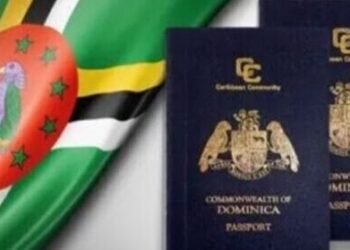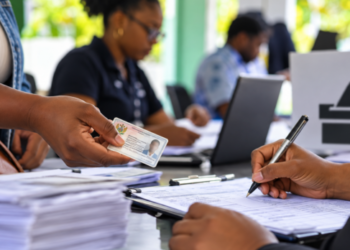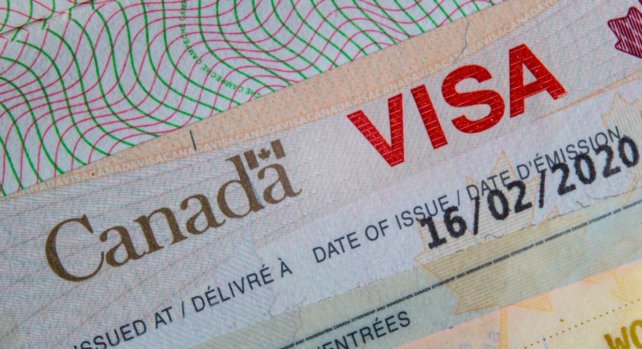

Canada is placing greater emphasis on document accuracy, identity verification and the credibility of travel plans as Caribbean nationals navigate the country’s visa system in 2026.
The five Caribbean countries attracting particular attention are Dominica, Antigua and Barbuda, Grenada, Saint Lucia, and Saint Kitts and Nevis.
Canadian immigration authorities are now placing increased emphasis on whether applications contain complete information, authentic supporting documents and a clear explanation of the applicant’s reason for travelling.
However, there is an important distinction: Canada has not announced a new visa ban or a country-specific verification regime targeting these five countries. Rather, the changes reflect a broader strengthening of immigration screening and identity checks that also affects applicants from many other countries.
Canada’s official entry requirements currently list Dominica and Grenada as visa-required countries, while Antigua and Barbuda, Saint Lucia and Saint Kitts and Nevis are also in the visa-required category, but some nationals can qualify for an electronic travel authorization (eTA) if they meet specific conditions.
The focus for Dominica, and the other Caribbean countries, is increasingly on ensuring that information supplied to Canadian immigration authorities can be verified.
A report by Travel And Tour World said Canada’s approach is centred on “application precision, transparency and stronger verification standards,” including scrutiny of personal details, supporting documents, financial information and stated travel intentions.
The publication said mistakes, missing information or inconsistencies between documents could lead to additional questions or delays.
For visa applicants from Dominica, this means particular attention should be paid to ensuring that passport information, employment details, financial documents, travel history and other supporting information are consistent throughout the application.
Canada’s official immigration website confirms that Dominican citizens currently need a valid visitor visa and passport to visit or transit through Canada.
Dominica is therefore in a different position from Caribbean countries such as Barbados and The Bahamas, whose citizens generally do not require a visitor visa for air travel to Canada and instead use the eTA system.
For Dominicans, the Canadian government says that in most cases fingerprints and a photograph must be provided after a visitor-visa application is submitted.
The five countries identified in the recent reporting are all members of the Caribbean’s citizenship-by-investment community.
The countries have been facing increased international scrutiny over citizenship-by-investment programmes and the verification of applicants who obtain passports through investment.
For Dominicans planning to travel to Canada, the practical message is straightforward: accuracy and consistency are increasingly important.
Applicants should make sure that their applications clearly establish: the purpose of the trip; their financial ability to fund the visit; their employment or other ties to Dominica; their intended length of stay; their previous travel history; their family and personal information; and their intention to leave Canada at the end of the authorised stay.
Canadian immigration guidance says applicants must convince an immigration officer that they have ties, such as a job, home, financial assets, or family, that will bring them back to their home country. Applicants must also demonstrate that they have enough money for their stay.
For Dominicans, perhaps the most important point is that the stronger verification measures should not be interpreted as a new Canadian visa ban on Dominica.
Canada’s official rules continue to provide a pathway for Dominican citizens to apply for visitor visas, and the government continues to process applications from Dominica.
Canada’s immigration information identifies Dominica’s applications with the Canadian High Commission in Port of Spain, Trinidad and Tobago, for applicants submitting documents by mail.