Synopsis: Phnom Penh says it will invoke the United Nations Convention on the Law of the Sea, which provides for compulsory conciliation, to resolve disputes and overlapping claims.
Cambodia has warned it will turn to international legal mechanisms under the United Nations Convention on the Law of the Sea (UNCLOS) if Thailand proceeds with a unilateral withdrawal from the 2001 Memorandum of Understanding, indicating a potential shift from bilateral negotiations to rules-based dispute settlement.
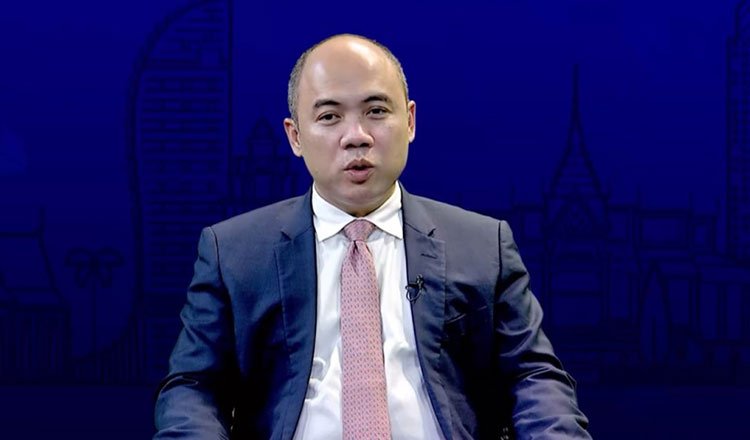
In an interview on National Television of Cambodia (TVK) yesterday, Kung Phoak, Secretary of State at the Ministry of Foreign Affairs and International Cooperation, said Cambodia is prepared to invoke UNCLOS procedures—particularly compulsory conciliation—to address overlapping maritime claims should the agreement be terminated.
“In the event that the Thai side unilaterally withdraws from this memorandum, Cambodia would be left with no choice but to rely upon international law and UNCLOS, particularly the mechanism of compulsory conciliation under this convention,” he said.
Cambodia ratified UNCLOS in January, more than 40 years after first signing the treaty in 1983. The convention officially entered into force for Cambodia on March 8.
UNCLOS provides a comprehensive legal framework governing maritime rights, boundaries and dispute resolution. One of its key features is compulsory conciliation, a mechanism designed to facilitate peaceful settlement when negotiations between states reach an impasse.
Under this process, an independent conciliation commission reviews the dispute, hears both parties, and proposes non-binding recommendations aimed at achieving a fair and equitable solution in line with international law. While the outcome is not legally binding, it carries diplomatic and legal weight and often shapes subsequent negotiations or arbitration.
Phoak said Cambodia’s consideration of UNCLOS reflects its commitment to resolving disputes through peaceful and lawful means.
“This mechanism is designed to help states resolve disputes peacefully and in accordance with international law,” he said, adding that Cambodia hopes for “a fair, just and lasting solution” that ensures stability and harmony.
Cambodia has long prioritised the 2001 MoU as the primary bilateral framework for managing overlapping claims in the Gulf of Thailand. The agreement established a mechanism for joint development of oil and gas resources and a pathway toward maritime boundary delimitation.
“For more than 25 years, this memorandum has played a crucial role as a mutually agreed bilateral framework,” Phoak said, warning that unilateral withdrawal would dismantle the only existing platform for direct negotiations.
“A unilateral withdrawal… would reject the only bilateral framework that both parties have relied upon for more than two decades,” he added.
Thailand’s Cabinet is expected to meet today to consider a proposal to withdraw from the MoU, citing limited progress in talks.
Acting Head of State Hun Sen has cautioned that scrapping the MoU could signal a move away from bilateralism toward internationalisation of the dispute—ironically pushing both sides closer to mechanisms like UNCLOS.
Foreign Minister Prak Sokhonn echoed this position, saying Cambodia would continue to pursue “peaceful, law-based mechanisms” if the MoU collapses.
“In the absence of this bilateral framework, Cambodia would continue its efforts to explore alternative avenues for peaceful resolution in accordance with international law,” he said.
Analysts warn that abandoning the MoU could complicate dispute management. While UNCLOS offers structured legal pathways, they are typically more formal, time-consuming and less flexible than bilateral arrangements.
Thai security expert Surachart Bamrungsuk has argued that the MoU already operates within the principles of UNCLOS, and removing it could dismantle years of negotiated understanding without guaranteeing a more effective solution.