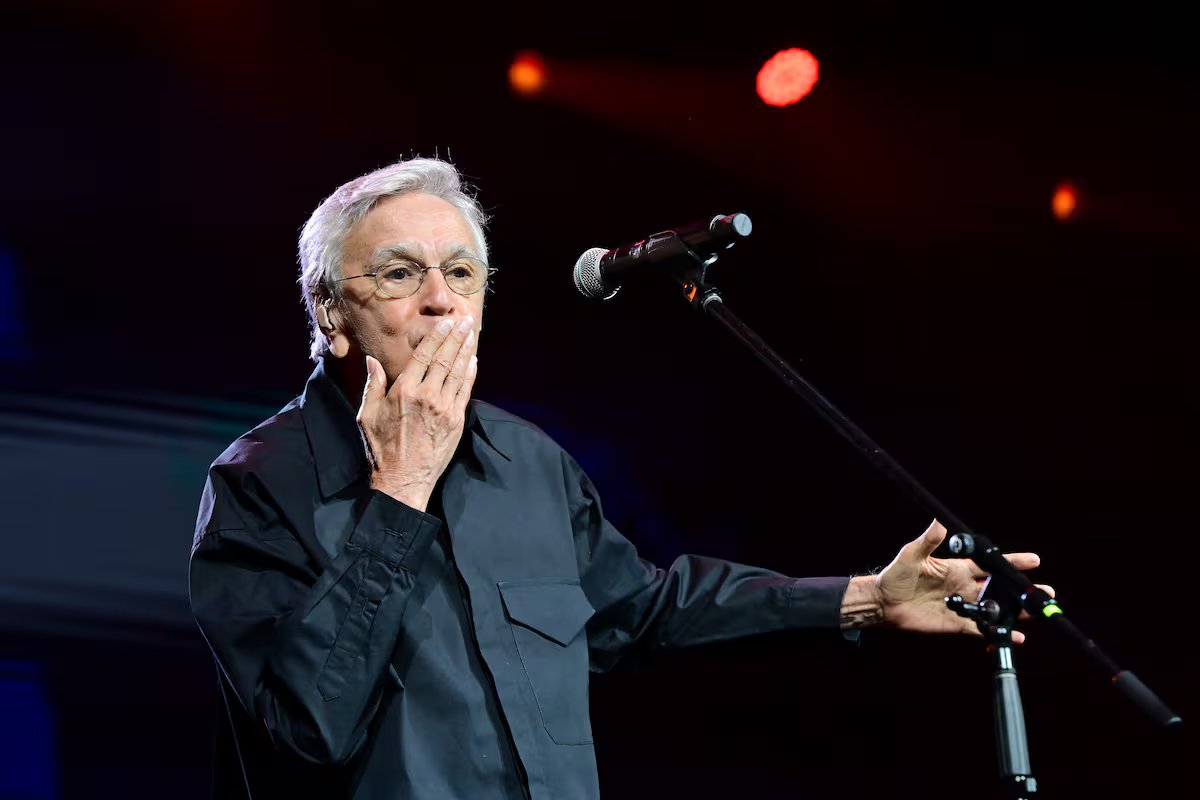
Caetano Velosofrom Lisbon, speaks slowly, via video call, with that mix of intellectual lucidity and Bahian melancholy that for six decades has turned each of his interviews into something more akin to a philosophical conversation than a simple promotion of albums or concerts. At 83 years oldthe Brazilian musician, faces a tour titled Caetano you celebrate us, that will pass through Spain (Madrid, June 4) and that he himself describes, without drama but honestly, as perhaps the last stop in our country. And that despite the close relationship it has always maintained with Spanish culture. But there is no monumental nostalgia in his words; rather physical fatigue, wise resignation, political concern and a bitter look—although not yet defeated—on the present. He speaks, without losing his passion, about the military dictatorship that his country suffered, about Silicon Valley, about The Beatles, about contemporary confusion and about a Brazil that, despite everything, continues to believe capable of “saying something to the world.”
Ask. How do you approach this tour? Has your relationship with your voice and the stage changed much over the years?
Answer. I’m old (laughs), so I arrived in Lisbon and stayed a few days before singing in Porto, and then came back here and then went to Madrid. I think this will be possible. Before I would go to places and go out to chat, eat, walk… This time I am more still, wanting to feel more rested.
Q. Many people think that these could be their last concerts in Spain. You yourself hinted at it in a video on Instagram.
R. I don’t think about it exactly that way, but I think it’s not very easy to think about taking long trips at this point in life. When you return to Brazil, you may no longer want to travel to distant places. Although you never know. Roberto Menescal (musician of the bossa nova), who is 88 years old, said he would never return to Japan because it is too far away… and now he might go again. As far as I’m concerned, it’s not clear to me.
Q. Does that change the way you plan a concert? One performance is not the same as “the last one.”
R. This concert is basically a reflection of what I have been doing in Brazil in recent times. But the choice of songs is very current because they are strong songs, confrontational with the absurdities of the world. From various periods of my life, yes, but now they sound different because the world seems so crazy.
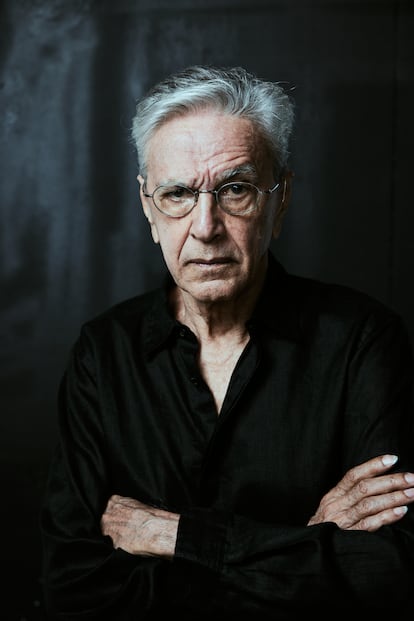
Q. There are veteran artists who end up becoming monuments. You, on the other hand, continue arguing with the present. Does nostalgia bother you?
R. No, but I feel aware of what’s happening. I see the complexity and difficulty of international and national issues. That even influences me in the choice of songs.
Q. Tropicalism advocated absorbing foreign culture instead of protecting itself from it. Is that idea still valid in the digital age?
R. The world has changed a lot. Those ideas were healthy for Brazil for many years. But today, with the digital world and technological changes, the question is different. Many new people constantly appear on the networks and it is very difficult to know who is really special. The very idea of the “cultural star” belongs more to the past. We wanted to recognize that Brazil was part of the world and absorb influences without submitting to them. That’s still important to me, although now everything happens much more quickly and confusingly.
Q. That movement took a lot from Anglo-Saxon culture, especially from The Beatles.
R. The Beatles were a very interesting phenomenon in the history of song and the world. We wanted to recognize their creative force without placing ourselves beneath them. Understanding that this was part of the world we lived in, but continuing to make Brazilian music. We admired the creative freedom they demonstrated and the way they constantly expanded their artistic possibilities, but the intention was never to imitate them, but rather to dialogue with that energy from our own tradition.
Q. He always fought cultural purism.
R. Because it cannot be true, especially in colonial countries like ours. In America there is no cultural purity. We wanted more creative energy and that is why we did not accept the closed defense of tradition. Later we discovered the ideas of Oswald de Andrade (poet and essayist) and that notion of “cultural anthropophagy”: devouring the influences of the dominant world to transform them into something ours. That complex vision of culture still seems valid to me.
Q. the song Joy, joy seemed to announce in 1968 a modern and open Brazil. What do you feel when you look at today’s Brazil?
R. It was already an ironic song. We were under the military dictatorship. There was everyday pleasure in the song, yes, but also a bitter look. Today that irony still exists. I made an album a few years ago, My coconut (from 2021), where there are songs that are very critical of the digital world and Silicon Valley. A bitter vision, although complex.
Q. You suffered prison and exile during the dictatorship. Are you worried about the return of certain authoritarian longings?
R. Yes. There are people who say publicly that they would like the military dictatorship to return. And they say it as if it were nothing. For me that is unbearable. Prison, confinement and exile were very painful experiences. We were imprisoned for two months, then several months confined in Salvador and then more than two years in exile. That even changed my way of facing the world.
Q. For years he was criticized by both conservatives and some sectors of the left. Did that make you feel freer?
R. Criticism from the left made us suffer, of course, but they were part of the cultural debate. It made me feel freer, of course. What was painful was the attitude of the military: the prison, the confinement, the exile. That even changed my courage.
Q. There is always beauty in his work, even when he talks about painful issues. Is aesthetics still a form of resistance?
R. Yes, without a doubt. It has to be like that.
Q. You championed aesthetic and sexual ambiguity long before it was common. Is there more real freedom today or simply more exposure?
R. Now it seems like there is more exposition than anything else. when I wrote Tropical truth (his 1997 autobiography) said the left needed to pay more attention to racial, sexual and behavioral issues. But today the amount of racialization, sexualization and emphasis on gender issues seems too much to me. That creates a lot of confusion.
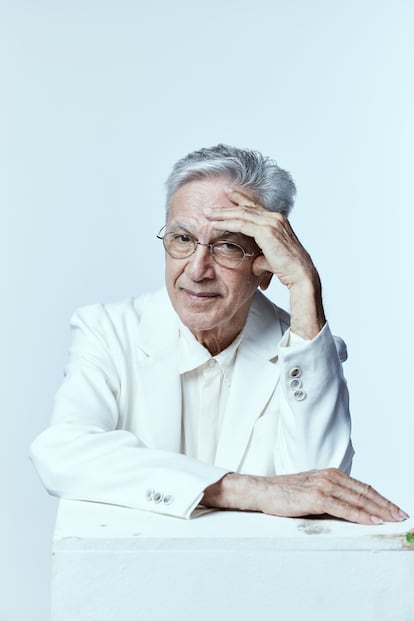
Q. Are you still excited about writing songs?
R. Yes, I feel the desire. But the capacity seems lower due to old age. Still, I continue to do it.
Q. What do you preserve from the young Bahian who arrived in São Paulo in the sixties?
R. I continue to reaffirm the interesting things that that young man began to do. But now I understand better what it means to be old and see how the world changes.
Q. When you think about the future of Brazil, does optimism or concern predominate in you?
R. Right now worry predominates in me; sometimes a kind of disenchantment. I try to avoid a too dreamy view of reality. Brazilian popular music still represents one of the country’s great cultural forces, but today things are so ugly… Brazil seems to be unable to save itself. But at the same time the feeling that it can still say something important to the world, contribute a different presence, another sensitivity, keeps coming back to me. That feeling hasn’t died inside me.