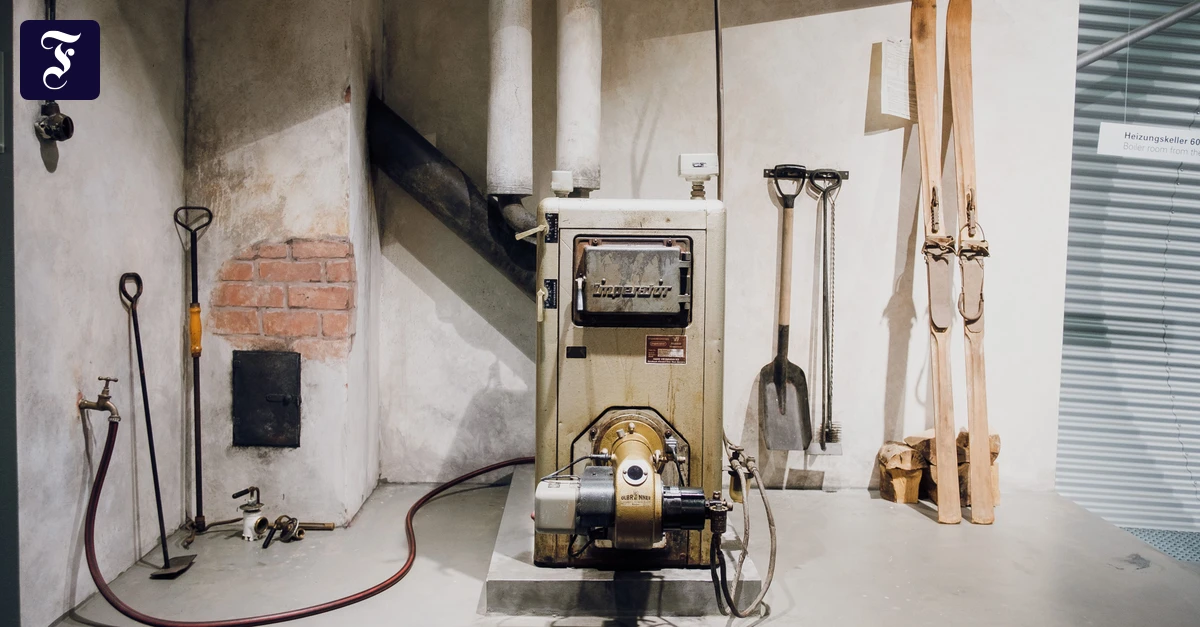
Green gases and oils as a supplement to Heat pump: In a new draft law, the black-red coalition continues to allow the new installation and operation of natural gas, liquid gas and oil heating systems. This means it is finally saying goodbye to the traffic light government’s controversial “heating law”.
This would only have permitted new boilers if they ran on 65 percent renewable energy. This was understood as a one-sided preference for green-electric heat pumps and district heating and was reviled as an invasive “heating hammer” in private basements.
According to the new draft, which is available to the FAZ, fossil heat generators will remain permitted until further notice, both existing and additional ones. From 2029 onwards, the operators of new plants – and only those – will have to fuel them with a growing amount of green energy sources: biomethane, bio-oil, biogenic liquid gas or climate-neutral types of hydrogen.
The organic stairs are coming
According to a “biostaircase”, new users, such as homeowners, have to ensure that from 2029 at least ten percent of the fuel comes from climate-friendly sources. In 2030 it must be 15 percent, in 2035 then 30 percent and finally in 2040 60 percent.
And then? The existing law states: “Boilers may only be operated with fossil fuels until December 31, 2044.” The underlying paragraph 72 will now be completely deleted. The expiry date at the end of 2024 will then no longer formally apply.
Is the 2045 climate target in question?
It could be argued that they are not needed at all, since Germany wants to be greenhouse gas neutral by 2045 anyway. Then fossil fuels will no longer be allowed to be burned. Nevertheless, the deletion raises questions: Does it anticipate an attempt to question the 2045 climate target as a whole? Because the calls are getting louder to move towards the EU target of 2050 or to be satisfied with 90 percent in 2045.
Accordingly, the middle class and economic union (WITH) of the CDU and its employee wing CDA. Signals in this direction also came from industry. Federal Chairwoman of MIT is Gitta Connemann, Parliamentary State Secretary to Economics Minister Katherina Reiche (both CDU). Their ministry, together with the Ministry of Justice, is in charge of the new law.
“Achieve climate-neutral building stock by 2050”
In fact, the target year in the current draft is 2050 and not 2045. It says: “The law contributes to achieving the goal of an almost climate-neutral building stock by 2050 (…).” Construction Minister Verena Hubertz (SPD) countered the impression on Wednesday that CO₂ neutrality was being watered down. “The 2045 climate target remains untouched, and the Building Modernization Act will make its contribution,” she told Reuters. “We are bound by the Climate Protection Act.” The target year there is 2045.
Overall, the new “Building Modernization Act” (GMG) is intended to change and replace the existing Building Energy Act (GEG) in such a way that its components, colloquially referred to as the “Heating Act”, do not apply. The coalition agreement explicitly states: “We will abolish the heating law.”
The present draft bill aims to fulfill this promise, which states: “With this law, the Heating Act will be abolished and the GEG will be replaced by the new GMG. The GMG is more open to technology, more flexible, more practical and simpler. In the future, the owner will have more freedom of decision in the event of a heating replacement.”
Tenants are relieved
However, the template also expressly states: “The climate protection goals apply, the new law will support the change to climate-friendly heating systems.” These could be heat pumps, district heating, hybrid generators or biomass heating. But “gas and oil heating systems continue to be available” as long as they follow the organic staircase. All the necessary specifications will be “evaluated in 2030 with regard to their contribution to achieving climate protection goals in the building sector”.
It recently became known that the coalition wants to protect tenants from additional burdens. They should share the CO₂ costs, the gas network fees and the additional expenses for the organic staircase equally with the homeowners (FAZ from May 1st).
Net relief of five billion euros per year for citizens
The amendment not only makes the heating operators responsible for their ecological obligations, but also the “distributors”, the gas and oil suppliers. From 2028 onwards – one year before the organic staircase – they will have to add more and more CO₂-neutral energy sources to their fuels. A balance sheet “green gas quota” then applies. This can be offset against the organic staircase.
The bill, which has now gone to the departmental vote, promises citizens an annual net relief of five billion euros, but does not quantify this in more detail. The economy is expected to save 2.3 billion euros. Environmentalists and the green opposition are negative about the plans.
The leading association of the housing industry GdW, however, called the project an “important step”. However, there are “question marks with regard to the practicality, cost-effectiveness and scalability of rental housing stocks”. Especially regarding fuel quotas
Biofuels are missing
The lack of availability of biofuels is repeatedly criticized. It will not be easy to mobilize sufficient quantities at affordable prices within just two or three years, they say.
These objections are contradicted by an as yet unpublished study,
However, that doesn’t mean that the transition will be easy. “The real sticking point is costs and distribution,” says Epico founder Bernd Weber. “During the ramp-up, buildings, industry, transport and the electricity system compete for limited quantities. The draft bill fails to provide a strategic answer to this.”
Incentives for switching needed
What will be crucial is that ultimately more heat pumps and fewer gas heaters are used. Then the additional costs for households remained “manageable,” said Weber. “On the other hand, if gas demand remains high, costs could gallop away.”
In order to encourage switching, low electricity costs and strong CO₂ pricing are necessary. Green gases should primarily be used where there is no alternative and where there is sufficient money. So not in heating systems, but in industry, for example.
For 2029, the analysis assumes ten percent of green fuels in the organic staircase and three percent in the green gas quota. In the middle scenario, the annual costs for an average single-family home increase by 100 euros or nine percent for the stairs and by 30 euros or three percent for the quota compared to the continued use of pure natural gas plus CO₂ costs.