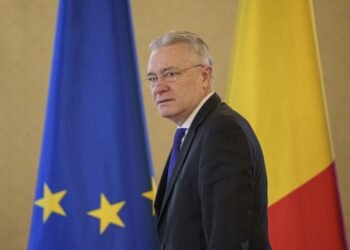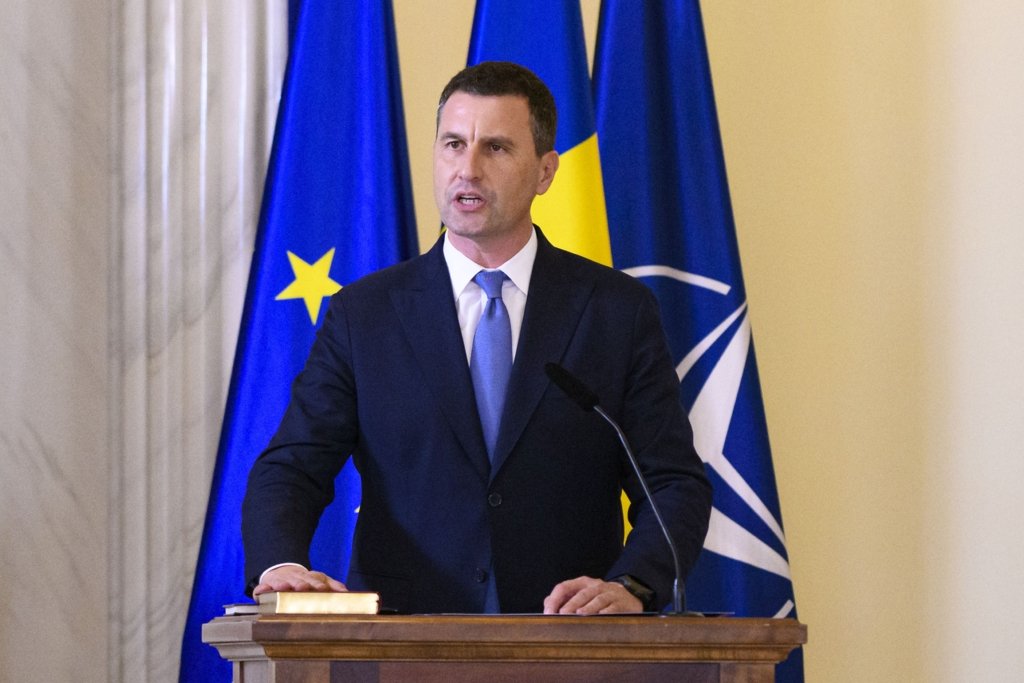

Deputy Prime Minister Tanczos Barna, Acting Minister of Agriculture (UDMR). PHOTO / Hepta
Deputy Prime Minister Tánczos Barna, who also provides the interim at the Ministry of Agriculture, admitted in a televised intervention on Sunday that the package of measures implemented last year to correct the budget deficit had direct consequences on the local economy.
The official said that these decisions have visibly curbed domestic demand and population consumption. “Certainly, last year’s measures affected demand and consumption. That’s right,” said Barna, on Sunday, in an intervention at Digi24.
According to Barna, the critical point in which Romania found itself cannot be attributed exclusively to these recent fiscal adjustments. He placed the start of macroeconomic difficulties at the end of 2024, exactly around the time he took over the Finance portfolio. “Any specialist in macroeconomics knows that no crisis like the one Romania was in – the term or reference point is December 2024, because that’s when we got to the finances – no macroeconomic slippage can be solved only by spending cuts and austerity. The economic development part is also needed,” said the politician UDMR.
The Deputy Prime Minister expressly admitted that the coalition partners from P.S.D they had the right vision when they demanded that economic stimulus programs be implemented along with austerity measures. “Without just and perhaps, colleagues from P.S.D they were right when they insisted a lot on economic recovery measures. The two things have to go hand in hand,” Barna said.
At the same time, the official categorically rejected the hypothesis that the current tense economic situation was only caused by the latest fiscal adjustments. He pointed out that the problem has older roots and the situation was already serious before these corrections were applied. “Those measures alone would not have put us in the situation we are in if everything was pretty rosy and everything was going perfectly until December 2024,” he said. The statements come amid heated debates on the effectiveness of the adjustment measures and their effect on the business environment and the purchasing power of the population.
The economic figures that give him a headache Ilia Bolojan
During Ilie Bolojan’s tenure as prime minister with full functions, Romania’s economy went through a sharp drop in consumption, after several years of strong growth.
Data from the National Institute of Statistics (INS) shows that retail sales, which directly measure people’s spending, began to decline from the second half of 2025, with the trend intensifying in 2026. In the whole of 2025, retail sales were 2% lower than the previous year, and in January 2026 there was a sharp drop of 25.3% compared to the previous month. This contraction of private consumption, which had been an important engine of Romania’s growth in recent years, deeply affected the entire economy.
As a result, Romania’s Gross Domestic Product (GDP) decreased in the first quarter of 2026 by 1.7% compared to the same period in 2025, which represented the largest economic decline in the European Union at that time.
Inflationary pressure remained a serious problem, eroding people’s incomes and worsening economic conditions. In June 2025, the annual inflation rate was 5.66%, but it increased rapidly, exceeding 10% in the following months. In April 2026, inflation reached 10.71%, according to official INS data. This increase was caused by the increase in VAT and fuel prices.
The labor market has also felt the worsening of economic conditions, and the unemployment rate has risen noticeably. In June 2025, unemployment (in seasonally adjusted form) was 5.8%. During the year, it rose steadily, reaching 6% in November 2025, 6.3% at the end of the year, and in the first months of 2026 it continued to climb. This deterioration shows that firms have experienced difficulties due to the drop in demand, which is why some resorted to layoffs and others postponed hiring.
For the population, the combined effects of high inflation and incomes that have not kept pace have resulted in a sharp decline in purchasing power. This is also seen in the evolution of the real salary, whose index decreased by 5.5% in January 2026 compared to the same month of the previous year. Immediately after the appointment of Prime Minister Ilie Bolojan, there was a decrease in the real salary, which became negative starting from July 2025.
In this context, Romanians were forced to prioritize their strictly necessary expenses, postponing or giving up completely the purchases of less essential goods, such as clothes, electronics or furniture, whose sales have dropped considerably.