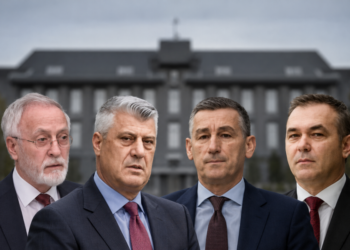
Berisha in Strasbourg: The former leaders of the KLA were convicted of a chain of command that they had never structured

tidings

Express Newspaper
29/09/2026 16:16
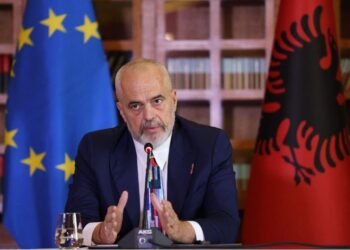
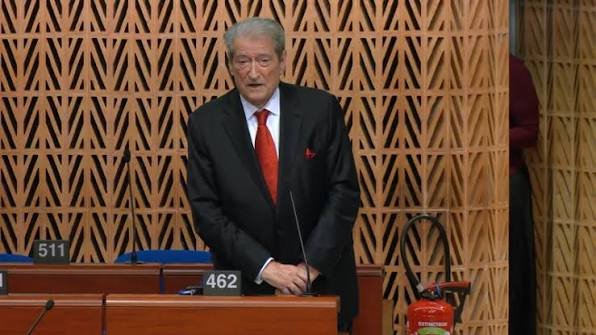
The President of the DP, Sali Berisha, at the Parliamentary Assembly of the Council of Europe, also spoke about the punishment of the former leaders of the KLA.
Berisha has emphasized that tens of thousands of citizens have protested every day in Pristina since the conviction of the former leaders of the KLA, adding that no one stands up against the punishment of crimes, but, added Berisha, some comparisons and the lack of clear evidence for concrete crimes have caused public anger.
Berisha’s speech:
Madam President,
The repeated elections in Kosovo, in terms of respecting the international principles for parliamentary elections, regardless of their motive, were conducted in accordance with these principles.
However, I agree with the previous speakers that their frequency, due to the election of the President, should be avoided. For this, the assistance of the Council of Europe and the Venice Commission is needed to find a more viable way to elect the President of the Republic.
Madam President,
During these last days, after the unexpected sentences of the former leaders of the Kosovo Liberation Army (KLA) by the Kosovo court in The Hague, tens of thousands of citizens have protested every day in Pristina. No one stands up against the punishment of crimes, but some comparisons and the lack of clear evidence of concrete crimes have caused public outrage.
For example, the UN Tribunal in The Hague condemned the commander of the Pristina Corps, Mr. Vladimir LAZAREVIC, and the Chief of the General Staff of the Yugoslav Army, Mr. Dragoljub OJDANIÇ, with 15 years in prison for crimes against humanity and war crimes during Operation “Horseshoe” in Pristina.
In contrast, Kosovo’s political leaders were sentenced to a total of 84 years in prison, based on a chain of command that they never had in a structured way.
Recently, the sentences handed down by the Kosovo court in The Hague have surprisingly followed clear ethnic lines. Contrary to its statute, the court prosecuted only the victim and not the aggressor. Therefore, let’s hope that the Court of Appeal will consider their cases more objectively.
The burial with state honors of the Bosnian butcher, the orchestrator of Europe’s largest genocide since World War II in Srebrenica, was a second execution, 31 years later, of 8,500 boys and men, solely because of their religion and ethnicity.
This is a grave insult to all humanity, an attitude of Belgrade and Mr. Aleksandar VUCIÇ, who wants to win the elections with the ghost of Mr. Ratko MLADIC.
I believe that this institution should take clear actions against these risks.