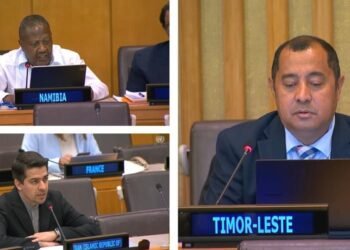
New York (United Nations), June 19, 2026 (SPS) – African countries reaffirmed their demand to respect the right of the Sahrawi people to self-determination and independence, during their speeches before the substantive session of the Special Committee on the Situation with regard to the Implementation of the Declaration on Granting Independence to Colonial Countries and Peoples (the Committee of Twenty-Four), which began its work on Monday at the United Nations Headquarters in New York.
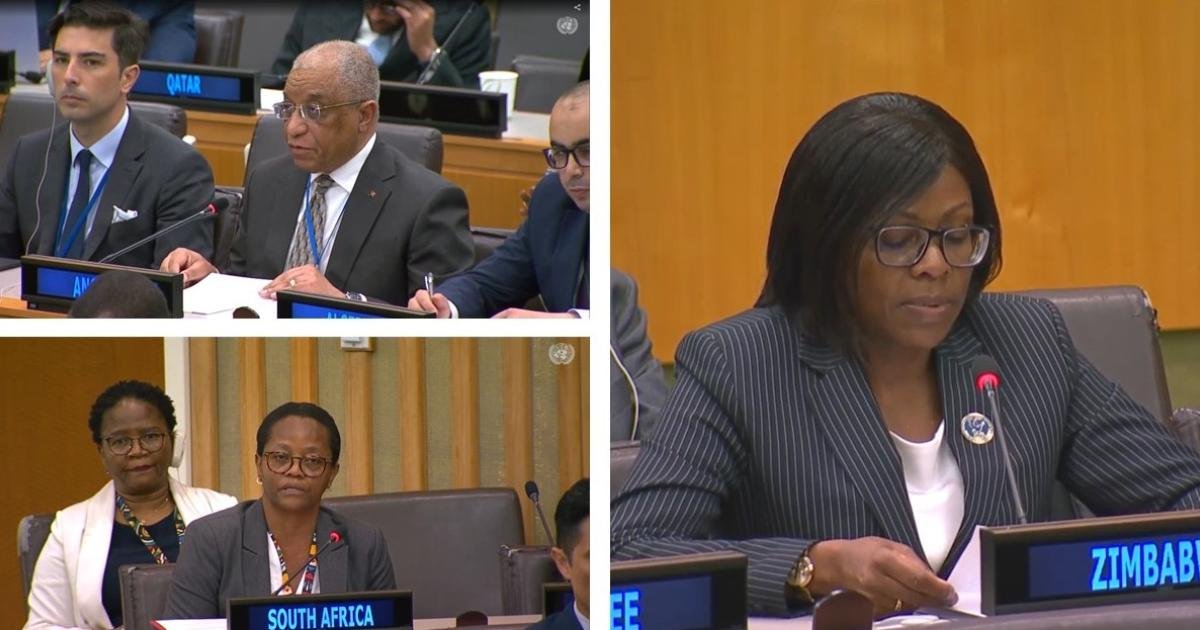
The representative of South Africa reaffirmed her country’s firm solidarity with the people of Western Sahara, whose freedom has been delayed for a very long time, and called for redoubling the efforts of the United Nations to reach a just, lasting and mutually acceptable political solution that guarantees the people of Western Sahara their right to self-determination, stressing the need for the United Nations to take urgent steps to hold this long-promised referendum on self-determination so that the Sahrawi people can determine their fate as their fundamental right under international law.
For his part, the representative of Angola stressed that his country remains strongly opposed to colonialism in all its forms and manifestations in line with the Charter of the United Nations and international law, and stated in this context that Western Sahara is still included in the United Nations list of territories subject to decolonization, reiterating Angola’s support for the inalienable right of the Sahrawi people to self-determination in accordance with the relevant United Nations and African Union resolutions.
He also stressed the importance of seeking to reach a realistic, practical and mutually acceptable political solution within the framework of the political process led by the United Nations under the auspices of the Secretary-General and his Personal Envoy, Mr. Staffan de Mistura, expressing Angola’s support for considering a Special Committee visit to the region to enhance understanding of the situation on the ground and support the political process. He also stressed the importance of cooperation between the United Nations and the African Union to push towards a peaceful, negotiated and sustainable solution.
The representative of Zimbabwe noted that the situation in Western Sahara constitutes a stark reminder that the decolonization agenda has not yet been completed, as the issue of Western Sahara, as the last colony in Africa, remains on the agenda of the Fourth Committee of the United Nations for decades without reaching a solution.
She stressed her country’s firm conviction that the people of Western Sahara enjoy an inherent and inalienable right to self-determination in accordance with the Charter of the United Nations, the relevant General Assembly and Security Council resolutions, and the resolutions of the African Union.
She reiterated Zimbabwe’s support for the United Nations settlement plan and holding a free, fair and credible referendum under the auspices of the United Nations Mission for the Referendum in Western Sahara (MINURSO), stressing that the settlement plan is a consensual solution that has received the support of the international community and represents the most credible path towards achieving lasting peace and stability, not only for Western Sahara, but for the entire region.
In conclusion, the Special Committee called for adhering to its firm position on Western Sahara as a territory subject to decolonization and for the need to make concrete efforts to ensure that the Sahrawi people are able to exercise their right to determine their future without any external interference. (SPA)