YOUTH
IT was not a government programme that turned around one of Popondetta’s most troubled settlements.
It was a Seventh-Day Adventist (SDA) evangelistic campaign that wove new hope for Bangoho.
Bangoho waterfront in Ward 1 in Popondetta Urban LLG had earned itself a name over the years. Bangoho Ward 1, was a name of a place locals associated with pickpockets, homebrew, drugs and unemployed youths hanging around with nowhere to go and nothing to lose.
For years it was the kind of settlement people passed through quickly and talked about carefully. Parents steered their children away from it. People kept their distance. The reputation stuck and nobody expected that to change.
The change began when the SDA Church brought its PNG for Christ evangelism campaign to Popondetta. The programme was nationwide, moving from province to province, drawing crowds and calling communities to faith.

From Bangoho, it drew some unlikely faces. Among those who came forward to be baptised were young men from the settlement, the same ones the community had quietly written off, the ones people had stopped expecting anything from. They sat in the meetings, they listened, and when the call came, they responded by choosing change.
When the campaign ended and the visiting evangelists left Bongoho, local elder, Robin Aringa saw an opportunity that others might have missed. He gathered the newly converted youths and gave them a challenge that would stay with them long after the revival was over.
“Why not we build a church in our community, so we can help rehabilitate our sons and daughters?” he asked.
We change the community and our youths by leading them to Christ, and letting God do His part in their lives. This is for the betterment of Oro Province and this country as a whole.”
It was a simple question though the answer to that would take years of work. The settlement’s old sago-thatched church had long since rotted through and collapsed.
There was no budget set aside to replace it, provincial government or district help sought.
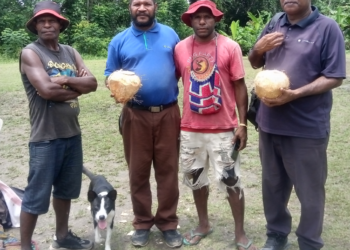
Community leader Rau Aku Kenas decided that was not going to stop them. He went to a landowner Sidney Humborata, who agreed without hesitation to donate a piece of land for the project.
Kenas then engaged a local man named Abel, who knew the bushes by heart, which trees to look for and where to find them. He then mobilised youths to look for timber to build their church. They harvested timber by hand and carried it out on their shoulders.
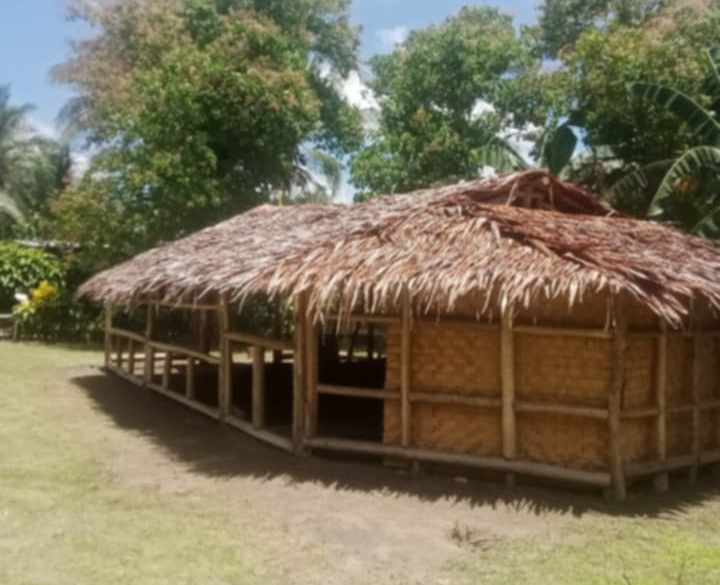
Back at the site, they cut, shaped and assembled it into a bush-material church hut with rough walls, a simple roof, a dirt floor, and enough room for a congregation to gather. It was not much. But it was theirs, the Bangoho Waterfront SDA Church.
Word moved through the settlement the way news does in a close community. Person to person, door to door. Saturdays began to fill up. Young men who had spent their weekends drinking homebrew or picking pockets started appearing at the door of the bush hut instead. Some came because a family member brought them. Some came out of curiosity. Others came because something in them had changed and they were looking for somewhere to put it.
“Many youths came and gave up their life of crime,” Kenas said.

“They turned to be good citizens.”
Yet, they were faced with another challenge. A bush hut built by hand in the tropics was never going to last forever. A year and a half later, the walls began to soften and sag. When the wet season arrived with its full weight, rain pushed through the roof and ran down the inside walls.
The congregation were faced with a choice of patching what they had and keep hoping, or decide that what had started deserved something more permanent. Through much thought, the congregation made a decision for a permanent church.
Members began putting in money from their own pockets. There was no fundraising drive aimed at outsiders. The people of Bangoho reached for their own resources and gave, guided by a theme they had chosen for themselves: Give to God, and help change our community.
Kenas took on the job of clearing the new site. He drew up the plan, coordinated the labour and when progress slowed, he kept the project moving and is still doing that.
Walking through Bangoho waterfront, a timber frame of a permanent church can be seen taking shape in ward 1. Corrugated roofing iron sits stacked on site, ready to go up. The walls and floor were still ahead of them. But the frame was straight, solid and built entirely by local hands without any help from outside.
The settlement around it feels different to the place it once was. Residents who once chose their words carefully when talking about trouble in Ward 1 now speak more openly about what they see. Crime in the settlement, they say, has significantly reduced.
The young men who gave Bangoho its reputation as a place to avoid are the same ones now showing up in the mornings to measure timber, set posts and haul iron across the site in the afternoon heat. For Kenas, the building going up is only part of the story. The bigger change, he says, is in the people.
“We change the community and our youths by leading them to Christ, and let God do His part in their lives,” he said.
“This is for the betterment of Oro Province and this country as a whole.”
The motto the congregation has built the project around is short enough to carry anywhere: Do your Part and God will do the rest.
The frame is up, but the walls and floor are next.
Every contribution, the congregation says, goes directly to the building.
A local business, the Northern Province Resources Limited (NPRL), a business arm of the Oro Provincial Government had also donated building materials for the project.
Philip Embahe, manager of NPRL, donated five sheets of roofing iron on behalf of the company to the project, sourced from HQH Hardware in Popondetta and has pledged to contribute more.
It was the kind of response the congregation had hoped their story would inspire. The donation by the local business has shown what was possible when the wider community steps in. A local business man Du Gaine also contributed K200 cash to the project.
The congregation had contributed two sheets of roofing iron. So far the church now has a total of 14 sheets of roofing iron all 14 feet.
The congregation calls on all kind-hearted Oro citizens and Papua New Guineans for support in completing their church.
What the church project needs are building materials including roofing iron, nails, cement, timber and paint, or donate funds toward completion.
For a settlement that Popondetta had quietly given up on, Bangoho has already done what no funded programme managed to achieve.
It changed itself, from the inside, powered entirely by its own people.