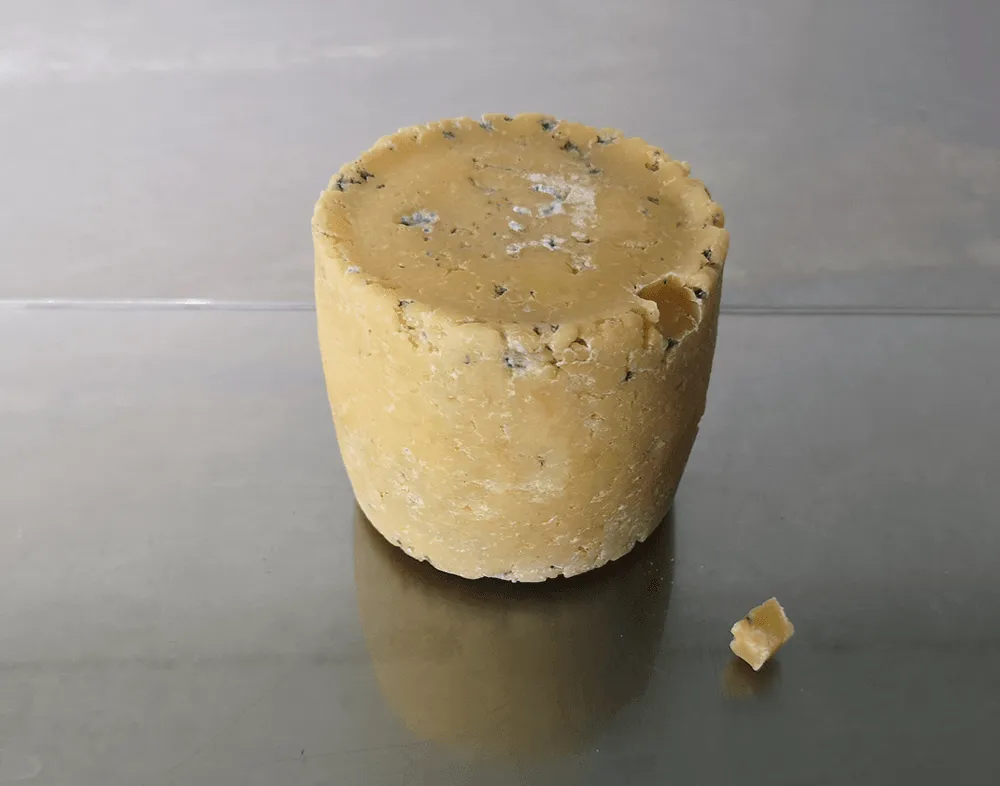
The project that was presented in London a few years ago caused both fascination and disbelief. The focus was on cheeses produced with the help of bacteria collected from the bodies of famous British personalities, and the whole idea was part of a wider story about the relationship of people to microorganisms and the future of food.
The unusual exhibits were shown in 2019 at the Victoria and Albert Museum as part of the exhibition “Food: Bigger than the Plate”. The aim of the exhibition was to explore various aspects of food production and the role of microorganisms in everyday life.
In the project, called “Selfmade”, scientists and artists took samples of bacteria from different parts of the participants’ bodies, including the armpits, nose, ears and navel. After laboratory cultivation, the microorganisms were used as starter cultures for cheese production.
In this way, bacteria characteristic of human skin participated in the process of turning milk into cheese.
Among the famous people who agreed to participate in the project were chef Heston Blumenthal, musician Alex James from the group Blur, rapper Professor Green, writer Ruby Tandoh and Graham “Suggs” McPherson, singer of the group Madness.
Each participant was associated with a specific type of cheese, including cheddar, mozzarella and stilton.
The authors of the project stated that one of the basic ideas was to question the common understanding that bacteria are exclusively associated with dirt or danger. They pointed to the fact that many food products would not exist without the action of microorganisms, including yogurt, bread, wine, beer and cheese.
The cheeses produced during the project were not intended for consumption. Instead, they are displayed under glass domes as a fusion of artistic and scientific work.
Their authors described them as “microbial portraits” of famous people, so instead of classic photos or autographs, visitors could see cheese made with bacteria characteristic of each participant.
Although the concept caused a feeling of discomfort among some of the public, the organizers emphasized that the goal was not only to attract attention. The exhibition was supposed to encourage thinking about food, the human body, hygiene and the role of bacteria in everyday life.
Regardless of the reactions, the project generated a lot of public interest and opened up a discussion about the boundaries between science, art and the food industry.