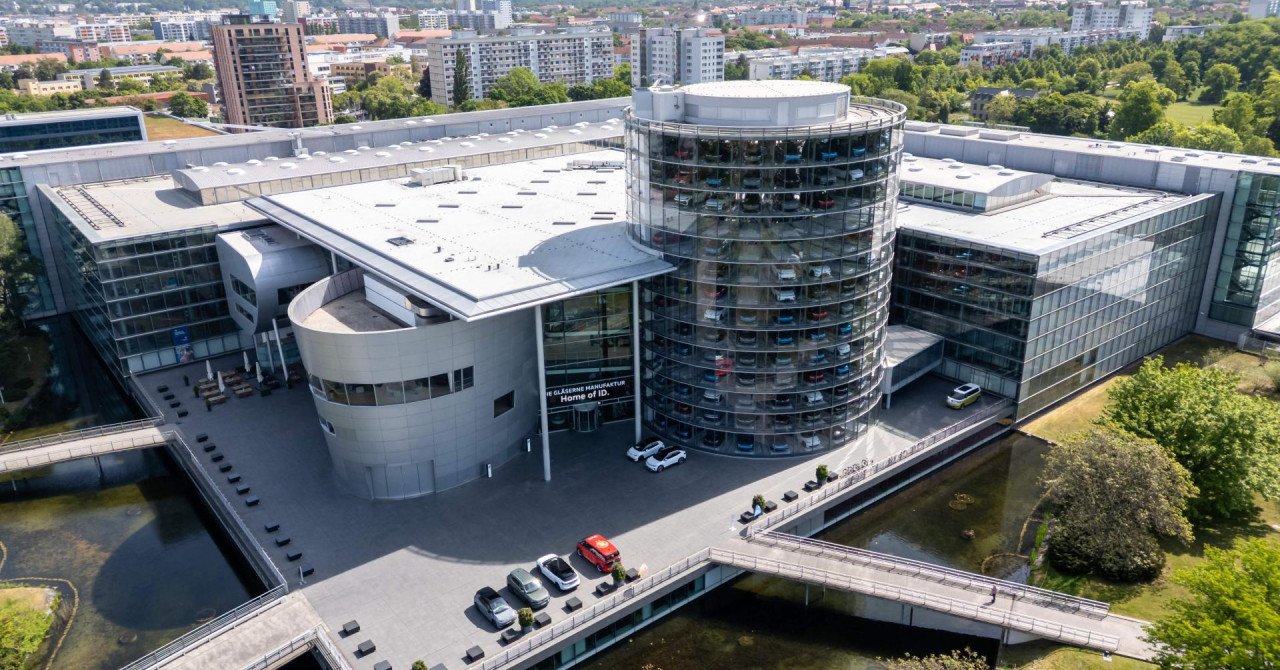
Chinese manufacturer BYD is reportedly considering buying one of Volkswagen’s most recognizable plants in Germany, CarNewsChina claims. It is about the “Glass Factory” in Dresden, a facility that ceased production at the end of 2025 and thus opened the question of its future.
If the plans are confirmed, it would be a move that goes beyond pure industrial logic. This factory has a strong symbolic value. It was opened in 2002 as a project Ferdinand Piëch and for a long time represented Volkswagen’s technological showcase. Cult models such as luxury ones were produced there Phaetonand later the electric e-Golf and ID.3.
According to available information, the concept under consideration involves the division of space. One part would be intended for the production of electric vehicles of the brand BYDwhile the other would become a technology center in collaboration with local institutions, including the Technical University of Dresden. Such a combination of production and development could further strengthen the presence of the Chinese manufacturer in Europe.
For BYD, entering Germany would have multiple benefits. Local production would reduce the impact of customs duties on the import of vehicles from China, but also bring additional credibility through the label “Made in Germany”, which continues to have a strong influence on the perception of quality among customers.
On the other hand, Volkswagen is in the adjustment phase. It is facing excess production capacity, weaker demand for electric vehicles than expected, and increasing pressure from the competition. In such a context, the sale of plants can be a way to reduce costs and use resources more efficiently.
The CEO himself Oliver Blume recently indicated that cooperation with Chinese manufacturers could be a “smart solution” to the current challenges.
It is important to emphasize that the talks have not yet been officially confirmed, and Volkswagen has already denied some of the allegations. Nevertheless, the very possibility of a Chinese manufacturer taking over one of the most symbolically important German factories clearly shows how global relations in the automotive industry are rapidly changing.