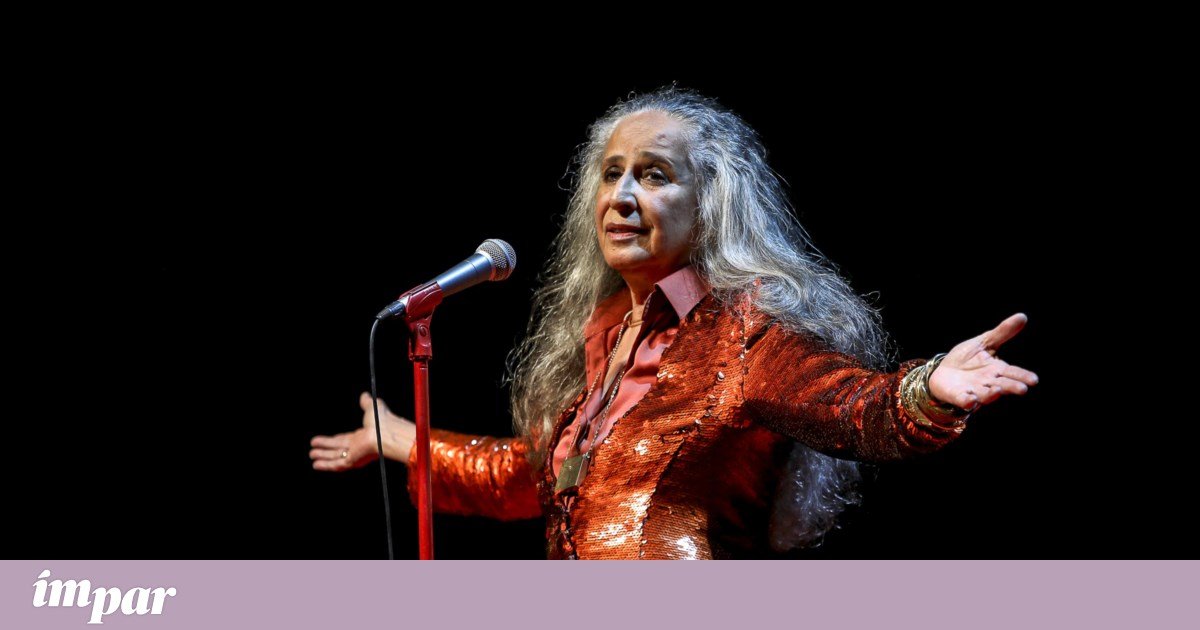
Bare feet, flowing hair, dramatic gestures, a scene in which music, poetry and devotion intertwine. Few Brazilian artists have created iconography as immediately recognizable as Maria Bethânia.
At 80 years old, which she turns this June 18th, and after a six-decade career, Bethânia remains a singular figure in Brazilian culture — not only for the presence she created on stage, but for the way she led her career.
Throughout this period, he went through movements, fads and transformations in the music industry without giving up his own criteria. If she belonged to any artistic movement, it was the one she created.
And, today, it is far from just occupying the place of cultural heritage. Tireless, he continues to work and figures among Brazilian artists whose new projects still attract immediate attention.
In recent years, alongside his brother, Caetano Veloso, he has starred in one of the most celebrated stadium tours in the country. Then, in 2025, he marked his 60th anniversary with a special show and, last month, he took the stage alongside Shakira, singing for a beach Crowded Copacabana.
This success is a reflection of an individuality conceived since the 1960s. While Caetano, Gilberto Gil and other young artists from Salvador delved into the discoveries of bossa nova, Bethânia was already heading in another direction.
How does the book register? Maria Bethânia, First Years – From the Bahian Cultural Scene to the Brazilian Musical Theatershe admired João Gilbertobut did not wish to adhere to his style. I preferred the emotional charge of the old sambas and sambas-canção by Noel Rosa, Batatinha and Antônio Maria.
By incorporating this drama, Bethânia was never just a singer. He always took elements of theater, poetry and ritual into his music. His shows became scenic experiences in which words began to have the same weight as melody.
Not by chance, she became a great promoter of literature in Portuguese, presenting texts by Fernando Pessoa, Clarice Lispector, João Cabral de Melo Neto and Guimarães Rosa, among others, to the general public.
Furthermore, he always made it clear how his spirituality dictated his art. Raised in the Catholic devotion of her mother, Dona Canô, and being the daughter of Iansã in candombléBethânia made syncretism one of the strengths of her work, uniting saints and orixás, sacred and profane.
It was through theater that Bethânia gained national recognition in 1965, when she replaced Nara Leão in the show Opinion. Carcará’s interpretation made her a symbol of resistance in the first years of the military dictatorship. But the label of protest singer quickly started to bother her.
In order not to be reduced to that image, she avoided playing Carcará for years. He returned to singing Noel, recorded love songs and expanded his repertoire.
The same stance would reappear with tropicalism, which he never fully adhered to. In the book Tropical TruthCaetano describes his sister’s “fierce individualism” and her resistance to any form of collective commitment. According to him, Bethânia understood tropicalist ideas, but defended “her individuality with blood and fire”.
The singer herself summarized this position even more directly in the documentary Barbarian Sweetswhich revisits the tour held in 1976 with Caetano, Gilberto Gil and Gal Costa. When asked about her identification with any genre or movement, she replied: “None. I’m kind of on the margins. I prefer to be faithful to myself.”
The logic extends to the relationship with the music industry. Bethânia has always cultivated a reputation for being inflexible. Sing what you want to sing. He records what he considers worthy of his repertoire. Put on shows according to your own standards. Those who work with her tend to adapt to her universe, and not the other way around.
The result is a work built according to very particular parameters. Even when he achieved enormous success — like Alibifrom 1978, with more than a million copies sold, with hits as my dream, Explode heart and Eyes to eyes —, Bethânia did not change her artistic compass to please the market.
In the following decades, he continued to deepen this authorial project. Discs like Honey (1979) consolidated an interpreter interested in both popular song and the theatrical construction of shows.
Already works like The Songs You Made for Me (1993), dedicated to the repertoire of Roberto and Erasmo Carlos, and Brazilian (2003), diving into the classics of the national songbook, demonstrated his versatility. More recently, albums like My Backyards (2014) and Nocturnal (2021) reaffirmed the centrality of poetry in his work.
The defense of her own freedom in her work also fueled the reputation as a demanding — and sometimes feared — artist that has accompanied her for decades. There are known episodes in which he interrupted presentations to complain about the sound, correct technical flaws or demand more attention from the team.
Nelson Garrido
In the documentary Maria – Nobody Knows Who I Amfrom 2022, however, it offers another reading for this behavior. “I’m infernally attached to myself. In other words, I don’t give myself peace. I watch myself all the time”, she said.
At another point, he explains that he needs people capable of understanding the way he works. “I don’t think I know how to do everything because I really don’t know. But I need all the wisdom around me, intelligent people, sensitive people, people who understand my ‘altitude’ of choices and manners. Understand and make it a banal thing, like drinking a glass of water.”
More than six decades after her debut, Bethânia continues to be an artist whose next move still arouses curiosity and expectation. Thus, she remains contemporary at age 80 — because she is her own style.
Exclusive PÚBLICO/Folha de São Paulo*
* PÚBLICO respected the composition of the original text, with some adaptations to Portuguese from Portugal