NEW ANALYSIS
The focus on the outside world was so great in the public debate on Facebook leading up to the election last year that it took attention away from domestic political agendas. This is shown by a new study.
Since there 11 March 2025 was the election for Inatsisartut, the whole world’s eyes were on Greenland because of the American president’s repeated interest.
Now a new analysis shows that the digital conversation leading up to the election was largely shaped by the outside world.
This is written by Nordic Safe Cities, which is behind the study.
They have mapped polarization and influence on Facebook in Greenland in the period 1 August 2024 to 31 July 2025.
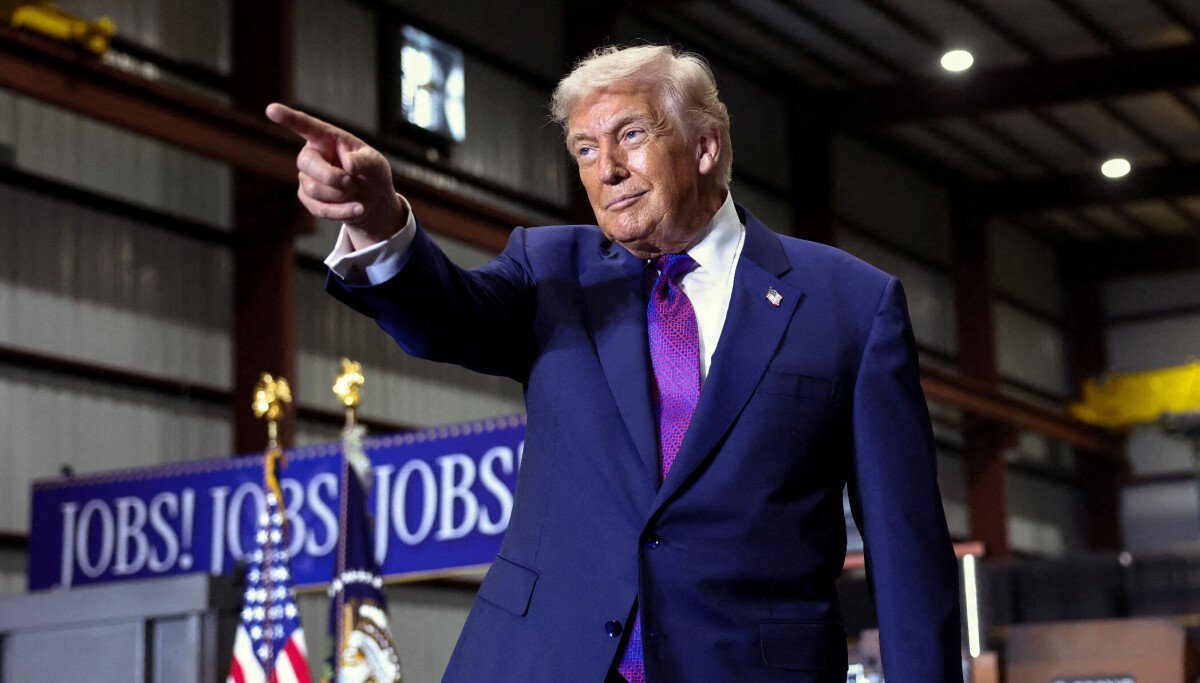
The analysis concludes that the USA and especially President Donald Trump succeeded in influencing what was talked about in Greenland in the run-up to the election.
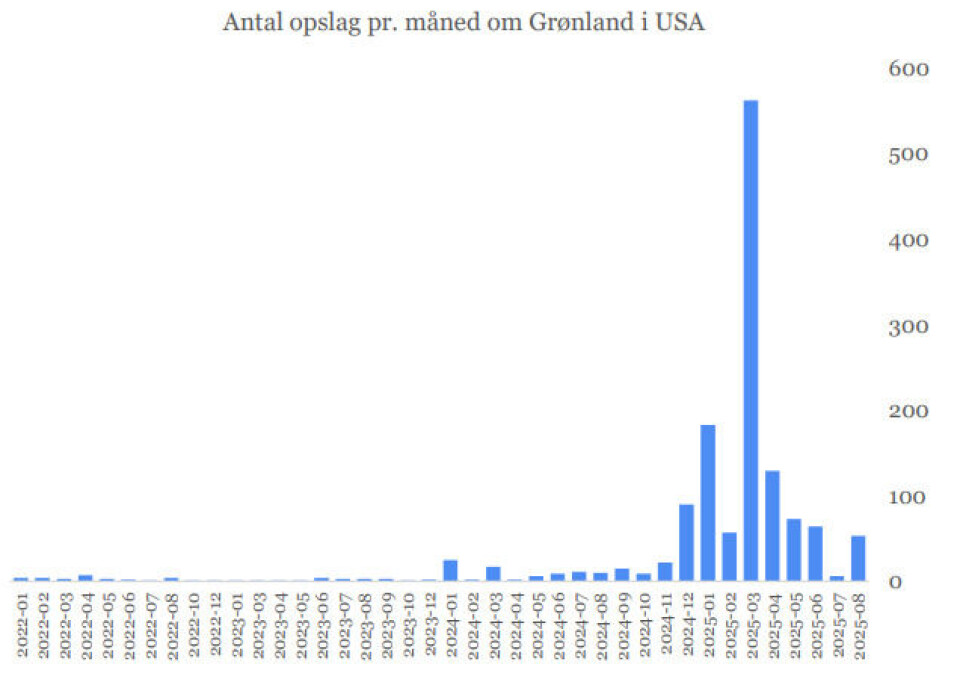
Since December 2024, the number of American posts increased significantly, and the conversation about the USA quickly became one of the most dominant topics in Greenland. As a result, there was less room to discuss domestic political agendas such as welfare and the cost of living.
But something may indicate that the increased attention to the United States has not been to Donald Trump’s advantage.
– If we think that the purpose of the Americans was to influence the Greenlandic population in a positive direction, in relation to the USA having to annex the country, then they failed. Because when we look at the total amount of reactions to these statements, they primarily triggered anger directed at the US and Trump, says Jeppe Albers, founder and director, Nordic Safe Cities, in the press release.
Individuals become lightning rods
While there is general agreement that Greenland must at some point become independent, there is considerable disagreement about which partners to enter into new agreements with.
This is why there is great anger and polarization in the debate when it concerns the US, the analysis shows.
It points out that people like Jørgen Boassen and Kuno Fencker, who are positive towards the US, attract great anger and become a kind of lightning rod in the debate.
The debate about the individuals is so polarized that you can hardly call it a debate anymore.
The population agrees that Greenland cannot be bought, and therefore it has not succeeded in creating much support for the USA, but instead distance and anger, especially towards Trump and his supporters.
According to the report, precisely that dynamic poses the greatest risk of internal polarization.
Also great anger towards Denmark
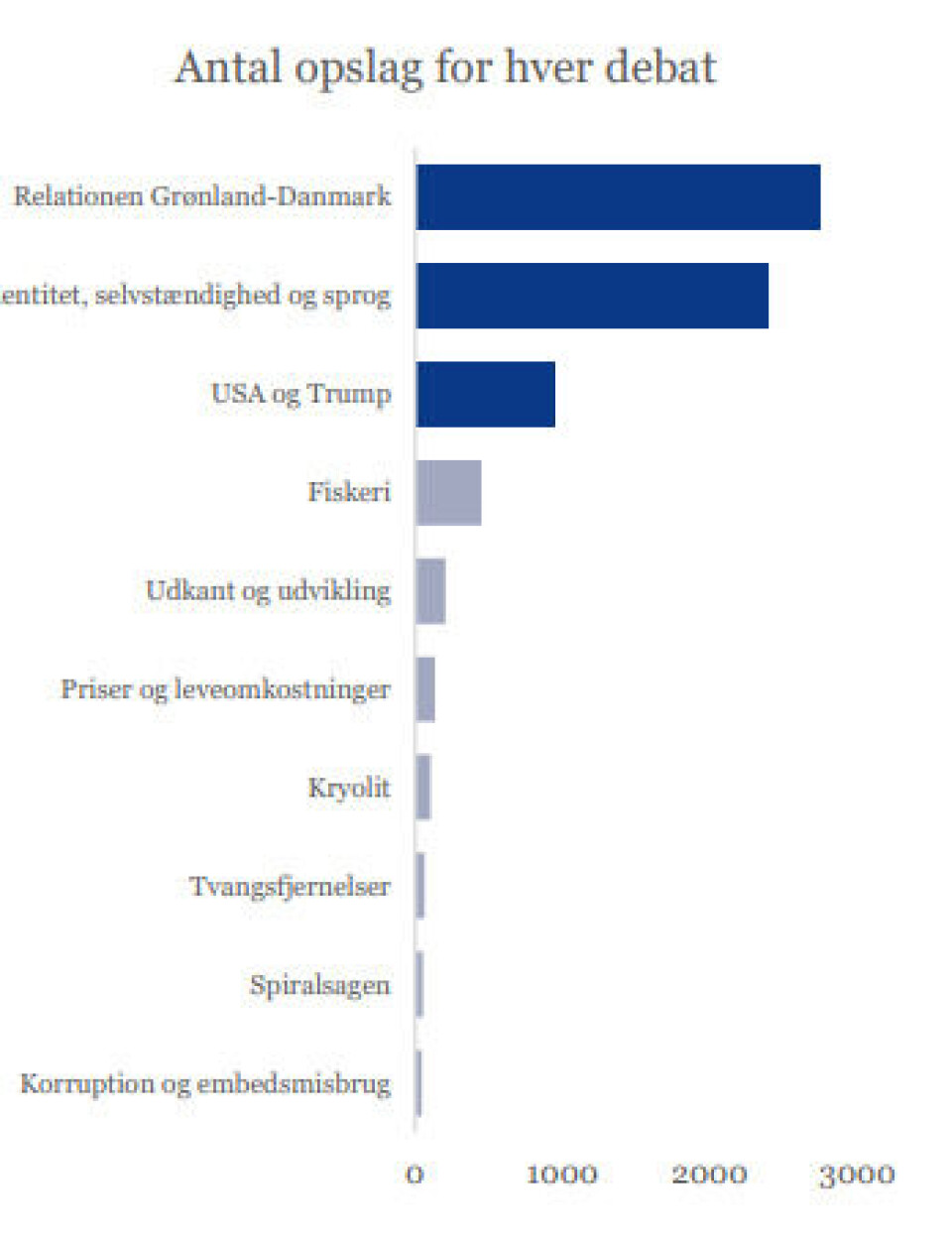
The topics in the public debate that create the most polarization almost always contain an element of Greenland’s relationship with the outside world.
The report shows that both the USA and Denmark act as points of conflict.
Shortly before the election, a documentary on the cryolite mine was published on DR. The documentary called “Greenland’s White Gold” caused great anger directed at Denmark. According to the report, the cryolite case is the most polarizing topic measured by interactions per post.
While the anger is primarily directed at Denmark, there is polarization between the population of Greenland when it comes to how to handle the relationship with Denmark going forward.
The report from Nordic Sage Cities is part of the initiative “Digital Unity” with the aim of strengthening Greenland’s democratic resilience in a time characterized by increased geopolitical pressure and digital influence.
– Nordic Safe Cities continues to work to support and strengthen the role of Greenlandic media, civil society and authorities in safeguarding unity and a safe, robust and free democracy in Greenland in a troubled time – through knowledge, cooperation and joint investments with Nordic and European partners, says Jeppe Albers.