This is an edited transcript of “The Ezra Klein Show.” You can listen to the episode wherever you get your podcasts.
We live in this moment when illiberalism is winning, when illiberalism is in power. I don’t think anybody really argues against that. But what has surprised me is how weak liberalism has felt in response.
I’m a professional liberal — one involved in liberal politics — and even I don’t think I could tell you what liberalism’s vision is, or who its leaders are, at this moment.
In some way, liberalism never really recovered from the Obama era — when it had this grand victory in electing America’s first Black president; when it had this thoughtful, deliberate and, frankly, quite popular liberal leader.
Then it ended in Donald Trump’s being elected — not once but twice. But here’s the thing: Donald Trump is not working out. He is not making people want more of what he is.
If he’s going to be beaten, if illiberal political forces are going to turn back, I think you’re going to need a liberalism that is aspirational again. A liberalism that has moral imagination again. A liberalism that stands for more than “not this.”
So I’ve been on a somewhat esoteric personal quest to read books in the liberal canon, as well as histories of liberalism, to try to think through what exactly in this long tradition is valuable for us right now.
One of the books I came across in this search is “The Lost History of Liberalism” by the historian Helena Rosenblatt. One of the arguments she makes is that for thousands of years before we had the word “liberalism,” there was the tradition of being a liberal. Behind that tradition there was the virtue called liberality, and people thought this virtue was really important.
As Rosenblatt writes, for almost 2,000 years, liberality meant “demonstrating the virtues of a citizen, showing devotion to the common good and respecting the importance of mutual connectedness.”
Liberality was talked about everywhere. You can read about it in Cicero, in John Locke, in the letters of George Washington. And yet we never talk about it today. Liberalism as a political philosophy and movement completely elbowed out liberality as a virtue, as an ethic that citizens aspire to meet.
I want to be clear: I don’t think a rediscovery of liberality is a complete answer to what ails liberalism. But I do think it’s one piece of the puzzle that I found exciting. And I think it’s one place to begin an inquiry that you’re going to hear a lot more about on the show this year.
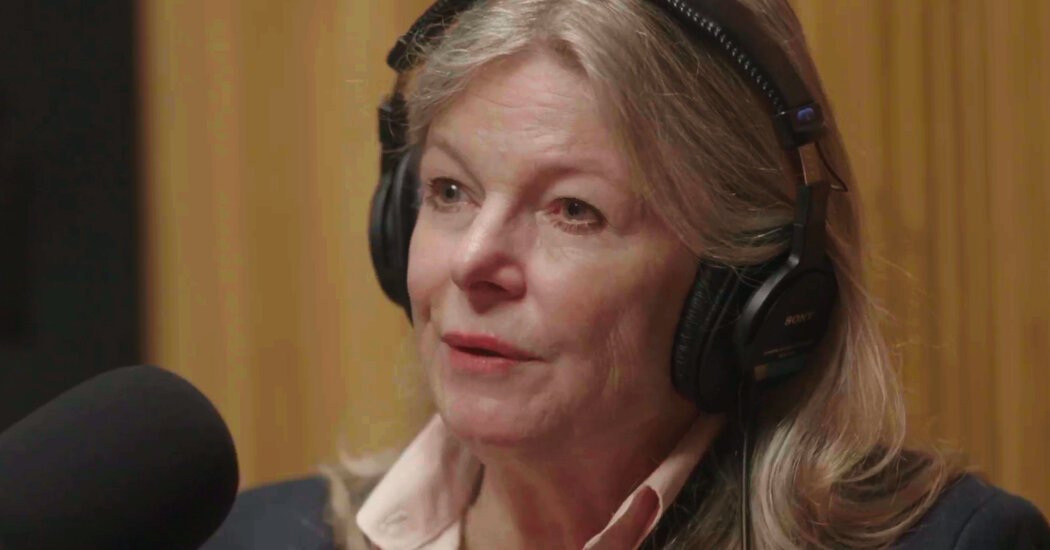
Helena Rosenblatt is a professor at the Graduate Center of the City University of New York. She’s the author of “Liberal Values: Benjamin Constant and the Politics of Religion,” as well as the aforementioned “The Lost History of Liberalism: From Ancient Rome to the Twenty-First Century,” which I highly recommend.
Ezra Klein: Helena Rosenblatt, welcome to the show.
Helena Rosenblatt: Thank you so much for having me.
To the extent that people think about liberalism today — which is, let’s be real, a niche hobby — I think they define it as a philosophy of individual rights and individual expression.
You write in your book that the word “liberalism” did not even exist until the early 19th century, and for hundreds of years before its birth, being liberal meant something very different.
What did it mean?
That’s right. Being liberal was not just about believing in, or working toward, a certain political design. It wasn’t just about a constitutional form; it wasn’t just about individual rights. It was actually more about moral development and about certain character development that they felt was so very important — and that a good constitution should promote.
And many of them thought that yes, rights are important, but they’re important because they allow us to accomplish our obligations. They’re very much concerned with establishing a morally good regime. It’s amazing how many of the early liberals were actually moralists at heart.
Talk me through the early word. It’s not even “liberal,” it’s “liberalitas.” Where does this start for you?
“Liberalism” as a word was coined around 1811 or 1812, and it was first theorized as a concept.
People started asking: What is liberalism? — in the early 19th century, in the wake of the French Revolution. It doesn’t become this Anglo-American tradition until very late in the game. I say, middle of the 20th century it became an Anglo-American tradition.
This was something very exciting that I found in my research. So I decided to trace the word, and the meaning of the word, all the way back to ancient Rome. “Liberal” in ancient Rome, the root of the word is “liber,” right? And the word “liber,” yes, it means “free,” but it also means “generous,” which I thought was so very interesting.
So if “liberal” were really the qualities of freedom, lovingness and generosity expected of a citizen, “liberalitas” was the noun that embodied it.
This was an attitude that was expected of citizens in Rome, when you are devoted to the commonwealth, to the common good.
One thing that was a bit of an epiphany for me, reading your book, is that a lot of things are missing in modern liberalism.
My interest in doing this episode — and more, I think, are going to come — is trying to figure out why liberalism feels so exhausted at a moment that it is so needed. And why so many of the books I read about it, some of the defenses I read of it, are so arid. They have no blood in them.
But one thing that was interesting here was this idea that liberalism — liberality — is built on a virtue, not a political philosophy.
And, as you just mentioned, the old definitions of it — and you have Cicero and John Locke and John Donne — but they have some kind of intersection between generosity and freedom. But not freedom as we think of it now.
So what did freedom mean in this context?
It’s really about having the freedom to voluntarily become the person that you should be.
And this has dropped out of our conversation. We think of liberalism as being about individual rights and maximizing our choices. But it was, to them, also about making good choices. And a good system of government would give you the capacity to make those good choices.
That evolved over time. So in the medieval period, it became Christianized, and it’s about behaving freely the way God wants you to behave — in a generous, charitable way.
When you talk about this conception of freedom, this conception of what it means to be liberal, who are some of the people you quote and what are their arguments?
As you can imagine, since it’s not a superlong book, I move rather quickly and have to make some strategic choices. But as you mentioned, there are Cicero and Seneca. These are well-known names that have had tremendous influence.
What do they say? What is their vision of liberality?
That liberality is about reciprocity, exchange. Gift giving and reciprocity are fundamental. You need to be good to one another. Very much about what they would call, or I call, citizenly virtues — things that make a commonwealth work and adhere. That is not to try to idealize these thinkers, either, because you had slavery in Rome. So they’re talking about a small group, an elite.
I think this is quite important, and it’s something threaded through your book. You write at some point that this idea of being a liberal, which comes way before liberalism as a political philosophy, is “designed by and for the free, wealthy and well-connected men who are in a position to give and receive benefits in ancient Rome.”
Another thing the book makes clear is that if today your problem with liberalism and liberals is that you find them to be a bunch of smug, condescending elites, that problem goes way back. [Laughs.]
That has always been braided into the issue here. And there was a set of virtues that was associated with the noble born, that set them apart in a way that would make them the ideal citizens. That feels, to me, actually like a quite profound tension at the heart of the project.
Yes, absolutely. They don’t even always live up to the ideal.
Sure don’t. [Laughs.]
But they had that ideal, and they talked about it. And they designed an educational system, a liberal arts education, that was supposed to cultivate these virtues, this liberality, in elite boys.
But there was a lot expected of the elite, as well. So I don’t think it was just hypocrisy. They were an elite, and they had obligations.
I’m writing a book right now about Mme. de Staël, a great early liberal and a woman — a powerhouse. Such a fascinating woman. Some say that it was in her salon, in her drawing room, that liberalism was invented.
Her name appears as a very important power broker, an intellectual, in the early 19th century, and then gets dropped. She’s endlessly frustrated by where all the good men are.
We need some good men. Not only to pursue the policies that we need, but to serve as examples.
I think this is also somewhat inspiring or provocative to think about, from our current vantage point. One of the problems that early theorists of being liberal are trying to think through is: What are the habits? What is a kind of education, what is a form of personal development needed to instill the virtues that will be necessary to hold together complex societies? What is needed to hold together a country, or even a city? It’s not easy.
I actually think this helps explain one reason liberals have always been so shocked and repulsed by Donald Trump himself — not just Trumpism or the Republican Party, but him. It’s quite deep in the liberal theory — an inheritance I’m not even sure people totally realize that they have absorbed — this sense that to make a country work, people have to behave in a certain way toward each other.
The ways in which Trump flouts the rules of behavior, the ways in which he acts toward other people, are almost separate from anything he believes — a profound challenge to what liberalism believes how you make a society work. I think in many ways, he is proving that there was something important in that.
But this question of how you instill in society the virtues necessary to make a society work — understanding that as actually a hard problem — I think there’s juice in that today.
Absolutely. And the fact that they’re elitists. Liberals, throughout their history, have tended to be elitist. But they demanded a lot, there were a lot of obligations, and they took that extremely seriously.
There’s a section in my book where I talk about Abraham Lincoln and how much he was admired by liberals who were very worried about the problem of elites perhaps not being able to show people how to behave and to be the kind of leaders that a liberal society needs. At that point they thought maybe liberal democracy would fail. There was no real example of its lasting. So would the American example, this exceptional example, actually work?
Lincoln showed that it could. He did it in this beautiful way that made people optimistic about liberal democracy.
He was not a demagogue. He did not talk down to people. He raised them up. He engaged in moral uplift, and they recognized that, and it showed that a liberal democracy could survive if it had a leader like this.
They also recognized that those kinds of leaders are very hard to find.
What is “liberal” in the liberal arts?
The purpose of the liberal arts education is really to form freedom-loving and moral leaders — to give them the tools, the rhetoric and history, and some science, for sure, but it’s supposed to train citizens, really, through engagement with the classics.
In the early times, there was a lot of emphasis on being able to speak in a convincing way in public. And this is all really to convince people to become citizens and to do the right thing.
It sounds terribly idealistic, and I don’t always want to, again, idealize them or say that these people were perfect in every way. Far from it. But the ideas were pretty beautiful, and I think we could learn something from them.
Education is such an important part of this book. Other histories of liberalism I’ve read reveal the same thing — that when you go back into the liberal tradition, the purpose of education is hotly debated and held at the center of the project.
Today you don’t have that discourse in the same way. We talk about whether or not education is working — and less so what it is for. It’s almost taken as evident that the purpose of education is to prepare you to get a job. And that was not the purpose of the liberal arts.
No, it was not. Today it’s a lot about vocational training, a lot about preparing students to get jobs. These were considered menial tasks. Liberal arts was for the leaders at the time, and the citizens were the leaders of society in Rome. In the medieval period, as well, it was always about something other than preparing you for a job.
Isn’t it funny that today, when people try to defend the humanities — which are under siege in many universities, frankly — and they try to advocate for a liberal arts education, they say: Oh, well, actually, there’s proof that having a liberal arts education will get you that job. [Laughs.]
So it’s that whole discussion about what a citizen of a democracy means. What are the values? What is our common language? What does it mean to be a citizen of a democracy? All of these questions that are so important have kind of dropped out of our discussion. People are even embarrassed sometimes.
And do you think that’s because citizenship is broadly shared now, and so it isn’t seen as a thing that people have to work to achieve? Or do you think that’s because those politics don’t work? People don’t like it? People don’t want to be told what they have to do to be a citizen?
That’s a great question. As a historian, I always apologize for saying that history is complicated. So usually there’s not just one answer to that terrific question.
Just give me the one that best serves my current purposes. [Laughs.]
Or maybe another way to ask it is: At what point, in your view, did the strand of liberal thinking that was about the cultivation and disciplining of the self drop out?
Definitely it happened during the Cold War, let’s say. And that’s pretty recent in the history that I describe in my book. But this idea of disciplining the self, or talking about the collectivity, about your duties, about any government or state getting involved in forming citizens. A public education system that forms citizens started to have a scary ring to it when you’ve seen fascism and Communism.
And liberals wanted to show: Oh, we’re not bad. We’re not going in that direction. We are not about the state forming citizens. We are about individual rights — about property rights, in particular. And I think that probably gave the impetus to something that was probably happening already.
The critiques you hear today of liberalism go back quite a long way. You have this part of the book where you’re describing fights in England in the 1830s. And the conservatives, what they say about the liberals, even then, is that critics of liberalism accused it of meaning the exact opposite of liberality. They accuse liberals of being selfish, egoistic, only interested in the gratification of their individual desires.
So you’re describing this tradition that is focused on personal cultivation and the liberal arts. At what point does this critique — that you just want to be able to follow your own desires wherever they go and not have anybody tell you not to — enter into the fray?
Right at the beginning. It’s been shown that “liberalism,” the actual word, was first a pejorative, a term of insult. It was coined in 1811 by the enemies of the liberals because of what had happened in the French Revolution.
And the word “liberal,” when it refers to something political, is often written with an accent on the E to show its foreignness. It’s something dangerous, it’s something ——
Libéral.
Yes. “libéral” has to do with the revolution, and we don’t want that, right?
All this getting rid of noble privileges, creating what we would call civil equality — isn’t that a great thing? They would say: No — it’s removing the privilege that they had for such a long time. So that’s being selfish. That’s not being magnanimous.
Catholic counterrevolutionaries immediately started denouncing liberals for being selfish, because they were taking away their privileges. They had a whole slew of insulting terms that they used as synonyms for liberals: They’re anarchists, they’re against the family, they’re sexually deviant. All of this, because it seemed like they wanted to free up — and in some ways, rightly so — all the constraints of the old regime.
Throughout the 19th century, the Roman Catholic Church was probably the most powerful enemy of liberalism. The popes, one after the other, just spewed the most vile, if I may say, rhetoric about liberals, about how very bad and sinful the world — liberalism is sin. I mean, there were works that came out like that.
Interestingly enough, today’s criticisms, for example, by post-liberals and so on ——
Many of them are Catholic counterrevolutionaries.
They are actually reviving some of that language and using very old arguments.
I’ve sat here with Patrick Deneen — not literally in this room, but on this podcast. He’s one of these post-liberals, close to JD Vance. And I said: Well, where’s this coming from with you? He said: Well, you know, the left wants to destroy the family. I said: I don’t think we do. But that is his view of it.
How much is the tension between the Catholic Church and liberals, or liberalism — how much is it around what I think of as liberalism’s first significant political idea?
Because so far, we’ve been tracking this almost-virtue that is a way for the powerful to think of themselves as developing in a way that is pro-social, if I were to be straightforward about it. It’s not a way to reorder society.
But this idea of generosity toward your fellow citizen begins to flower into an idea of toleration when that is more radical. And toleration is a way of reordering society.
So can you tell a bit of that story? How do we get from liberality to actual arguments for toleration? And then how does that begin to put liberals in tension with religious authorities?
Yes, absolutely. You may have noticed also in the book that many key liberals were actually Protestant.
This founding group that I talk about in France, Mme. de Staël and Benjamin Constant, were actually Protestants. And Protestants were way overrepresented in terms of numbers in liberal movements throughout French history. The reason here is: Protestants in France wanted to be tolerated, to be actually recognized as citizens, which they weren’t.
This is one of the key developments in the history of liberalism, when it moves from being just what we were talking about — the virtues of a Roman citizen or a Christian nobleman, who should give to the poor and be liberal and magnanimous, to now, you are starting to say that we have to be accepting of difference. And you start using “liberal” not just to define or describe an individual who’s magnanimous but a whole society.
Clubs can be liberal because they allow different types of members. Religions can be liberal when they are tolerant. The church, the Catholic Church, in particular, gets very worried about this, when you’re going to be accepting that it’s not the one religion.
Before we go into the Catholic Church’s reaction, I want to spend a moment on this. Because from where we sit now in the United States of America, I don’t think religious tolerance strikes many people as a particularly radical idea. It is taken broadly for granted.
So I’d like you to paint a little bit more of the picture. What is the context into which this argument is beginning to play out, and the relationship to religion as a fundamental divide in societies? The stakes are very high for people who believe. So what is the situation into which this argument over religious toleration is entering?
Today we hear a lot about celebrating difference. Diversity is a great thing, including religious diversity. But what I’ve found, and one might find this somewhat troubling, is that these Protestants that I’m talking about, the early founders of liberalism, did not advocate toleration for toleration’s sake.
They were very hostile or disdainful toward what they call superstition and dogmas. Dogmas have held people back in their opinion. The church, of course, in France, was in charge of education. They were in charge of censorship.
They basically found — and you can see this in Adam Smith’s “The Wealth of Nations,” which is really funny — they believe in a free marketplace of religion. So if you tolerate all religions, they can then fight among themselves — which will lead to a purification of religions. And eventually, people are going to become liberal Protestants — or Unitarians or deists. You know, they have a religion — they’re not antireligious — but the way you please God is by being good to your fellow citizen, by doing good for the community, not necessarily praying at certain times of the day or doing certain rituals or believing in certain dogmas.
So you could also see that not just the Catholic Church but certain Orthodox Churches would be upset by this, because, literally, if this is the case, what do you need churches for? You can believe in God and be a good person without going to church.
I want to look more closely at something you said early in that answer, which is that tolerance, in this framing, is not just a nice, civically virtuous thing — it’s not about being polite. There is a theory here about the marketplace of ideas.
One of the other books on liberalism I’ve quite liked is Edmund Fawcett’s “Liberalism: The Life of an Idea.” He makes more than you do of the idea that, central to liberalism, is the idea that in a conflict-ridden, disputatious society, you can turn difference into something constructive through argumentation, through the exchange of ideas. And tolerance and other things that are built on it — freedom of speech, etc. — are not about being nice.
Rather, it is about this belief that you can make disagreement not into something that tears societies apart but into something that refines them and makes them better and helps people find truth and progress and a way forward.
What do you think about that?
I’m so glad you brought that up. This kind of optimism is a really important, central aspect of liberalism: If you accept this tolerance, progress will be the result — people will improve, society will improve. We need this battle of ideas to refine ourselves and our way of thinking, and there will be a better outcome in the future.
So marketplaces of ideas without state interference, without church interference, allow these ideas to compete with each other, including religious ideas. And this will be a purification process.
So yes, they were very optimistic about the future. Today, that seems so naïve. This belief in the arc of history, the march of history, they talked about the whole time — I mean they weren’t naïve, and they weren’t silly.
One of the guys who’s a hero in my book is Benjamin Constant, and he said that we need pleasing illusions to make us better.
Also to maybe cut into some of that pessimism, liberalism is hard to do well. Complex society is hard to do well.
Some of the collapse in confidence in that, I think, is misplaced. I don’t think that what happened is that all these ideals failed. I think in many cases we failed the ideals.
Yes.
But I want to get at something that exists in there as a shadow side. One thing that is very present in your book is the contempt many liberals in the 1700s, 1800s, have for religion, or certainly religions that they don’t belong to, as backward, superstitious.
And this comes right up into the modern era, where there’s a real feeling, among the religious, that liberals look down on them — among evangelical Christians and others, that they try to use a state to change their behavior. That you can’t even refuse to bake a cake for a couple of the same sex who are getting married.
So there is this critique of liberalism that you see throughout the ages, which is that liberals are tolerant of everything but what they consider to be intolerant. And if they consider you to be intolerant, backward, bigoted, then they will bring the full force of the state, if they control it, down upon your head.
And it creates backlashes, but it is this very hard problem, this paradox of tolerance. How do you tolerate people who don’t want to be tolerant? How do you then not become intolerant? Can you trace a bit of that tension?
I don’t know if they ever solved that problem.
I don’t think they have.
If you really try to understand the world from their perspective, it was really hard to be a liberal most of the time. There were such formidable obstacles, such strong enemies and such intolerance of their views. Really serious stuff, to think of the Catholic Church coming back into power, the counterrevolutionaries — you know, what would happen to you?
So do you tolerate them? Do you allow them to use the free press to attack the constitutional government? At what point do you censor?
We struggle with this today. And they certainly did then, as well.
What, in your view, is the first society or state in which something that we would now recognize as liberalism took power?
When does liberalism move from a theory outside power — as a political philosophy, not as a virtue — into something that is being wielded by those with authority?
Famously, in 1830, there’s a revolution in France that brings what’s considered a liberal government into power. And it unfortunately fails in the 1848 revolution.
What happened in the French Revolution was the rise of the bourgeoisie. The privileges with the nobility were overturned, and you had rule of law, civic equality.
And actually, Karl Marx talks about this. Communists talk about this as being a bourgeois revolution — and how terrible it is because it was very quickly considered a selfish regime, a money-driven machine.
Let’s stay on Marx for a minute. What is his critique of liberalism?
Liberalism is really the rule of the bourgeoisie. It’s middle class, it’s money.
He also was really looking at France. Everybody is looking at France and what was going on with the success of revolutions. It’s like a laboratory of political ideas, right? This is a bourgeois revolution to them. And it’s liberals who carry these ideas forward.
But what happens in Marxist thought is, of course, once they take over power, they’re going to exploit the workers and just make more and more money. They will exploit the workers until they rise up. And you’ll have the Communist revolution and takeover.
But the thing is that there’s no way around it. You need the liberals to take power. You need the bourgeoisie.
In Marx’s view.
In Marx’s view. So he’s not anti this, precisely — this is the motor of history. It’s going to be superseded by the proletariat.
Where does liberalism begin to become interested in, or associated with, the actual redistribution of resources in society from the rich to the poor? Where does it become connected to social welfare states?
When you talk about F.D.R. and that later liberalism, a lot happens between what we’ve been discussing in there. At some point, this moves away from just being a set of approaches to a marketplace of ideas or individual virtue. And it becomes connected to a view that power needs to be redistributed, and money and security need to be redistributed.
When does that begin to happen?
The early liberals were mostly concerned with creating a political system, getting rid of the divine right of kings and having a constitutional, representative government with guarantees for individual rights, freedom of speech, freedom of religion and private property rights, rule of law. Obviously, very important.
But they’re also pragmatic people, and over time — with the Industrial Revolution, with urbanization — they see new problems arise. There’s the idea of “pauperism,” a new word that’s invented at the time to describe how people, workers, are stuck in poverty.
When discussing what to do about this, some people start saying: Listen, deregulation isn’t working for these people. They’re stuck. And with our core values of generosity and freedom-lovingness — obviously these people are not free. They’re not able to morally refine themselves or to contribute to society in any meaningful way, morally or intellectually.
So the government now needs to step in, first with factory legislation and such, and eventually with some sort of tax distribution and so on.
There is an interesting dimension there that I think you hear less of today, which is a connection of a social welfare state. Everything from education to health care and so on as being not a matter of justice but instead a matter of uplift.
You’re trying to create the conditions for a capable, educated, productive citizenry. In early arguments about this, you see less of the idea, at least in my reading, that society is unfair — which is more how I would argue for a lot of these policies today.
Instead, there’s the argument that this needs to be done because it is the only way to have a citizenry capable of participating in liberal democracy, and able to fight in your wars.
It’s a question of building the capacity of the citizenry. It’s very concerned with the uplift of the individual.
Absolutely. And it strikes me, also, that factory legislation in France, when it came to women, was to shorten the workday and make it a little less harsh for them. Why? Because they’ll have better breast milk. They’ll be healthier, and they’ll produce healthier soldiers — basically, boys who will fight in wars.
Germany suddenly starts to play a big role. They had thinkers saying that this whole idea of free markets and laissez-faire was great theoretically but weren’t working in practice right now. And what you need is to actually study the workers and demographic patterns — prices and salaries and so on — and see what’s actually going on. And then devise policies accordingly.
These ideas were spread and written about. Their ideas were translated and talked about in England, in France.
It’s also the power of Prussia, right? The Franco-Prussian War was a huge shock. Napoleon III thought he could have a little war with Prussia, give him some glory and some popularity. And lo and behold, the exact opposite happened. The Prussians won very quickly, and it was a shock.
It was a shock to everybody that France, meant to be the most powerful country in Europe, could be defeated like this. And they start to ask why. And they start thinking: Well, guess what? German soldiers are vaccinated. They’re much healthier. Their railroads work ——
Germany is very early to have a state-run health care program.
Exactly. And this catches on.
But it doesn’t come from the liberals initially. I mean, Otto von Bismarck is a key mover here.
Exactly. And that’s an interesting twist, that sometimes the influences on liberalism are not necessarily from within.
The first Napoleon is what made people like Benjamin Constant and the early liberals say: We need something so that this never happens again. We need constitutions that stop somebody like Napoleon, a demagogue, a dictator, from coming to power.
And now it’s Bismarck. But look at his policies. Look what he’s doing to the population. They’re healthier, they’re stronger, they’re more patriotic.
This is really when there was what came to be called a new liberalism in England, when a group of people started to say: No, we need to learn from the Germans, and we need some government intervention to help the workers to spread the wealth. And the government has an important role to play in the economy and in a liberal polity.
And so they learn their lessons the hard way.
So how then do you have this weird split that makes so much of the conversation about liberalism confusing now?
Today you have a liberalism in much of Europe that means laissez-faire, that means that you are in many cases opposed to the welfare state. And you have a liberalism very much associated with America, maybe coming from Germany, that’s the exact opposite.
You have this debate between the classical liberals like Friedrich Hayek. And then F.D.R. is arguably the most important American liberal. They agree on things like free speech and some other dimensions around rights.
But you do have liberalism split into two streams, one of which is profoundly skeptical of the government and sees the government as the source of much tyranny, and the other that sees the government and a more generous government as the guarantor of a kind of freedom.
Yes, that’s right. In England, eventually, the new liberals went out, and they dropped the “new,” and they just called liberals.
And that’s what happens in America. They don’t call themselves new liberals. They start calling themselves, first, progressives and then liberals. There’s a moment you can see where Woodrow Wilson is calling himself a progressive, and then he switches to liberal. It’s quite interesting.
In France, they never make that move. So liberalism without any descriptive term before it means laissez-faire, small-government liberalism. And today in most of the world, that’s what liberalism means. It’s sort of right-of-center, free markets, small government.
Whereas in America, colloquially, it tends to mean big government — more interventionism, more of a redistributive state, a bigger role for the state.
Who, in your view, are the most important American liberal thinkers? If you’re thinking of a canon of American liberalism, who belongs in it?
Well, that’s interesting. You, of course, have to talk about John Rawls. There’s John Dewey, who’s very important, particularly in his liberal education. And then there were — I wouldn’t call them great innovative thinkers. I mean, John Rawls was obviously a great philosopher of the 20th century. But on the caliber of John Locke or John Stuart Mill, I don’t see any.
I hope American intellectual historians aren’t going to email me like crazy saying that I’m being unfair. But I don’t think that America was notable for its liberal theorists until quite late in the game. We do have great liberal leaders. I mentioned Lincoln, I mentioned F.D.R.
Well, I think this is underplayed in our own tradition. And I’d like to say more on this, because I actually think great liberal practitioners in some ways, to me, are more interesting than great liberal theorists.
I find it to be a problem with American liberalism that it is so obsessed with John Rawls. People think that is because I don’t like John Rawls, but that’s not quite it. I just think that, in terms of something that is, hopefully, a popular and public philosophy, somebody whose central work is fundamentally unreadable by the public does not really make sense as a foundation for that.
And he’s not the foundation for that. Frederick Douglass, Abraham Lincoln, Martin Luther King Jr. John Dewey, I think, is actually quite important here. F.D.R.
You have really remarkable liberal leaders in this country. Many of them have written remarkable things about how to think about liberalism.
Many of them came from outside the halls of power. I think liberalism is often most interesting when it is in a tense relationship with power.
So I’m curious how you see that tradition and how it has altered what American liberalism became and is.
Totally. I think that’s wonderful. But if you look at the people I look at, at the very beginning, there wasn’t this great divide between the great thinkers and the great political leaders. They’re very pragmatic earlier, they’re ——
Cicero is a political figure.
He’s a political figure; Benjamin Constant becomes a deputy in the Chamber of Deputies. John Stuart Mill runs for office.
And if you read some of the wonderful speeches people were making in those days, drawing on Montesquieu and Locke, they’re reading this stuff, as well. So there wasn’t this great divide between intellectuals and practitioners.
What does that tell you in America? What was different about it here?
Maybe it’s worth starting, actually, with the founders. I think there’s a lot of interesting argumentation over how much to think of the American founders as inside the American liberal tradition, or as in tension with what later becomes a liberal tradition. There are obviously claims by all sides here.
How do you think about the founding, with its profound internal contradictions around freedom and human bondage?
I’ve become more and more interested in American political thought and institutions and history. Unfortunately, because of the way disciplines and concentrations work, I’m more of an expert on European history. But what I’ve read about the founding and about the founding fathers and what was going on there, it just fills me with enormous respect and gratitude for the wonderful work that they did being both thinkers and actors.
Benjamin Franklin and Thomas Jefferson came to Paris, and were very much interested in French matters and vice versa. The American Constitution influenced early liberals, because they thought it was an amazing document.
Maybe that’s the thing that’s so wonderful to see, exactly those things coming together, the ideas and the practices coming together in the founding fathers to produce this amazing document.
That’s a very glittering answer, but I think a critic of liberalism would say: What good is your liberalism if it can include slavery in its founding constitution?
Or in the European case: What good is your liberalism if it is so interwoven with colonialism?
There were many people who certainly believed in many liberal ideas we’re talking about here, who made space for both of those practices within their liberalism.
Again, I don’t mean to idealize these people out of proportion. These are early liberals, and liberals have never been perfect. They often suffer from the same prejudice as the prejudice of their time. There are exclusions there, but ——
I mean, we’ve talked a lot about freedom here. How did they grapple with this?
They grappled hard. Other people can speak more intelligently about the U.S. Constitution and the slavery within the document. This is really a question also of compromise. It’s a horrible thing to imagine, but I think there were debates going on there, and politics going on that are unseemly today.
You have John Stuart Mill saying absolutely atrocious things about how despotism is OK when you’re dealing with barbarians, talking about British imperialism in India. You have Alexis de Tocqueville, who was OK, apparently, with burning silos in Algeria. Awful stuff.
But at the same time, this was not a liberal position. Many people were saying: You are betraying your own principles. And conservatives were perhaps even more so for colonialism, imperialism.
It’s horrible to say, but racism was rampant. Sexism was rampant. If anyone was against it, they were liberals, basically.
Well, this is the other side of it. There’s a lot of liberal abolitionism. There obviously is the long effort, among liberals, to expand the franchise to women and people of other races, and a lot of fights over immigration.
You have this interesting moment in the book where you say that maybe the first use of “liberal” as a noun was when somebody signed an antislavery pamphlet: “a liberal.”
It is a tension.
For sure. So the thing to remember is that, for example, when it comes to women, liberals did not really lobby for women’s suffrage until very late. They were not at all for giving women the vote until it was almost forced upon them. But on the other hand, the women, when they did fight for admission into political rights, they used the terms of liberalism.
They went to the guys, and they said: Hey, you are not living up to your own principles. You are like an aristocracy — an aristocracy of sex. You’re acting like despots. We want to participate. We want to also be citizens. We can have the virtues of citizens.
So they used that same language to say: We have shared responsibilities, and we bring something to the table, something liberal.
So they use the language. And I think that’s also true with Frederick Douglass and other groups who have been prejudiced against and subordinated and oppressed. They can use the language of liberalism, use the lofty notions and the ideals, to argue for their own rights and their own capacities.
What ideals — thoughts or principles or shared values — create this time bomb aspect of liberalism that seems to go off repeatedly in history?
As we said at the beginning of this conversation, liberalism begins as a quite aristocratic ideal. And, eventually, it becomes, in many cases, a philosophical weapon to expand the terms of inclusion and freedom.
What does that, in your view?
Well, ideas don’t travel in a vacuum. So I would always say that the facts on the ground change socioeconomic pressures. Changes in the economy, wars, all of this creates conditions, creates conflicts, creates crises, that liberals then have to confront and deal with.
Everybody is talking about the crisis of liberal democracy today and the crisis of liberalism. Well, there’s been a succession of crises. Liberalism was born in a crisis — the crisis of the French Revolution.
And so when these moments happen, when there is extreme tension, when there are new problems, it can throw liberalism off kilter for a while. All sorts of debates occur, and become more heated, confused. There have been moments in liberalism’s history when they literally started to have lists of articles: What is liberalism? What do we stand for? What is true liberalism? No, that’s false liberalism!
They have these debates and, as I said before, that can weaken the movement, but it can also bring strength to allow it to evolve. This conflict, this battle of ideas, brings out something new that really responds to the crisis that’s on the ground.
Are there specific moments in liberalism’s history that this moment reminds you of?
Yes. I’ve even started to think about the original crisis of Napoleon’s despotism. The liberals had such high hopes for establishing a liberal regime, based on constitutional rule and representative government, with these rights protecting the individual.
Then the revolution derailed into this horrible period of terror. Eventually, they thought that Napoleon would come to save the revolution. There was a lot of hope that this charismatic figure, who claimed to want to save the revolution, was making all the right noises. He was going to bring peace to France. He was going to bring back order, he was going to protect all these things that liberals had fought for so hard.
Instead, he became this despot and a demagogue. And he used wars to divert attention to what he was doing at home. He gave gifts to people. He lined the pockets of his friends. He flattered people, gave them power. But at the same time, he amassed power in his own hands.
This was profoundly demoralizing to the early liberals, who had this lofty notion of what a freer or better, more moral, more humane world would look like. And look what it derailed into.
So what did they learn from that?
They learned that you needed certain safeguards in place. This is really when you get liberalism as a constitutional way of thinking: balance of power, separations of powers, individual rights, freedom — how important freedom of press is, how important freedom of religion is.
Napoleon used religion to buttress his power. So all of these constitutional ideas really came together then. And it happened again and again over the course of the 19th century, that you have these very clever, charismatic figures who could speak directly to the people: I understand you, I represent you. We don’t need these representative institutions. We don’t. Because I speak directly to you.
I mean, that’s what a demagogue does, and that’s what populism is, right? It’s that you don’t need the intermediaries.
The liberals were very worried about this. The system they came up with, constitutional liberalism, was meant to make it impossible. But that also made them really think, more than ever, that we needed an educated citizenry. Intellectuals needed to step up. Newspapers needed to step up to educate the public as to what it means to be a citizen of a liberal regime, of a liberal form of government.
They wrote articles. Mme. de Staël wrote novels in which you could see her trying to foster the right kind of moral inclinations. By that I mean compassion, generosity, sociability, understanding — understanding of shared responsibilities, that you needed to educate people. Because without an educated, critically minded, alert citizenry, the people will fall prey to unscrupulous actors and demagogues.
This was on their minds the whole time because they saw how vulnerable those liberal constitutions could be. They really depended on a morally educated, civic-minded and alert citizenship.
I take the current crisis of liberalism to be not any one crisis but a couple of things.
This is a nonexhaustive list: First, is that liberalism, in its modern American form, became associated with power and with the status quo and with reigning institutions — as opposed to being seen as a challenge to them. So the more fed up people got, the less liberalism looked like an answer, because it was increasingly people who seemed sort of comfortable with how society was working.
Another crisis is that individualism has gone very far. And I think the internet and social media and algorithmic media and the fracturing of what we know — and our bonds from each other — and the weakening of civic institutions and religions and labor unions and all of these things that Robert Putnam and others have documented.
There is a crisis of individualism that has become, partially, a crisis of meaning. But I also just think it requires different ways of thinking about freedom.
Liberalism, in its modern form, is very skeptical of individual responsibility and communal obligations because it has seen those used for oppressive reasons or used to push people out to the margins of society or to blame them for things that have been done to them.
But it also has left it with very little language in which to talk about something that is not just individualism.
On the question of “individualism,” something you describe in the book is that, at other times, liberals actually were quite averse to that word, and they preferred “individuality” or — one I like more — “personhood.”
I’m curious why they preferred those words, and also what you see in them that might be relevant to today.
So yes, they shied away from that word. “Individualism” really was kind of a synonym, to them, for “selfishness.” And Tocqueville, you’ll see, uses it that way in “Democracy in America.”
Again, it’s an ism. Isms are very often pejorative. Individuality is more about becoming the best person you can be, developing yourself, your capacities of flourishing — individual flourishing.
Individualism today — we’ve become very much a narcissistic society, unfortunately. I think the more choices we have, that’s better. I don’t want to go on sounding horrible about us today, but I do feel that we’ve become very inward-looking and narcissistic.
What parts of the liberal past do you think could be helpful in renovating an answer to that?
I really think that people are searching for meaning. And I think that in order to go forward, we can draw on this history that we have and recover this moral language of character, of shared responsibilities, of moral improvement — looking at all of these things that we have now, that people before us for centuries didn’t have, and think of them as ways to see if we can improve ourselves, develop our capacities and do good for everyone.
It’s funny — when I talk this way, I’m constantly aware that I must be sounding silly somehow. And it’s a reflection of the cynicism that’s in the culture, right? Why is it somewhat embarrassing to speak about making or improving ourselves and doing good for society, keeping the common good in mind?
There’s something funny there, and I think that’s a shame.
Well, isn’t there a question of: Well, who gets to decide what the common good is? And what happens when we disagree?
That’s exactly right. That’s the danger. But that’s why we have to come together, at least, to discuss it. I think people can come together to agree on things that are good for everyone.
And then I think there’s this question, which has been threaded a little bit through our conversation, of liberalism’s relationship to power.
Sometimes it is the ideas of people out of power. Sometimes it’s people in power. But I think — particularly as liberalism in America has become the movement of people who are college-educated and people who have benefited more from how the institutions work — it has ended up very connected to power. You see that a lot in the rhetoric of people challenging it now and the counterrevolutionary ideas that the people on the new right have.
I’m curious how you would describe liberalism’s view of power, and what you see in the various liberalisms that you have tracked that might be useful at a time when people feel — and I think quite understandably — very skeptical of institutions and frustrated with the feeling that society is taking a direction that they don’t have much influence over.
Yes, absolutely. Liberalism is best when it criticizes power. That’s how it limits authority and allows human flourishing, for sure. And now there is at least this sense, and I think it’s probably true, that liberals largely — I don’t know if they exactly control media and universities, but they do have a huge influence and power and it’s somehow self-perpetuating. Which translates into political power, as well.
I think the worst part of that is a kind of condescension or disconnect between these liberal elites and the common man, regular people.
I think that is a betrayal of liberal principles, really. We talked in the beginning about elites and leaders, and this is not what liberal elites are supposed to be doing.
And I’m an educator. I am, I suppose, part of this liberal elite.
I was going to say: We all are.
So mea culpa. I think we can do a better job of returning to these principles.
One thing that I think is useful here — and it’s not a full answer, but it’s one reason I found some inspiration in your book — is that some of the very early ideas around liberality and an ethic of generosity toward your fellow citizen were initially framed as things the aristocracy should practice. But like a lot of things in liberalism, we’ve tried to expand that. And we now believe in liberal democracy, not liberal aristocracy.
And I think it’s going to be very hard, in this period, to have a relationship of generosity in a very divided country. Politics is very hard to practice well right now.
The liberals who’ve done it really well — say, Barack Obama in 2008 — are really able to, on the one hand, hold a vision of moral progress — which can be a divisive vision — and also hold a vision of an ethic of generosity and decency toward both the people we agree with and the people we don’t agree with.
I think, in general, one place where liberal elites of all parties and persuasions tend to go very wrong is in losing that sense that they are part of a citizenry. And instead seeing themselves as leaders who know what is best for everybody else.
Balancing those commitments inside of liberalism — the commitment to moral progress, to expanding freedom, to giving people a better life, and the commitment to the kinds of virtues you need to make a complex society thrive without people feeling oppressed or condescended to or pushed out by you — there’s not one policy that does it. It’s a very difficult balance. But I think the great liberals figured out how to do that well.
You talked about Lincoln earlier. I mean, think about somebody holding together opposites, right? Leading a civil war — the bloodiest war ever on American soil — and also doing so within an ethic of constantly trying to reach out to see that there is some solidarity on the other side of this, that there’s some way to rediscover bonds of commonality.
It’s why his speeches are read today. Not because they’re bloodthirsty but because amid all that blood, they’re not.
That’s absolutely true. It is very difficult, and we’re living in a very difficult moment — a true crisis. And we’re so polarized.
But I think giving up on liberalism — I know that’s not what you’re saying, but those post-liberals whom we mentioned a while back ago — I think it’s dangerous to start talking about moving beyond liberalism or giving up on liberalism.
Liberalism has gone through these crises before, and I think it can survive and come out of this even stronger and better, if we renew with some of these ideas.
But, as you, in particular, have said: Liberals have to deliver with the affordability crisis that you’ve written about, with health care, with environmental degradation, with concrete problems that liberals aren’t solving. So I think we have to find ways to do that.
But to inspire people is important, too. I think there’s a yearning in young people. We live in a very materialistic culture. There’s so much emphasis on what you can buy and how you should look and how you should dress. I think people are looking for some moral uplift.
I think it’s a good place to end. Always, our final question: What are three books you’d recommend to the audience?
I’m always influenced by, in such a good way, the work of Samuel Moyn. He’s coming out with a new book that I’m looking forward to. But I would like to recommend “Liberalism Against Itself,” which really picks up on some of the themes also from my last chapter. It’s about Cold War liberalism, and why liberals went wrong in the Cold War. Very interesting.
The second one is a fun read, which is Alexandre Lefebvre’s “Liberalism as a Way of Life.” It’s just delightful. It basically tells us that we’re all liberals, whether we know it or not. He draws on comedy shows and TV series. Just a lovely, uplifting book.
And last, but certainly not least, is “Thinking With Machines,” by Vasant Dhar. We haven’t had a chance to talk about A.I., but everybody is talking about it now. If you want to read one book on A.I., I think that’s the one. It’s a story of Dhar’s life with A.I. He was one of the first to teach it and to bring it to Wall Street.
So he talks about its evolution over time, the good and the bad, the risks and the benefits. And, full disclosure, he’s my husband. I hope I was allowed to do that.
Oh, liberals. Always scratching each other’s back.
[Laughs.]
Helena Rosenblatt, thank you very much.
Thank you.
You can listen to this conversation by following “The Ezra Klein Show” on the NYTimes app, Apple, Spotify, Amazon Music, YouTube, iHeartRadio or wherever you get your podcasts. View a list of book recommendations from our guests here.
This episode of “The Ezra Klein Show” was produced by Jack McCordick. Fact-checking by Michelle Harris with Kate Sinclair and Julie Beer. Our senior engineer is Jeff Geld, with additional mixing by Johnny Simon. Our recording engineer is Aman Sahota. Our executive producer is Claire Gordon. The show’s production team also includes Marie Cascione, Annie Galvin, Rollin Hu, Kristin Lin, Emma Kehlbeck, Marina King and Jan Kobal. Original music by Pat McCusker. Audience strategy by Shannon Busta and Lauren Reddy. The director of New York Times Opinion Audio is Annie-Rose Strasser. Transcript editing by Filipa Pajevic and Marlaine Glicksman.
The Times is committed to publishing a diversity of letters to the editor. We’d like to hear what you think about this or any of our articles. Here are some tips. And here’s our email: letters@nytimes.com.
Follow the New York Times Opinion section on Facebook, Instagram, TikTok, Bluesky, WhatsApp and Threads.