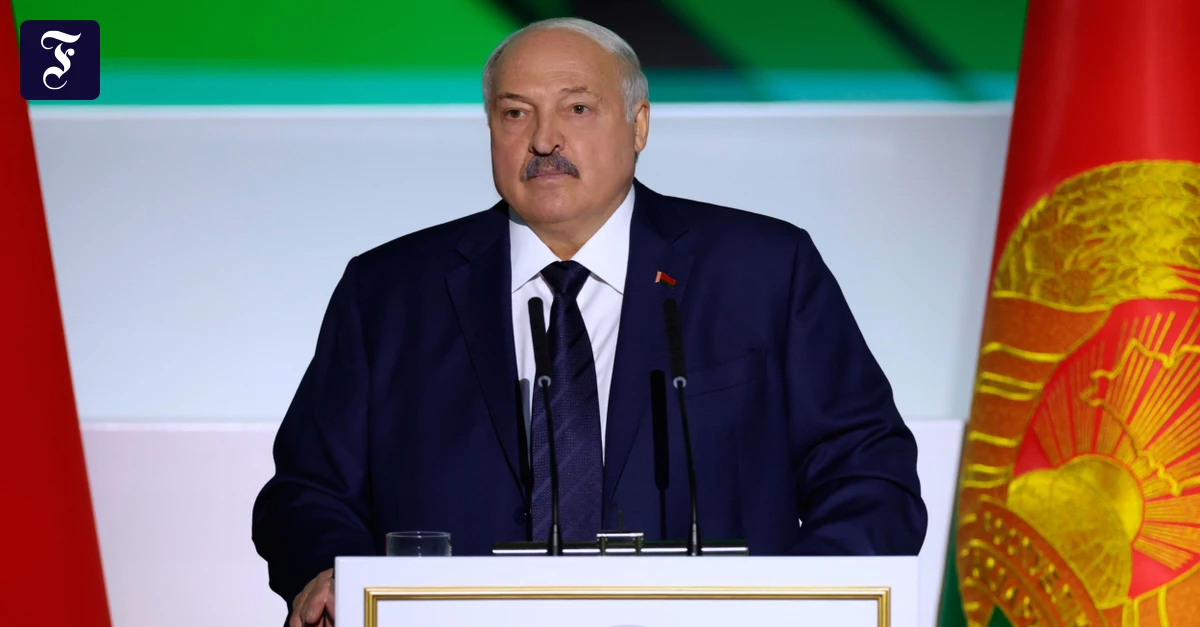
Belarusian leader Alexandr Lukashenko is very adept at portraying himself as a loyal ally of the Russian president Vladimir Putin and at the same time give him subtle rhetorical jabs again and again. The most recent example of this is a long interview that Lukashenko gave to Dubai broadcaster Al Arabiya. In it he doesn’t say a word of criticism of Putin. But without openly opposing the Russian president, Lukashenko undermines his narratives about the war against Ukraine in many places.
Lukashenko says that not only… Ukrainebut also Russia soldiers were missing, and suggests – without saying it openly – that Russia cannot win the war. Putin withdrew his troops from northern Ukraine in the spring of 2022 to make peace possible, says Lukashenko. This is also the official representation of the Kremlin. But Putin allowed himself to be duped once again – by the Vatican and the “Jewish lobby” who had promised peace in Zelensky’s name. Putin certainly doesn’t want to be seen like that.
In power longer than Vladimir Putin
A central message from the interview is aimed at Ukraine: it has nothing to fear from Belarus, says Lukashenko. There is no basis for the fear repeatedly expressed in Kiev that Russia could attack Ukraine through Belarusian territory (as it did at the beginning of the all-out war, which Lukashenko keeps silent about). Because the Belarusian people do not accept war. That means: not even Putin’s.
Lukashenko has been in power longer than Putin. In 1994, at the age of 40, he received 80 percent of the vote in the only free presidential election Belarus has seen. Nothing of the popularity of that time has been left for a long time. His rule only exists thanks to the violence of the militia and Vladimir Putin. If Putin had not made it clear at the height of the mass protests against Lukashenko in the summer of 2020 that Russia would defend him with force if necessary, Lukashenko would hardly have been able to hold his own.
But even if he is politically and economically dependent on Putin, Lukashenko is a difficult partner for the Kremlin. He also defends his power against Moscow’s claims – only not with violence, but with peasant cunning. Since Donald Trump came to power in the USA, he has resumed the successful game of making small concessions to the West in order to negotiate leeway with Russia. And he was successful: in return for the release of political prisoners into exile, the United States lifted some painful economic sanctions against Belarus.