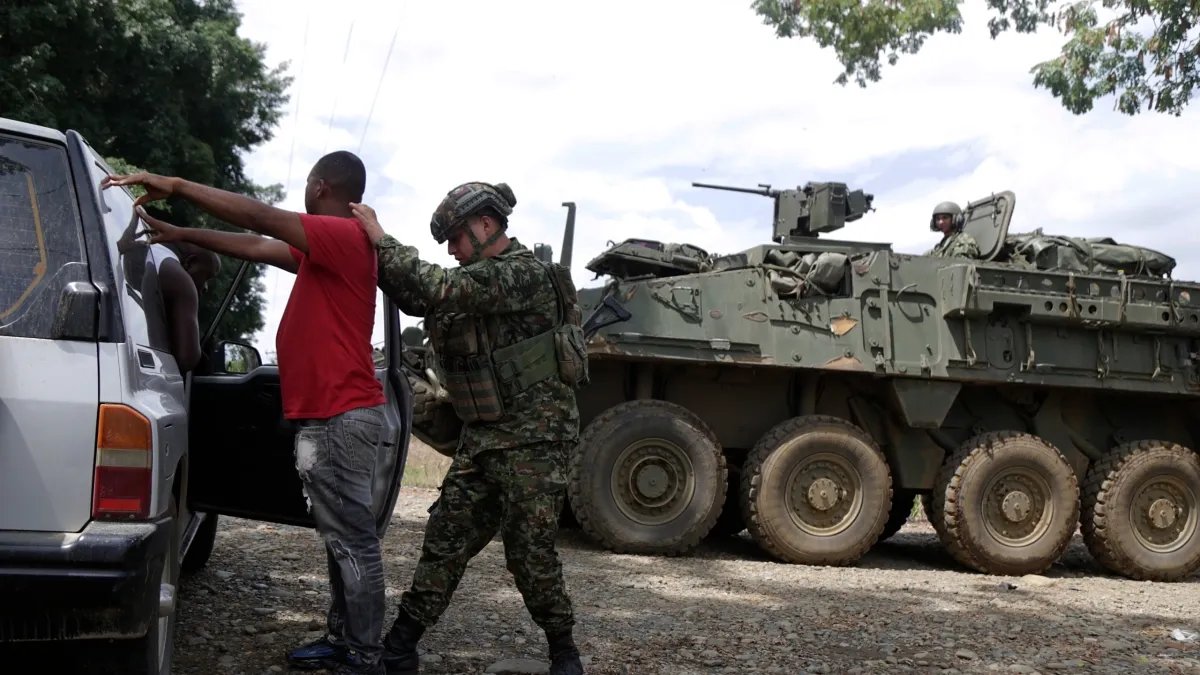
The possible departure of General Erick Rodríguez of the Army has caused widespread controversy and has led to questioning the position of Gustavo Petro’s government regarding the pressure that illegal groups would be exerting on citizens in the middle of electoral times. On May 19, Rodríguez denounced that the dissidents led by ‘Calarcá’ –who has a place in ‘total peace’–, and ‘Iván Mordisco’ they exercised territorial control in the south of Meta and carried out forced identification of rural inhabitants to monitor and pressure the electorate during the democracy plan.
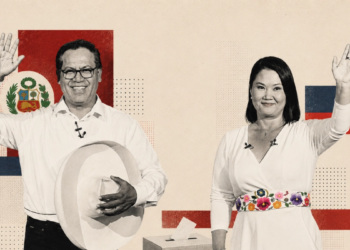
Different sectors came out to support the officer (see interview) now question the attitude assumed by the president in the face of warnings pressures on the civilian population. Even the candidate Abelardo de la Espriella He expressed himself on his social networks. Not only did he single out Rodríguez, but he pointed directly to the President: “Petro: Is your ambition for power so great that you put bandits above democracy? The votes of your puppet, Iván Cepeda, are obtained at gunpoint, blood and threats in the areas where you allowed the narcoterrorism become law?”
And since Abelardo de la Espriella’s campaign they have begun to broadcast higher alerts compared to the supposed pressure in favor of Iván Cepeda. “We analyze the electoral results of Cauca, Nariño and Chocó in the first presidential round. What we found is difficult to explain without talking about armed pressure on the vote. It is not a hate issue. Is armed electoral fraud in favor of Iván Cepeda,” said former representative Rodrigo Lara, who placed special emphasis on the tables in which support of more than 90 percent in favor of Cepeda was reported, but a participation that did not reach 50 percent.
Vote counting. Photo:Melisa Múnera. THE TIME
The former prosecutor Néstor Humberto Martínez In his EL TIEMPO column, he also made similar mentions and drew attention to the high votes for the leftist campaign in armed influence zones: “The criminal gangs they were thoroughly employed in favor of Cepeda’s candidacy”.
For its part, from the first round, the Iván Cepeda’s campaign has denied irregular support and has even rejected any electoral constraint. “We clearly, emphatically and forcefully reject any attempt to armed groups to pressure the electorate in one sense or another,” said the candidate when there were still three weeks left before the first round.
For its part, the MOE has pointed out in their reports that it has not been proven that he constraint of a group has benefited a candidate. At the moment, the Congressional report does not show any correlation between armed groups and voting. On the other hand, they are still studying the figures from the first round. However, said Frey Muñoz, deputy director of the MOE, that the votes in some tables are striking, but do not necessarily imply fraud.
“There is territories that, throughout their history, have left-wing ideas and in that sense they vote. So it’s something complex to point out that it is a simple constraint when there can be a whole way of thinking that has been built”said Muñoz.
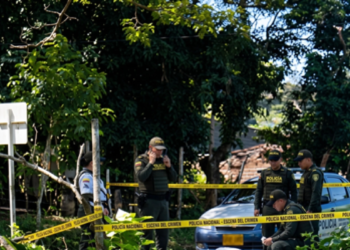
National Police for the Democracy Plan in Bolívar Photo:national police
Regions under the microscope
Beyond the accusations against one or another of the campaigns, the alerts for the action of the armed They have even come from own government.
He Minister of Defense, Pedro Sánchezreported that the authorities have identified dozens of municipalities with some degree of electoral risk. As he explained, the sixth version of the electoral risk map points out 38 municipalities with threats associated with non-violent eventsas possible cases of constraint on the voter, vote buying and other irregularities.
Others are added to that figure 32 municipalities at risk of violent events. The official indicated that criminal organizations like him ‘Gulf clan’ and structures associated with alias Calarca could be involved in crimes related to the electoral process.
The concerns include regions ranging from the Pacific to the border with Venezuela and from the south of the country to strategic corridors of the Caribbean. Departments like Cauca, Catatumbo, Guaviare, Caquetá, Putumayo, Arauca, Meta, southern Bolívar, Nariño and Antioquia They concentrate a good part of the alerts issued by electoral organizations, the Ombudsman’s Office and the Electoral Observation Mission (MOE).
Behind these warnings a recurring phenomenon appears: the presence of armed groups what are they looking for consolidate your influence in territories where they converge illicit economies, illegal mining, drug trafficking and strategic routes for criminal mobility.
In several rural areaspolitical activity has developed under restrictions imposed by illegal structures. There is candidates who cannot enter to certain territories and social leaders who have reduced public gatherings for security reasons.
Democracy Plan in Valley. Photo:Private Archive.
There have also been complaints about pressures exerted against community action boards and peasant organizations. In Antiochthe alerts focus on the possibility that armed and political actors interfere with citizen participation.
The MOE has warned that the panorama is especially sensitive in Bajo Cauca, the North and Northeast of Antioquiawhere during 2025 they persisted territorial disputes and the presence of criminal organizations.
The restrictions They are also reflected in the daily life of various populations. Municipalities like Briceño, Sabanalarga, Ituango, Yarumal, Anorí, Tarazá, Campamento, Remedios and Segovia are among the territories most affected by armed confrontations and illegal control.
In crashedalthough the departmental and military authorities assure that There are no formal complaints of electoral constraintremains surveillance over sectors of the Atrato where the Ombudsman issued alerts for the simultaneous presence of illegal armed groups.
Guaviare appears as another of the territories under special observation. There, the dissidents have consolidated control which, according to known alerts, transcends the military sphere and includes the regulation of mobility, local economies and community life.
Democracy Plan in Valley. Photo:Juan Pablo Rueda / EL TIEMPO.
In Caucaparticularly in rural areas near Popayánpolitical sectors have pointed out that the dissidents would be conditioning community meetings and exerting pressure to favor certain candidacies.
The complaints have also spread to other departments. In La Guajirathe former president Álvaro Uribe warned of possible armed pressure in favor of specific political sectors by the Eln, the FARC dissidents, ‘the Pachenca’, the ‘Aragua Train’ and the ‘Gulf clan’. Meanwhile, in Putumayo, Arauca and Catatumbo are reported mobility restrictions, mandatory calls for community meetings and warnings directed at political leaders about proselytizing activities.
Juan Diego Torres – Justice
Juan Sebastian Lombo – Policy