Rights groups cite rising detention numbers, rejected review requests, continued confinement of minors
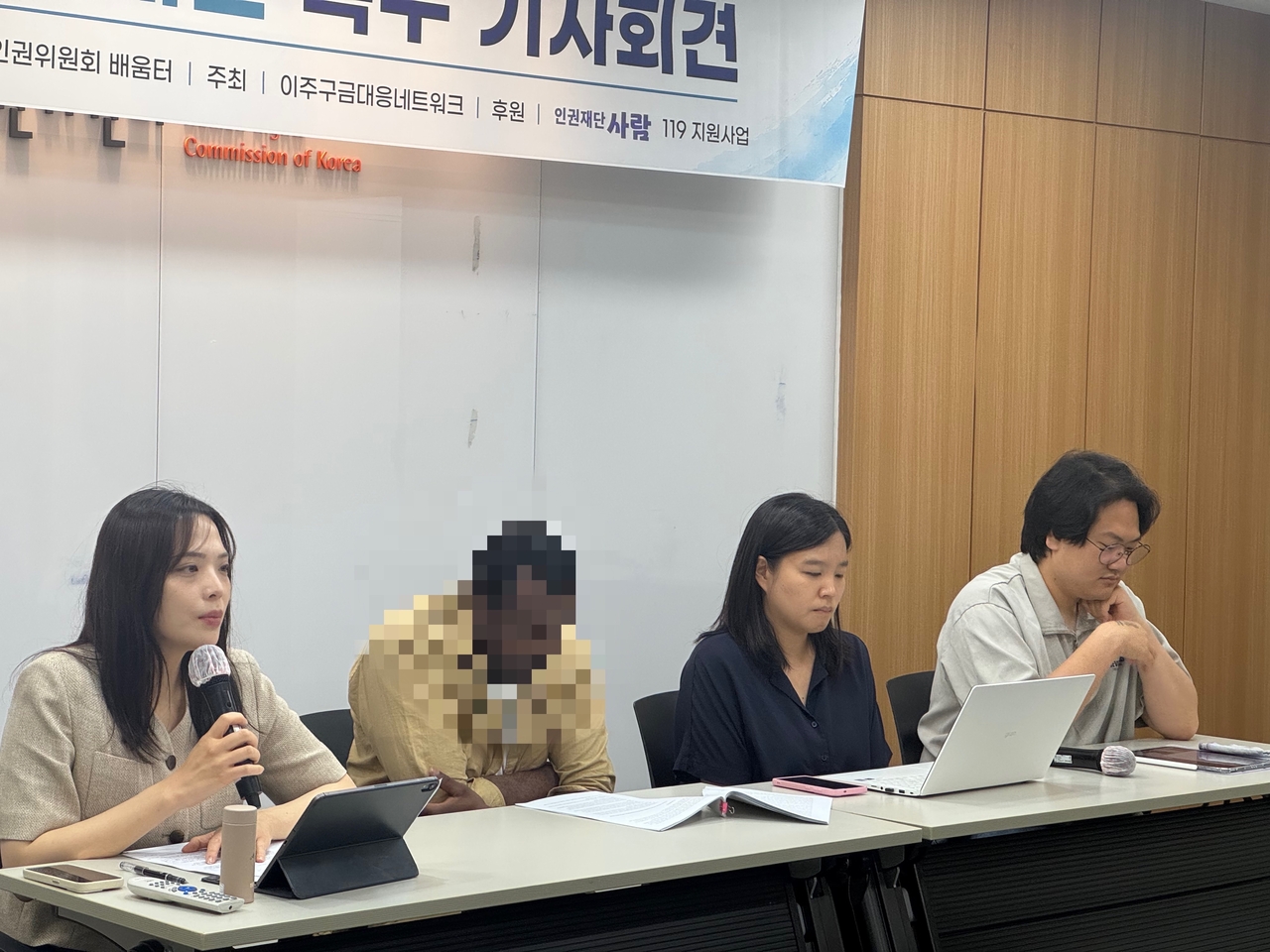
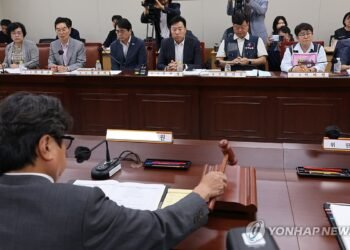
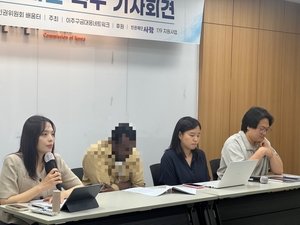
At the National Human Rights Commission of Korea headquarters in Seoul, a former detainee at Hwaseong Immigration Detention Center recalled the day he was taken into custody.
“Immigration officers stormed into my company cafeteria, stopped our meal, threw away our food, handcuffed all the undocumented workers and took us by bus to the detention center,” he said during a press conference Tuesday.
The testimony added to rights groups’ broader criticism that Korea’s immigration detention system remains opaque and punitive.
Rights groups and former detainees said Tuesday that vulnerable foreign nationals, including minors and refugee applicants, remain exposed to prolonged confinement and poor treatment, even after the Constitutional Court found indefinite immigration detention unconstitutional in 2023 and Korea amended related laws in 2025.
The Cameroonian national, who was detained at the facility in 2025, described crowded rooms, sleepless nights and neglect.
“The detention center is not a good place. I would not recommend it to anyone, not even my enemy,” he said.
Detainees sometimes fainted because the air was so stuffy, he said, while officers did not respond to emergency calls. Some were placed in solitary confinement if they failed to “follow the rules exactly,” he said, adding that conditions there were even harsher.
Phones were confiscated and returned for less than an hour a day, with camera functions blocked. Officers often shouted at detainees and banged on doors to intimidate them, he said.
Other detainees also reported racial discrimination.
The accounts shared Tuesday showed what rights groups described as a gap between legal reform and conditions on the ground.
Detention rises despite legal changes
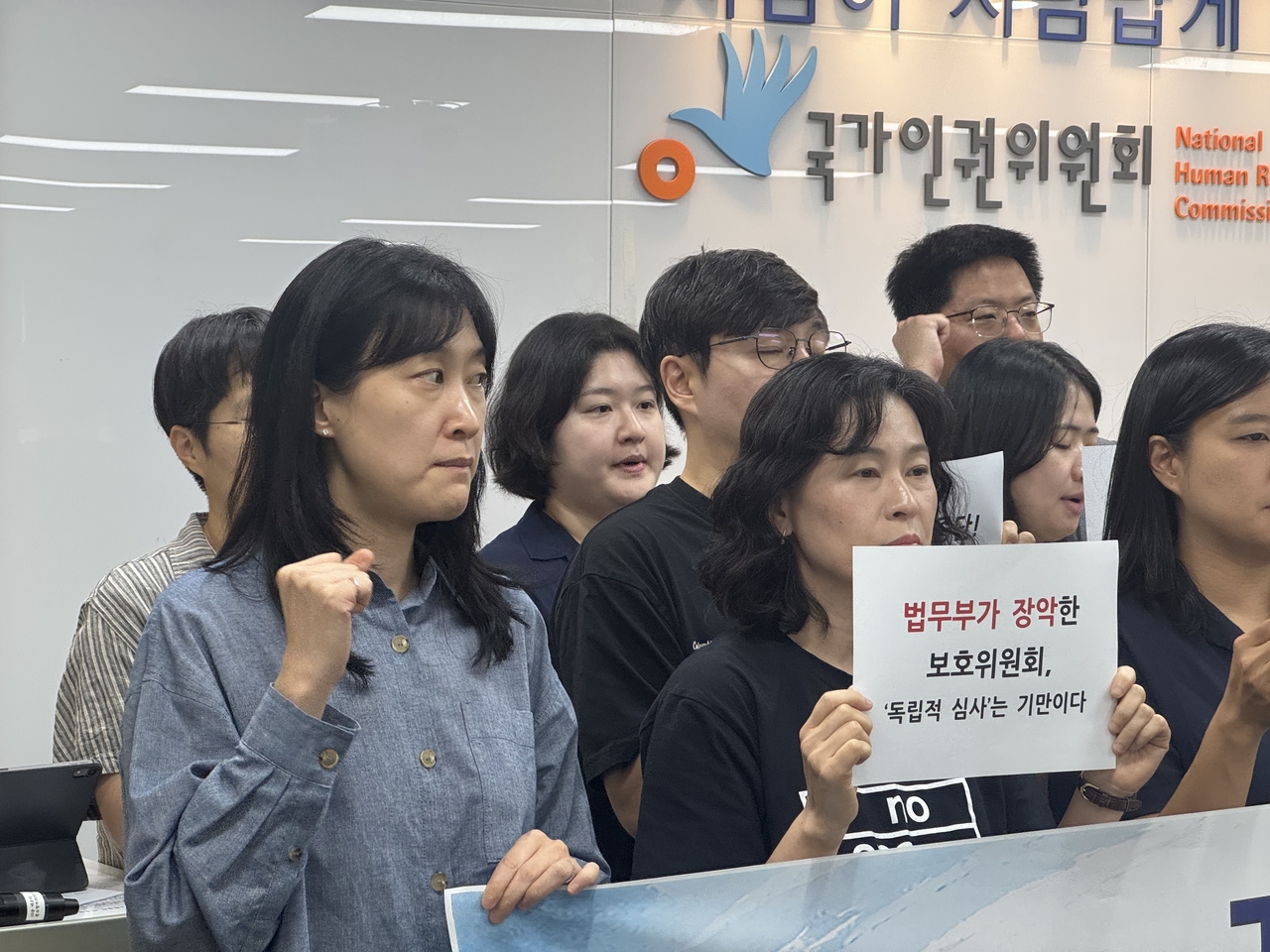
According to Justice Ministry data cited by rights groups, the number of people detained at immigration facilities did not fall after the Constitutional Court ruling and legal revision.
The figure stood at 38,639 in 2023 but rose to 39,138 last year.
Public interest law organization Duroo also noted that the revised law introduced two mechanisms intended to prevent arbitrary detention: a review request system and a periodic extension review system. But the group said both have had little effect.
In particular, the acceptance rate for review requests filed with the Foreigners Protection Committee has remained at zero percent more than a year after its launch.
The committee’s rejection rate for detention extension requests also stood at 4.7 percent, lower than the 6.3 percent average rejection rate under the previous system.
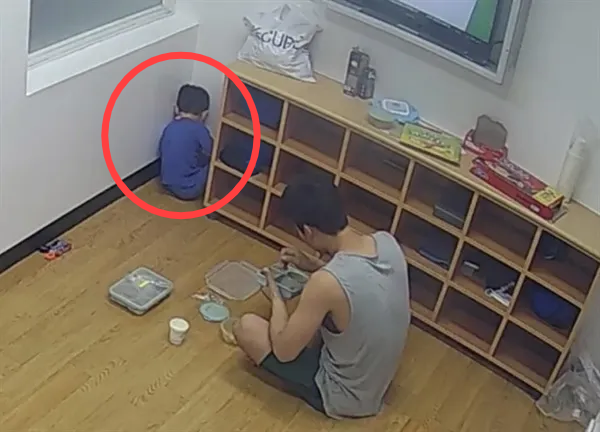
The Justice Ministry said in 2025 that it does not detain minors under the age of 14.
But Kim Jin, an attorney at Duroo, pointed to three cases in which infants under the age of 2 were detained for up to 18 days between 2020 and 2023.
During Tuesday’s event, an Egyptian national who came to Korea alone at the age of 17 said he was detained after repeatedly trying to apply for refugee status.
He described being handcuffed and placed behind bars, without interpretation or any explanation of where he was.
The Egyptian national said he survived on one boiled egg per day. “I could not eat there,” he said. “I am Muslim. I didn’t know whether the food contained pork.”
He said he was threatened by adults, denied exercise and education, and placed in a room with 25 other detainees.
Kim noted that Korea has no law prohibiting the detention of minors in immigration facilities.
“Children have the right to survival and development. They must be given the opportunity to have their opinions heard and to receive proper nutrition,” Kim said. “How is this not child abuse?”
Refugee applicants face longer detention
Rights groups also said refugee applicants face particular difficulties under the revised system.
Detention centers may hold foreign nationals for up to nine months under the amended law. However, Korea allows a 20-month extension for those seeking refugee status, citing the average time it takes to process applications.
Advocates argued that prolonged detention can pressure potential refugees to withdraw their claims in order to secure an earlier release.
“I am afraid to go back to my country, but I cannot stand being detained here for 20 months,” one refugee applicant told Kim Yeon-joo, an attorney at the Refugee Rights Center.
Limited phone access also makes it difficult for detainees to communicate with lawyers or prepare for refugee screening, Kim said.
Rights groups called on the government to strengthen independent oversight of immigration detention centers, ensure access to medical and legal assistance, and end the detention of children.
seungku99@heraldcorp.com