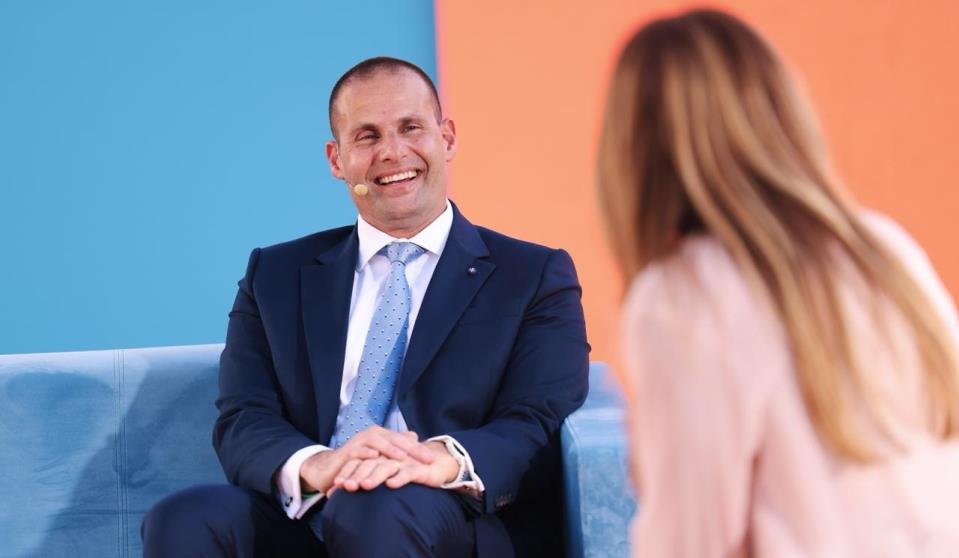
Persons with disabilities seeking to purchase their first home would receive a doubled government first-time-buyer grant of €20,000, while new personalised budget plans would be introduced to support independent living, Prime Minister Robert Abela announced on Thursday evening.
During a political activity in Birgu, Abela said that the government aims to give persons with disabilities greater autonomy and the means to reach their full potential.
“For young people aged 18 and over with a disability, we plan to introduce a personalised budget plan, not only to pay for therapy, but to ensure that persons with disability can achieve fulfilment in their lives,” he said.
“Experts will assess their needs and aspirations and draw up an individualised financial plan to ensure their dreams and potential can be realised,” Abela said.
He added that a second initiative is aimed at strengthening independence through home ownership.
“We believe that persons with severe disability should be given the greatest opportunity for independence and autonomy. To strengthen inclusion, we are proposing that we help young persons with disability become homeowners,” Abela said.
“At present, first-time buyers are given a €10,000 grant. We will double that to €20,000 for persons with disability so they can become owners of their home,” he said.
He said that the measures are intended to ensure dignity and equal opportunity.
“We must work together to give dignity to everyone,” he said.
The Prime Minister said these proposals were shaped through direct engagement with the public, adding that the party cannot design policies for people if it does not meet the people.
“It is through these encounters that you understand different needs,” he said.
Abela also announced additional social measures stemming from public feedback.
Among them is the extension of the six-month free gym scheme, initially aimed at youths, to individuals with conditions such as Parkinson’s and Alzheimer’s, where physical exercise can serve as a form of therapy.
Abela said that this is a measure which is also expected to benefit older individuals.
He also said a pilot project offering free swimming lessons for children with autism will now be expanded to all children aged between three and five through Sport Malta, allowing them to learn to swim as a form of enjoyable physical exercise and for their safety.
On healthcare, Abela said the government is in the final stages of signing a contract for a new mental health hospital at Mater Dei, alongside the expansion of the emergency department, the finalisation of which will occur in the coming days.
He also referred to investment in specialised care facilities, including a €25 million project at Dar Saura, which he described as a “state-of-the-art” centre offering high-quality services and therapies. Abela added that the government will fully cover the cost of all types of therapy, including private sessions.
Additional initiatives included the allocation of land in Mosta for the Richmond Foundation, and land beside it for Puttinu Cares, aimed at strengthening collaboration between voluntary organisations and the state to promote wellbeing.
Abela pointed to international pressures on energy prices, noting that global oil prices have surged to levels not seen since the Russian invasion of Ukraine, with crude oil reaching around $160 per barrel.
He warned that beyond rising prices, there are also concerns about security of supply, with airlines and fuel stations internationally already signalling potential shortages.
“Yet there is one country where the situation is different – Malta,” he said, pointing to stable fuel prices locally, with diesel at €1.21 and petrol at €1.34, compared to around €2 per litre elsewhere.
Abela said electricity prices have been kept stable since 2013, contrasting this with previous years under a Nationalist administration when tariffs had increased significantly.
He also recalled a time when fuel prices rose frequently and thousands struggled to find work.
Abela defended the government’s subsidy policy, arguing it remains sustainable and necessary.
“Families and businesses need stability,” he said, adding that without intervention, the burden of rising prices would have fallen on households.
He said the government has invested heavily in the energy sector, including upgrades to the distribution system, new substations and a shift from heavy fuel oil to natural gas.
He added that the government is aiming to increase renewable energy generation to 25% by 2030 as part of efforts to strengthen energy security.
Abela said that the second Malta-Sicily interconnector will be laid by the end of the year, and spoke of the third interconnector, announced early on Thursday, saying that these are part of a strategy to diversify energy sources.
Abela said a financial “cushion” of more than €250 million has been set aside to maintain price stability across fuels, including gas, LPG, aviation fuel and diesel.
Abela also outlined a number of proposals linked to different stages of life, guided by what he described as a wellbeing index measuring the impact of policies on people’s lives.
These included the PL’s proposal to increase the childbirth allowance to €5,000, expanded parental leave paid for by the government, further increases in student stipends, tax exemptions for young workers in their first years of employment, and additional support for first-time buyers.
He also pledged an increase of at least €50 per week in pensions, along with changes to allow widows and widowers to benefit more from their partner’s pension.
He said the measures reflect a broader vision of government being present “at every stage of life,” underpinned by a strong economy.
“The individual must always be at the centre of our vision,” Abela said.