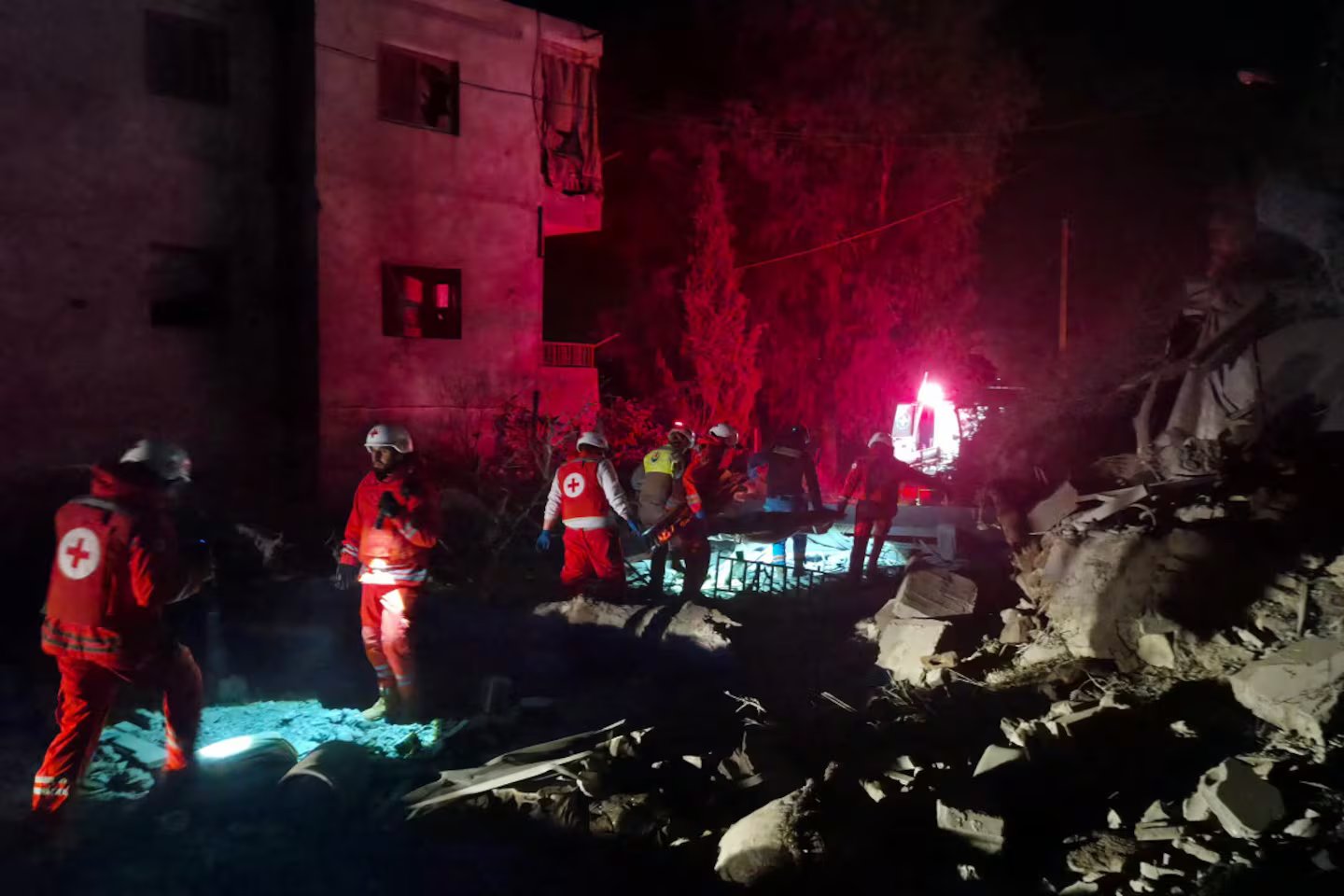
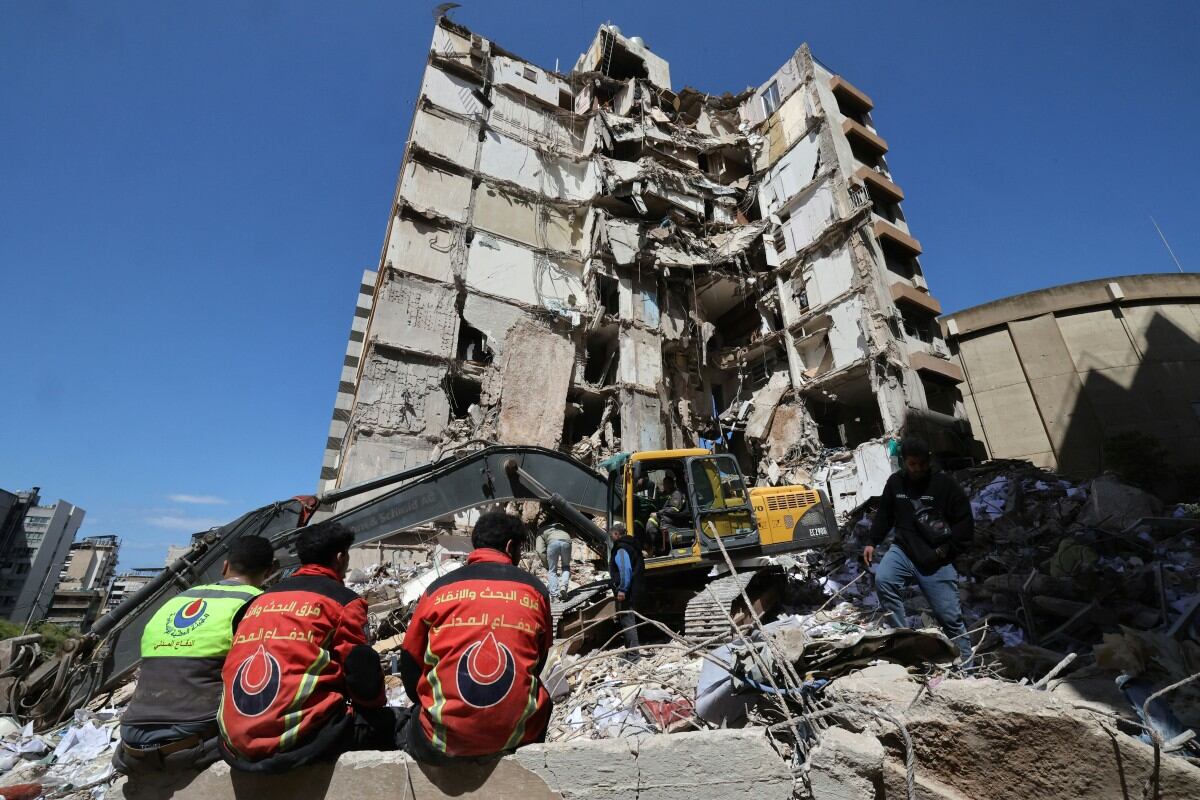
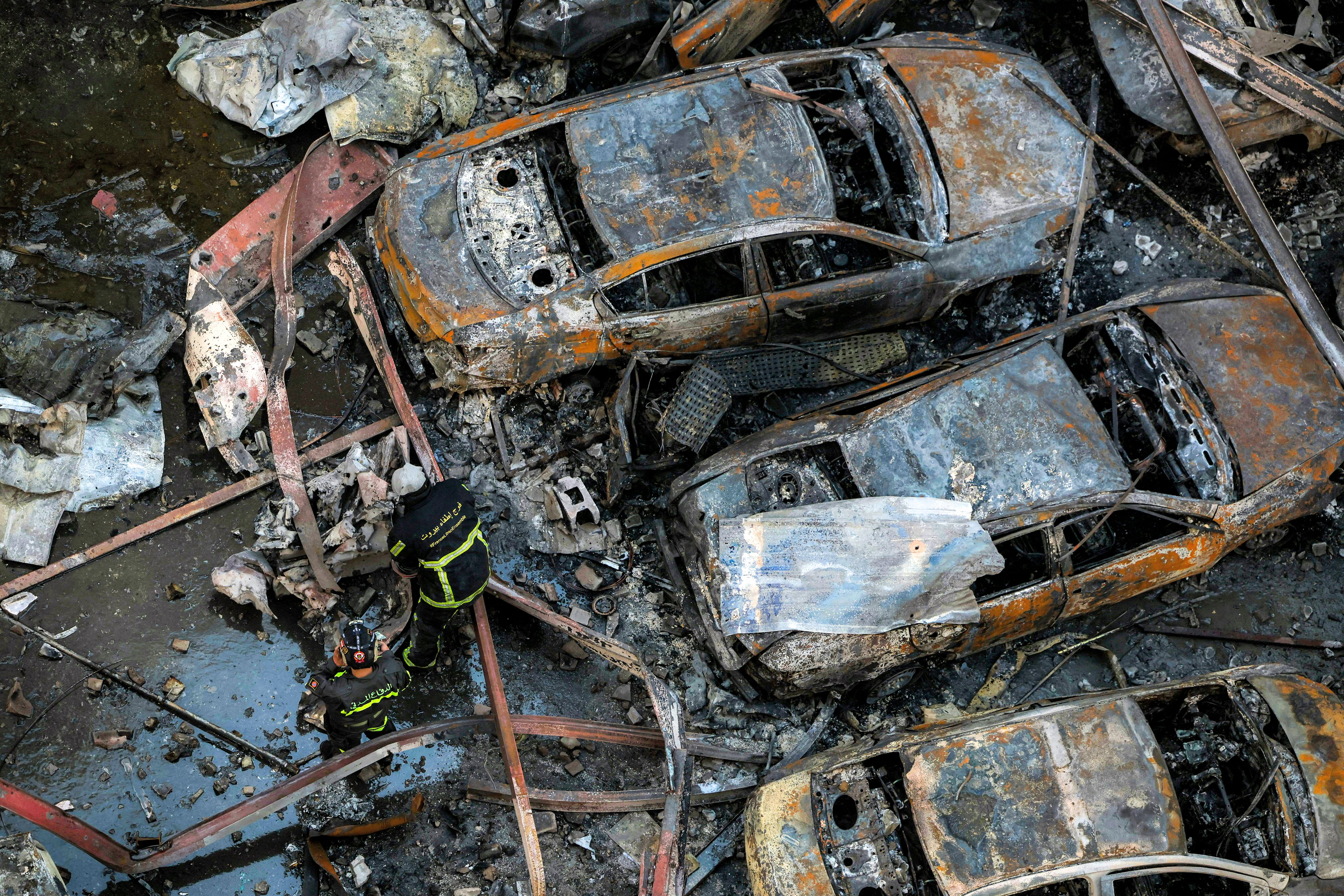
Beirut, Lebanon. A poet, a radio host, a volunteer helping displaced people, a widow who lost her husband in the Beirut port explosion: the Israeli airstrikes on Lebanon Wednesday left more than 300 dead.
After carrying out its largest air offensive since the war against the Lebanese armed group Hezbollah began on March 2, the Israeli army claimed to have attacked “approximately 100 Hezbollah command centers and military sites.”
But most of those killed were civilians, a Lebanese military source told AFP.
The radio host
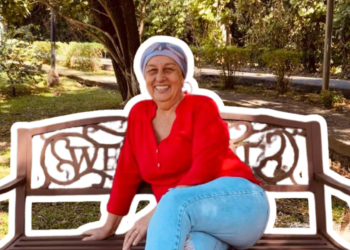
Veteran radio host Ghada Dayekh, 60, died when an Israeli bombardment leveled her home in the coastal city of Tyre.
“I have known Ghada for 37 years and she always used to say that she was our mentor at the station,” said Alwan Charafeddine, owner of the Sawt Al-Farah radio station, which in Arabic means “Voice of Joy.”
“He trained generations of journalists and generations grew up with his voice,” said Charafeddine, who is also vice mayor of Tyre.
After the Israeli bombing of the Sawt Al-Farah office at the start of the war, Dayekh continued working from home.
“He refused to leave, thinking that he was safe and that there were no partisan facilities nearby,” never imagining that such an attack “would target the building without warning,” Charafeddine said.
Charafeddine remembered “her endearing personality, her joyful spirit, the smile that never left her face and her love of joy and life.”
“She used to introduce herself as Ghada, ‘The Voice of Joy’, instead of her last name.”
The delicate poet
In the Tallet al Jayyat neighborhood of Beirut, poet Khatoun Salma died at home with her husband on Wednesday night.
Writer and editor Rasha Al Amir mourned Khatoun’s death in a social media post, calling her “the delicate poet, the loving mother, the proud grandmother and the friend who died yesterday with her husband Mohammad under the rubble.”
Theater director and playwright Yehya Jaber recalled the evenings they spent with the couple on their balcony.
“We used to string together memories, recite poetry, remember our city of Tire and love the capital, Beirut.”
He dismissed her saying: “With its sharp scissors, the war plane shot down a poet of delicate Arabic.”
A master roaster
Nader Khalil started working at the Rifai nut roastery 35 years ago.
He went to work for the last time on Wednesday, at the Rifai branch in the Corniche Al Mazraa area of Beirut.
An Israeli bombing turned the neighborhood, crowded at that rush hour, into a scene of ruin and devastation.
Rifai mourned the death of Khalil, who was “known for his dedication, exceptional service and passion for his work,” noting in a social media post: “He will be deeply missed, but his legacy will forever remain in our hearts.”
That sentiment was echoed in dozens of comments praising the man with the “kind heart” and “joyful face.”
The widow who demanded justice
Almost six years ago, the Beirut port explosion on August 4, 2020, turned the lives of 32-year-old Ola Al Attar and her two daughters upside down, when her husband, who worked at the port, died along with more than 220 others.
The girls, now eight and eleven years old, are once again mourning the loss of their mother who died when an Israeli bombing hit the building where she worked as a secretary in a medical clinic in the working-class neighborhood of Ouzai, south of Beirut.
Ibrahim Hoteit, an activist representing the families of victims of the Beirut port explosion, told AFP that the girls “have now been left without mother and father, after both died in equally horrific massacres.”
“His dream was that we would get to the truth and achieve justice” in the port investigation, Hoteit said after attending his funeral.
“Today we commit to her to fulfill her dream.”
The volunteer
In the Aley area, southeast of Beirut, Rana Shaya went to a pharmacy run by a local NGO to collect medicines for people displaced by the war.
As he entered the pharmacy, an Israeli airstrike killed everyone inside.
In her hometown of Baysur, her family received condolences on Thursday, and her brother-in-law Sami told AFP: “Since the beginning of the war, she had volunteered to help the displaced.”
Shaya leaves behind a husband and two children. The family will always remember “Rana, determined and full of life,” Sami said.