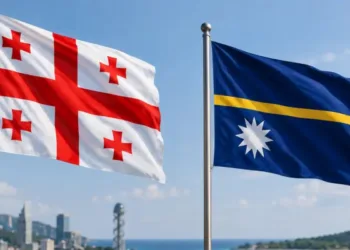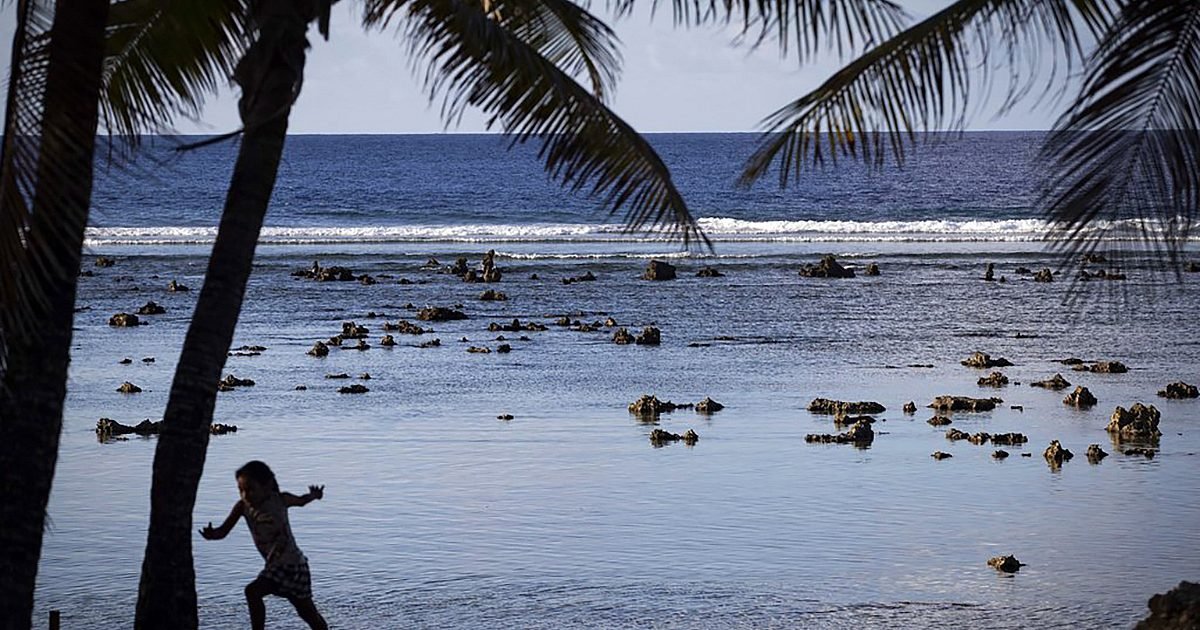
The island nation of Nauru has a new name—but it’s also an old one. The new name, Naoero, is the island’s traditional name.
Find a map of the world. Look in the Pacific Ocean east of Papua New Guinea. Then zoom in. And zoom in. And zoom in some more. The Republic of Nauru might not even appear on your map. It’s too tiny! With just 12,000 residents, it’s the third smallest country in the world.
That hasn’t prevented the island from becoming a prize for bigger powers. In 1888, Germany colonized it. After World War I, control went to Australia. Australia governed the island until Nauru became an independent republic in 1968.
The early German settlers found a valuable resource on the island: phosphate. This mineral helps fertilize crops and preserve food. Phosphate mining began there in the early 1900s. In the 1970s, this industry made Nauru one of the wealthiest nations per capita (per person) in the world. But in the 1990s, the industry collapsed. Bad money management brought the country to economic ruin.
The name “Nauru” (pronounced NOW-roo) came about as a matter of convenience. Foreigners often struggled to pronounce the original name. But the island’s people prefer Naoero (pronounced NOW-ero). The government says that citizens will also now be known as dei-Naoero instead of Nauruan.
“This . . . change seeks to more faithfully honor our nation’s heritage, our language, and our identity,” says President David Adeang.
Other nations have made similar swaps in recent years. In 2018, the African kingdom of Swaziland reclaimed its historic name, Eswatini. In 2022, officials from Turkey requested that the United Nations begin calling their nation Türkiye.
Names have power—for both nations and people. In scripture, God often gives people new names. God changed Jacob’s name to Israel before promising the land to his descendants. (Genesis 35:10) Jesus changed Simon’s name to Peter when speaking of the rock on which He would build the Church. (Matthew 16:18)
God promises to give all His followers new names too. (Revelation 2:17) Like the change from Nauru to Naoero, this new name says something important about our identity. We don’t find our identity in fleeting earthly things, like industries that can collapse. We find our identity in Him.