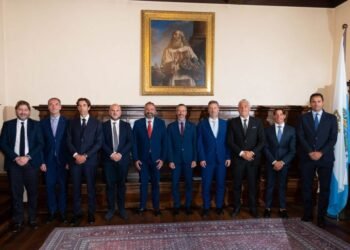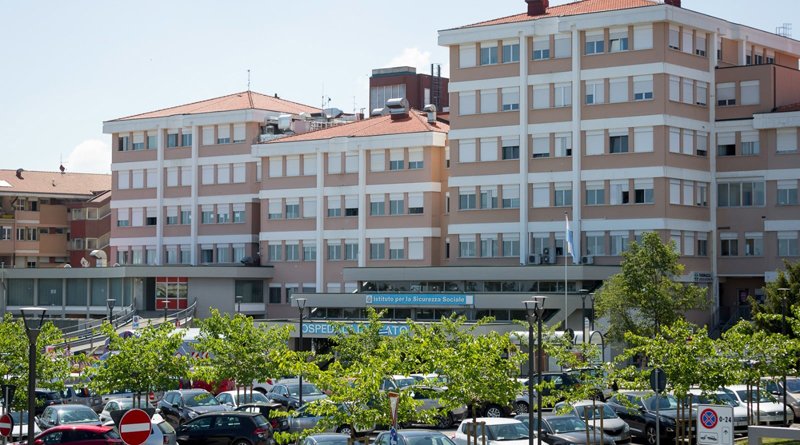
SAN MARINO – A framework divided between strategic prevention projects, reorganization of the territorial network, interventions to contain waiting lists and still unresolved political issues. This is what emerged during the hearing of the Executive Committee of the Institute for Social Security (ISS) in Permanent Council Commission IV.
The Secretary of State for Health opened the proceedings, Massimo Andrea Ugoliniwhich traced the route of a system “increasingly centered on the person, on their needs and requirements”. The approach focuses on prevention, digitalisation, with the evolution of the SM Salute app, the strengthening of the Electronic Health Record and the introduction of the digital signature, and on logistical interventions for users.
Among these, the regulation of three-hour parking in hospital car parks from November, the moving of the pharmacy to the car park level, the transfer of the blood sampling point to the building of the former retirement home and the modernization of the emergency room waiting room and the mortuary.
On the social and health infrastructure front, the Secretary of State for the Territory, Matteo Ciacciillustrated the design of the territorial network: the completion of the Borgo Maggiore Health Center and the imminent start of works in Murata, the expansion of Casale La Fiorina with 59 places for non-self-sufficient elderly people and the new hospice, in synergy with the San Marino Oncology Association, in addition to the hypothesis of a 76-place affiliated RSA at the former Karnak in Chiesanuova.
Prevention, proactive medicine and deprescribing
The Director General of the ISS, Claudio Vagninireviewed the main operational lines initiated by the Executive Committee. Prevention confirms itself as a strategic pillar: from the Cardio 40 program for the early diagnosis of cardiovascular risks to early colorectal screening at the age of 45, up to the free “Let’s get tested” campaign for hepatitis C.
There is also space for the proximity care model inspired by the Italian Ministerial Decree 77, for the humanization of care, with the “gentle caesarean section” and the “Musica in ward” project in geriatrics, and for initiatives for disabilities, such as the Snoezelen multisensory room and the “Il Re” autonomy path.
The data presented on the pilot project of deprescribing and pharmacological review in elderly people hospitalized in geriatrics is noteworthy: the rationalization of therapies has shown “a reduction of more than 50% in hospitalizations within thirty days”. As Vagnini observed: “We know that the combination of many drugs can become, in certain cases, a problem rather than an advantage”.
Clinical additions came from the Director of Health Activities, Alessandro Bertoliniwhich announced the start of lung cancer screening from November 23rd and pediatric home visits from October 1st for vulnerable groups.
On the waiting list front, Bertolini cited the case of the ENT department, reorganized with three full-time specialists and one part-time, which brought waiting times to four days. To reabsorb the other non-parameter lists, additional services have already been started on a voluntary basis in gastroenterology, radiology and orthopaedics.
On the administrative level, the Administrative Director Manuel Canti underlined the transition from individual resolutions to stable regulatory frameworks and the revision of medical evaluation forms, the economic result of which now depends 50% on budget objectives and the remaining 50% on professional quality and proactivity.
Opposition questions
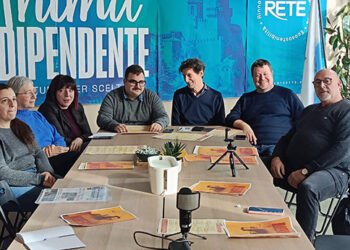
Once the presentations of the ISS summits were completed, the debate got to the heart of the questions from the commissioners.
Emanuele Santi (Rete) asked for guarantees on the underlying prospects: “What happened to the new hospital? Will it be built or not?”. Santi also asked for clarity on the costs of the current structure, on the transition of mammographic screening to every two years and on the autonomy of the Executive Committee: “I ask you if today you are put in a position to work peacefully or if the political pressure remains constant and very relevant”.
Matteo Casali (Future Republic) contrasted theoretical relationships with the inconveniences experienced by users, reporting cases of elderly people forced to wait up to seven or eight hours on a stretcher in the emergency room before finding hospitalisation: “My suggestion is to never confuse projects, things that are in progress and desires with the reality of the facts that citizens encounter today”.
Concern about overcrowding in the emergency room was also expressed by Gaetano Troina (Domani-Motus Liberi), who asked whether the analysis of ISS personnel had revealed “situations of supernumerary personnel or people placed in certain structures without that presence being really necessary for the functionality of the individual Operational Unit”.
Finally, Troina raised doubts about the outsourcing of the kitchens and the promiscuity of the canteen spaces between healthcare personnel and civilians.
The discussion was therefore suspended and postponed to the afternoon session for the replies of the ISS leaders and the continuation of the political debate.