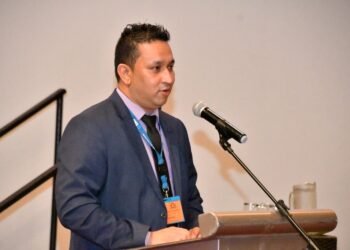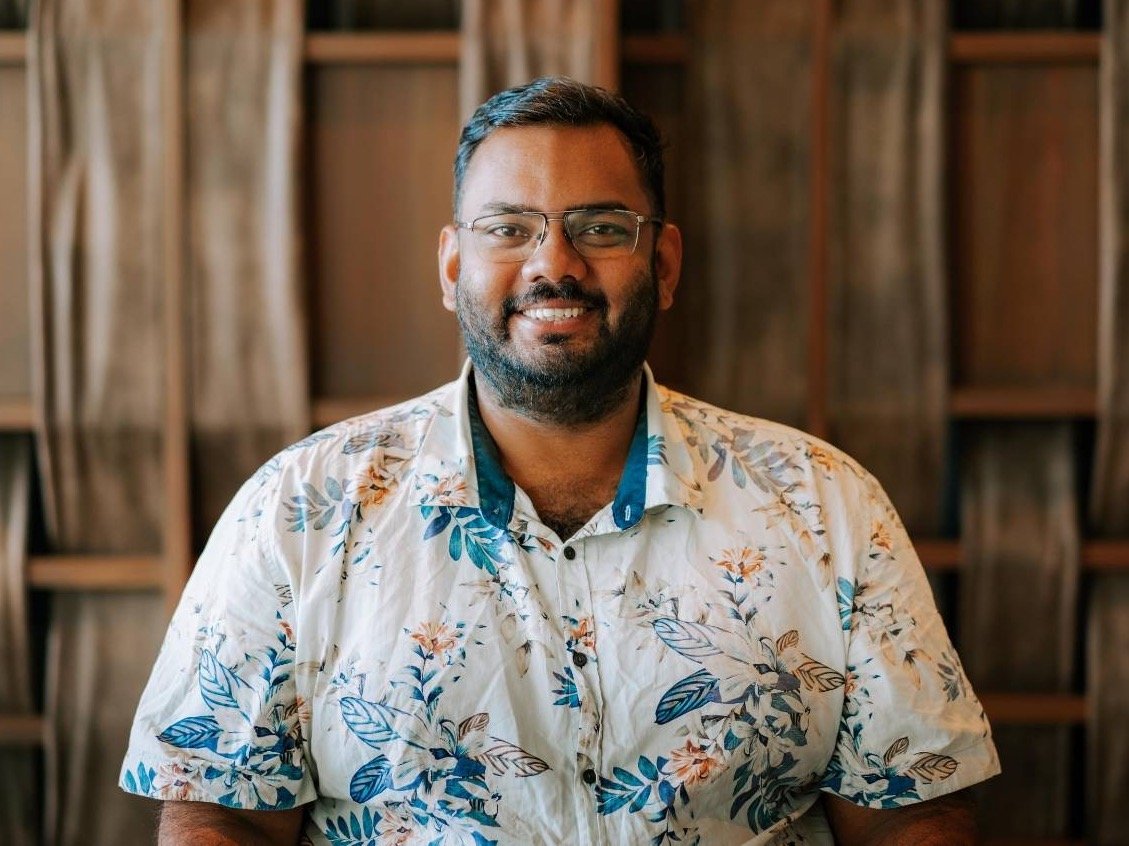
For years, Pacific Island students have been told to tell their stories louder. But at the Women Deliver Conference 2026 in Melbourne, Abdul Mufeez Shaheed delivered a different message: the Pacific is no longer just speaking — it is reshaping the rules of global climate justice itself.
At first glance, it began like many youth climate conversations do — students, academics, activists, governments, and global partners gathered under one roof, all speaking the language of urgency.
But Abdul Mufeez Shaheed from Pacific Islands Students Fighting Climate Change (PISFCC) and Oceania Pride was not there to repeat familiar warnings.
He was there to explain how a generation of Pacific students helped shift climate justice from moral appeal to legal accountability and why that changes everything.
“People are asking for data and percentages,” he reflected, “but they need to dig deeper. They need to see the stories behind the numbers — the inequalities behind them.”
His words carried the weight of a movement that has spent years navigating closed doors, crowded consultation rooms, and global systems that often demanded urgency from the Pacific while offering delay in return.
Now, he said, something fundamental has shifted.
From classrooms to courtrooms: a legal turning point
Mr Shaheed traced the origins of what has become one of the most significant youth-led legal climate campaigns in the region.
It began, he explained, with a simple classroom exercise – around 27 university students asked a hypothetical question: If you could use international law to address climate change, what would you do?
Most students expected to stay within academic theory. Instead, the group began exploring something far more ambitious: taking the question of climate change to the world’s highest legal authority.
The idea that emerged was the push for an advisory opinion from the International Court of Justice (ICJ), later reframed and advanced through global advocacy and legal channels as part of a broader effort to clarify state obligations under international law.
The breakthrough, Mr Shaheed said, was not just legal — it was political and moral.
For Pacific communities, climate change was never abstract. It was not policy debate or economic modelling. It was lived reality: disappearing shorelines, stronger cyclones, and disrupted livelihoods.
He recalled how, in Fiji alone, a decade has seen a sharp escalation in extreme weather events, including Category 5 cyclones that have devastated infrastructure and erased years of economic development in a matter of hours.
“These are not projections for us. They are lived experiences.”
Rewriting the rules: climate
as a human rights issue
One of the campaign’s core principles, Mr Shaheed explained, was non-negotiable: climate change had to be framed as a human rights issue.
Not a technical environmental problem. Not a distant economic debate. But a question of survival, dignity, and justice.
That framing, he said, changed everything.
Instead of relying solely on emotional testimony, stories that global audiences could choose to sympathise with or ignore, the movement began grounding its arguments in legal obligation.
“States now don’t just hear our stories.
“They are being told what they are legally required to do.”
That shift, he argued, marks a transition from persuasion to accountability.
When the Pacific refused to
be the ‘drowning narrative’
Mr Shaheed also reflected on a tension that has shaped Pacific climate advocacy for decades: the expectation that island states must constantly perform their vulnerability for global audiences.
For years, he said, Pacific voices have travelled the world repeating the same message — stop, because this is killing us.
But in doing so, he added, the burden of resilience often fell back on the very communities most affected.
“We were being asked to survive loudly. To prove our existence through suffering.”
The new legal and advocacy frameworks, he argued, help shift that burden.
The question is no longer whether the Pacific is suffering but what those responsible for emissions are legally required to do about it.
The Witness Stand Project: when stories become evidence
One of the most powerful developments Mr Shaheed described was the transformation of storytelling into legal evidence.
Through what he referred to as a “witness stand” initiative, communities from across the Pacific recorded video testimonies documenting their lived realities of climate change.
These testimonies, often from people who would never physically appear in international courts were compiled, transcribed, and submitted as part of legal processes.
The scale was staggering: thousands of pages of documented lived experience used alongside scientific and legal submissions.
For Mr Shaheed, this represented something historic: Pacific voices not as symbolic presence, but as evidentiary force in global climate law.
The power and danger of
global alliances
At the heart of Mr Shaheed’s message was the importance of alliances between students, academics, legal experts, governments, and civil society.
He described the emergence of transdisciplinary collaboration — spaces where science, law, activism, and lived experience intersect.
But he also issued a caution.
Academia, he suggested, does not always naturally translate into public impact. Research can become disconnected from the communities it claims to represent. Policy conversations can drift away from the realities on the ground.
For him, the activist-academic alliance only works when it refuses to separate knowledge from lived experience.
“I can’t talk about economics without talking about energy and climate.
“Because for us, everything is connected.”
When data is not enough
A recurring theme in Mr Shaheed’s reflection was the limitation of data alone.
Scientific reports, he acknowledged, remain essential. The Intergovernmental Panel on Climate Change (IPCC) continues to provide critical evidence for global negotiations.
But numbers, he argued, are not neutral — they represent lived realities.
He recalled conversations with communities affected by climate displacement, where people were not only losing land but also risking their lives to sustain basic food systems across increasingly unstable waters.
In one example, he described families in the Pacific travelling hours by boat through dangerous seas simply to deliver food to relatives still living on affected islands – efforts that sometimes end in tragedy.
These are not statistics, he implied. They are human systems under strain.
From extractive knowledge
to shared responsibility
Mr Shaheed also challenged how knowledge is produced and used.
Too often, he said, communities are studied, quoted, and analysed — but not meaningfully included in shaping outcomes.
This, he suggested, mirrors broader patterns of extractive research: information taken from the Global South and processed elsewhere without sufficient return of benefit or power.
The solution, he argued, lies in long-term partnerships that redistribute authority, not just attention.
The emotional toll of
climate leadership
Behind the legal frameworks and policy language, Mr Shaheed acknowledged something more personal: the emotional weight carried by young Pacific leaders.
Advocacy, especially in climate justice spaces, is not just intellectual work. It is continuous exposure to loss, urgency, and responsibility.
The result, he suggested, is burnout — particularly among those who are expected to speak for entire regions while navigating their own identities and academic or professional pressures.
From urgency to justice
If there was one unifying thread in Mr Shaheed’s message, it was this: the Pacific is no longer asking to be heard – it is demanding systems that respond.
Through legal innovation, youth mobilisation, and transdisciplinary alliances, Pacific students have helped shift climate justice into a new phase — one grounded not only in moral appeal, but in enforceable accountability.
Still, Mr Shaheed warned against complacency. Legal victories and advisory opinions are not endpoints. They are tools — tools that must be continuously defended, expanded, and grounded in real community experience.
A movement still in motion
As he closed his intervention, Mr Shaheed returned to the idea that began his journey: a group of students in a classroom, asking what seemed like an impossible question.
That question has since travelled far beyond lecture halls — into international courts, global negotiations, and frontline communities across the Pacific.
But for Mr Shaheed, the mission remains unfinished.
The task now, he suggested, is not only to change international law but to ensure that law, once changed, changes lives.
Because in the Pacific, climate change has never been theoretical. And neither, he insisted, should justice be.
Cheeriann Wilson is a communications consultant. She is attending the Women Deliver 2026 Conference in Melbourne as a scholarship awardee.