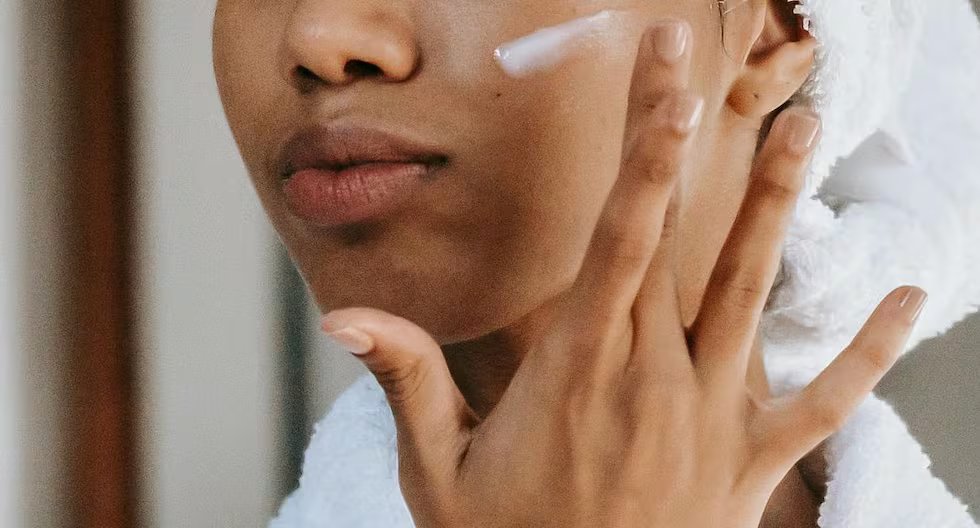
Many believe that hydrating and moisturizing are synonymous, but in reality they are not, and that mistake ends up affecting a skincare routine more than you imagine. Although both actions seek to improve the appearance and health of the skin, they fulfill different functions: one provides water, while the other helps retain it. However, not everyone can understand this difference and make mistakes when choosing the right products, especially if the skin is dry, dehydrated, or needs specific attention. That is why it is important to stop for a moment to inspect How are you taking care of yourself on a daily basis? And if you are actually helping the largest organ in your body to be healthy, why? Many feel that their creams “don’t work” or that their skin remains tight, dull or uncomfortable despite following several daily steps without understanding what is really needed.
The difference between hydrating and moisturizing the skin
Hydrating and moisturizing are often confused in skin care routines, but they serve different functions. Not differentiating them is one of the most common mistakes in skincare and can mean that the skin does not receive the care it really needs.
“Hydrating means providing water to the skin, while moisturizing involves sealing that hydration to prevent it from being lost. They are different, but complementary processes,” explains Mg. Raquel Quincho Jara, academic coordinator of the Cosmiatry degree at the Carrión School of Beauty and Aesthetics.
Furthermore, one of the most common mistakes is to think that a cream is enough to keep the skin healthy, when many times it is only moisturizing without having previously hydrated. The opposite also happens: using moisturizing products without then applying one that helps retain that moisture, which promotes water loss and increases dryness.

Today people are looking for solutions that really integrate into their daily routine and accompany skin care constantly. (Photo: SHVETS production / Pexels)
How to know if your skin needs more attention
Signs that the skin is not properly hydrated include dullness, tightness, more pronounced fine lines, and loss of elasticity. On the other hand, when moisture is lacking, peeling, roughness and a constant feeling of dryness may appear, even after applying products.
Among the most used active ingredients, ingredients such as hyaluronic acid, glycerin, aloe vera, panthenol and urea stand out in low concentrations, which help attract and retain water in the skin. On the other hand, ceramides, vegetable oils, shea butter and squalene help seal in that hydration and reinforce the skin barrier.
Skin type and age also influence the choice of these products. While dry skin requires a more intense combination of hydration and moisture, oily skin needs light, non-comedogenic formulas. Furthermore, over the years, the skin loses its ability to retain water and lipids, so it becomes necessary to reinforce both processes.
“An effective routine should first include a hydrating product and then a moisturizing product. The key is not to use many products, but to understand what the skin needs and be consistent in its care,” Mag. Quincho concludes.

The key to a healthy and beautiful face is to take care of it with a proper routine. (Photo: Anna Tarazevich / Pexels)
The sign that your skin needs more consistent care
Now that you know the importance of hydration and moisturization in your daily routine, it is also good for you to know that an uneven tone on your face is usually a sign that your skin needs more consistent care. This is where it is time to accompany her in a progressive way, helping her to stay balanced and luminous.
For this, it is important to know that factors such as sun exposure, genetic predisposition, aging, hormonal changes and inflammatory processes – such as acne or scarring – can influence the appearance of spots and skin tone. Here I share a skincare routine from the experts at Natura Chronos Derma that will help you.
- Step 1 – Gentle Cleansing: Every effective routine begins with proper cleansing to even out skin texture. Apply the Unifying Cleansing Enzymatic Facial Powder to wet hands, add water and rub until foaming. Apply the product to the face and leave it on for 1 minute. Rinse and use a maximum of 1 time per day.
- Step 2 – Unifying Care: The next step is treatment. The Intensive Multi-Lightening Serum helps the tone look more uniform and brighter with constant use, making spots less noticeable as the days go by. It is advisable to apply two to three pressures on clean, dry skin, distributing it over the face and neck.
- Step 3 – Daily protection: To complete the routine, sun protection is key. The Lightening Multiprotector SPF 50+/70 protects the skin from the sun and helps prevent the appearance of new spots. Apply it every morning as the last step of your facial routine, even when you are not directly exposed to the sun.
If you are interested in health and well-being, we invite you to join our WhatsApp channel. Don’t miss valuable information and tips that will help you in your daily life. Join our community 👉 here