Monday, May 4, 2026
    The GeoStrategic Consensus
    No Result
    View All Result
    • Login
    • HOME
    • AMERICAS
      • Argentina
      • Brazil
      • Canada
      • Chile
      • Colombia
      • Costa Rica
      • Cuba
      • Dominican Republic
      • Ecuador
      • El Salvador
      • Greenland
      • Guatemala
      • Honduras
      • Mexico
      • Nicaragua
      • Panama
      • Paraguay
      • Peru
      • United States
      • Uruguay
      • Venezuela
    • ASIA-PACIFIC
      • Australia
      • Brunei Darussalam
      • Cambodia
      • China
      • Federated States of Micronesia
      • Fiji
      • Indonesia
      • Japan
      • Kiribati
      • Laos
      • Malaysia
      • Marshall Islands
      • Mongolia
      • Myanmar
      • Nauru
      • New Zealand
      • North Korea
      • Palau
      • Papua New Guinea
      • Philippines
      • Samoa
      • Singapore
      • Solomon Islands
      • South Korea
      • Taiwan
      • Thailand
      • Timor-Leste
      • Tonga
      • Tuvalu
      • Vanuatu
      • Vietnam
    • CARICOM
      • CARICOM – Non-English
        • Haiti
        • Suriname
      • CARICOM Associates
        • Anguilla
        • Bermuda
        • British-Virgin-Islands
        • Cayman-Islands
        • Curacao
        • Turks-and-Caicos
      • CARICOM English
        • Antigua and Barbuda
        • Barbados
        • Belize
        • Dominica
        • Grenada
        • Guyana
        • Jamaica
        • Montserrat
        • Saint Kitts and Nevis
        • Saint Lucia
        • Saint Vincent and the Grenadines
        • The Bahamas
        • Trinidad and Tobago
    • EURASIA
      • Armenia
      • Azerbaijan
      • Balarus
      • Georgia
      • Kazakhstan
      • Kyrgyzstan
      • Moldova
      • Russia
      • Tajikistan
      • Turkmenistan
      • Ukraine
      • Uzbekistan
    • EUROPE
      • Albania
      • Andorra
      • Austria
      • Bosnia and Herzegovina
      • Bulgaria
      • Croatia
      • Cyprus
      • Czech Republic
      • Denmark
      • Estonia
      • Finland
      • France
      • Germany
      • Greece
      • Holy See
      • Hungary
      • Iceland
      • Ireland
      • Italy
      • Kosovo
      • Latvia
      • Liechtenstein
      • Lithuania
      • Luxembourg
      • Malta
      • Monaco
      • Montenegro
      • Netherlands
      • North Macedonia
      • Norway
      • Poland
      • Portugal
      • Romania
      • San Marino
      • Serbia
      • Slovakia
      • Slovenia
      • Spain
      • Sweden
      • Switzerland
      • United Kingdom
    • MIDDLE EAST AND NORTH AFRICA
      • Algeria
      • Bahrain
      • Egypt
      • Iran
      • Iraq
      • Israel
      • Jordan
      • Kuwait
      • Lebanon
      • Lybia
      • Morocco
      • Oman
      • Palestinian Territories
      • Qatar
      • Saudi Arabia
      • Syria
      • Tunisia
      • Turkey
      • United Arab Emirates
      • Western Sahara
      • Yemen
    • SOUTH ASIA
      • Afghanistan
      • Bangladesh
      • Bhutan
      • India
      • Maldives
      • Nepal
      • Pakistan
      • Sri Lanka
    • SUB-SAHARAN AFRICA
      • Angola
      • Benin
      • Botswana
      • Burkina Faso
      • Burundi
      • Cabo Verde
      • Cameroon
      • Central African Republic
      • Chad
      • Comoros
      • Cote d’Ivoire
      • Democratic Republic of the Congo
      • Djibouti
      • Equatorial Guinea
      • Eritrea
      • Eswatini
      • Ethiopia
      • Gabon
      • Gambia
      • Ghana
      • Guinea
      • Guinea Bissau
      • Kenya
      • Lesotho
      • Liberia
      • Madagascar
      • Malawi
      • Mali
      • Mauritania
      • Mauritius
      • Mozambique
      • Namibia
      • Niger
      • Nigeria
      • Republic of the Congo
      • Rwanda
      • Sao Tome and Principe
      • Senegal
      • Seychelles
      • Sierra Leone
      • Somalia
      • South Africa
      • South Sudan
      • Sudan
      • Tanzania
      • Togo
      • Uganda
      • Zambia
      • Zimbabwe
    • HOME
    • AMERICAS
      • Argentina
      • Brazil
      • Canada
      • Chile
      • Colombia
      • Costa Rica
      • Cuba
      • Dominican Republic
      • Ecuador
      • El Salvador
      • Greenland
      • Guatemala
      • Honduras
      • Mexico
      • Nicaragua
      • Panama
      • Paraguay
      • Peru
      • United States
      • Uruguay
      • Venezuela
    • ASIA-PACIFIC
      • Australia
      • Brunei Darussalam
      • Cambodia
      • China
      • Federated States of Micronesia
      • Fiji
      • Indonesia
      • Japan
      • Kiribati
      • Laos
      • Malaysia
      • Marshall Islands
      • Mongolia
      • Myanmar
      • Nauru
      • New Zealand
      • North Korea
      • Palau
      • Papua New Guinea
      • Philippines
      • Samoa
      • Singapore
      • Solomon Islands
      • South Korea
      • Taiwan
      • Thailand
      • Timor-Leste
      • Tonga
      • Tuvalu
      • Vanuatu
      • Vietnam
    • CARICOM
      • CARICOM – Non-English
        • Haiti
        • Suriname
      • CARICOM Associates
        • Anguilla
        • Bermuda
        • British-Virgin-Islands
        • Cayman-Islands
        • Curacao
        • Turks-and-Caicos
      • CARICOM English
        • Antigua and Barbuda
        • Barbados
        • Belize
        • Dominica
        • Grenada
        • Guyana
        • Jamaica
        • Montserrat
        • Saint Kitts and Nevis
        • Saint Lucia
        • Saint Vincent and the Grenadines
        • The Bahamas
        • Trinidad and Tobago
    • EURASIA
      • Armenia
      • Azerbaijan
      • Balarus
      • Georgia
      • Kazakhstan
      • Kyrgyzstan
      • Moldova
      • Russia
      • Tajikistan
      • Turkmenistan
      • Ukraine
      • Uzbekistan
    • EUROPE
      • Albania
      • Andorra
      • Austria
      • Bosnia and Herzegovina
      • Bulgaria
      • Croatia
      • Cyprus
      • Czech Republic
      • Denmark
      • Estonia
      • Finland
      • France
      • Germany
      • Greece
      • Holy See
      • Hungary
      • Iceland
      • Ireland
      • Italy
      • Kosovo
      • Latvia
      • Liechtenstein
      • Lithuania
      • Luxembourg
      • Malta
      • Monaco
      • Montenegro
      • Netherlands
      • North Macedonia
      • Norway
      • Poland
      • Portugal
      • Romania
      • San Marino
      • Serbia
      • Slovakia
      • Slovenia
      • Spain
      • Sweden
      • Switzerland
      • United Kingdom
    • MIDDLE EAST AND NORTH AFRICA
      • Algeria
      • Bahrain
      • Egypt
      • Iran
      • Iraq
      • Israel
      • Jordan
      • Kuwait
      • Lebanon
      • Lybia
      • Morocco
      • Oman
      • Palestinian Territories
      • Qatar
      • Saudi Arabia
      • Syria
      • Tunisia
      • Turkey
      • United Arab Emirates
      • Western Sahara
      • Yemen
    • SOUTH ASIA
      • Afghanistan
      • Bangladesh
      • Bhutan
      • India
      • Maldives
      • Nepal
      • Pakistan
      • Sri Lanka
    • SUB-SAHARAN AFRICA
      • Angola
      • Benin
      • Botswana
      • Burkina Faso
      • Burundi
      • Cabo Verde
      • Cameroon
      • Central African Republic
      • Chad
      • Comoros
      • Cote d’Ivoire
      • Democratic Republic of the Congo
      • Djibouti
      • Equatorial Guinea
      • Eritrea
      • Eswatini
      • Ethiopia
      • Gabon
      • Gambia
      • Ghana
      • Guinea
      • Guinea Bissau
      • Kenya
      • Lesotho
      • Liberia
      • Madagascar
      • Malawi
      • Mali
      • Mauritania
      • Mauritius
      • Mozambique
      • Namibia
      • Niger
      • Nigeria
      • Republic of the Congo
      • Rwanda
      • Sao Tome and Principe
      • Senegal
      • Seychelles
      • Sierra Leone
      • Somalia
      • South Africa
      • South Sudan
      • Sudan
      • Tanzania
      • Togo
      • Uganda
      • Zambia
      • Zimbabwe
    No Result
    View All Result
    Agentially
    No Result
    View All Result
    Home AMERICAS Colombia

    They investigate the DNA of Andean inhabitants in Argentina: they can drink water with arsenic and this has science thinking

    The Analyst by The Analyst
    April 14, 2026
    in Colombia
    They investigate the DNA of Andean inhabitants in Argentina: they can drink water with arsenic and this has science thinking


    For thousands of years, human communities have survived in the Andes by consuming water with arsenic levels up to 20 times higher than recommended levels. by the World Health Organization. Today, science is beginning to understand how its biology changed.

    In San Antonio de los Cobres, in the highlands of northwestern Argentina, at more than 3,700 meters above sea level, the water contained nearly 200 micrograms of arsenic per liter before the installation of a filtration system in 2012. The recommended safe limit is just 10. And yet, this region has been inhabited for at least 7,000 years, possibly as long as 11,000. What in any other context would be an extreme risk—chronic exposure to arsenic is associated with cancer, congenital malformations, and premature death—there became an everyday condition.

    READ ALSO

    Woman demands a man’s cell phone password after suffering a serious accident in Cartagena: ‘I don’t care!’ | DNA Diary

    Everything exploded in the air in Santa Fe: Hugo Rodallega did not like being replaced by Pablo Repetto and came out throwing insults (video)

    Water eliminates gluten. Photo:iStock

    The key is how the body processes this element. When arsenic enters the body, it is transformed into different chemical forms. Some are especially dangerous, such as the monomethylated compound (MMA), while others, such as the dimethylated compound (DMA), They can be eliminated more easily through urine. In most people, metabolism generates relatively large amounts of the most toxic compound before reaching its eliminable form. But in this population something different happens.

    In the mid-1990s, researchers detected an unusual pattern in women in this region in which their bodies produced less of the most harmful derivative and moved more efficiently toward the form that the body can expel. For years, this ability remained a biochemical oddity. Until genetics offered a possible answer.

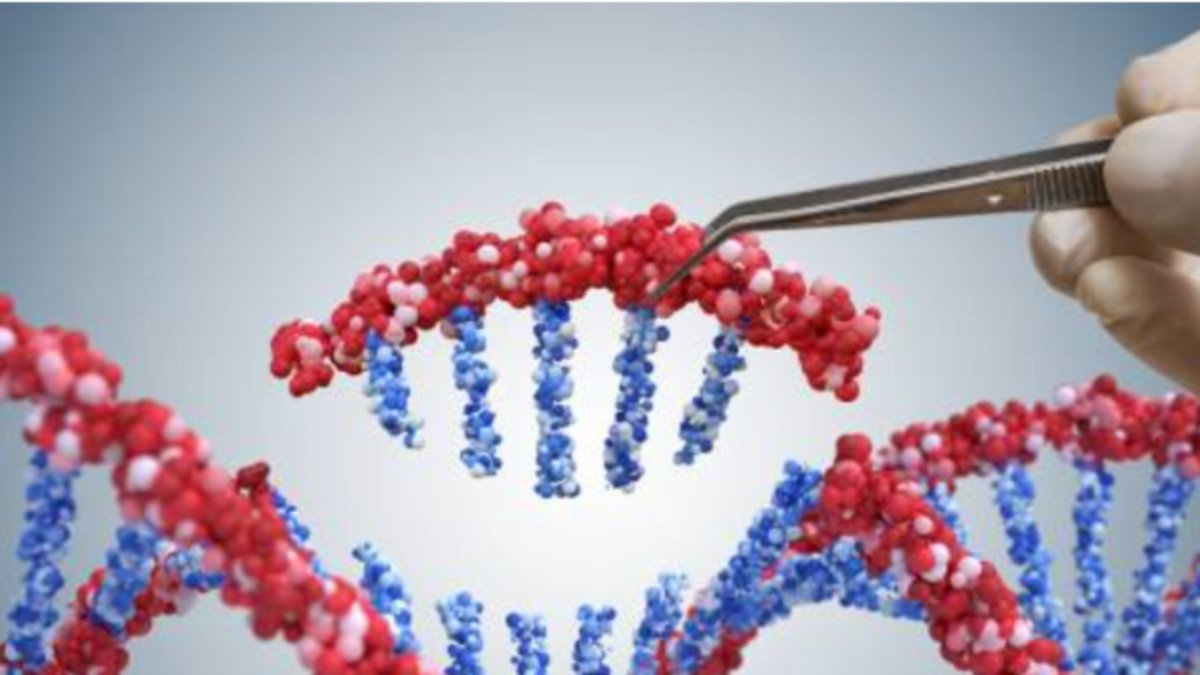
    In 2015, a team from Uppsala University, led by evolutionary biologists Carina Schlebusch and Lucie Gattepaille analyzed the DNA of 124 women from San Antonio de los Cobres and compared it with populations from Peru and Colombia. They found specific variants around the AS3MT gene—key in arsenic metabolism—that were strongly associated with more efficient processing of the metalloid. These variants were much more frequent in the Argentine population than in other regions with less environmental exposure.

    The discovery was accompanied by an even more revealing signal: a “selective sweep.” That is, the genetic footprint left by natural selection when it quickly favors a trait useful for survival. In simple terms, those who metabolized arsenic better were more likely to survive and pass on that advantage. Over time, those variants became predominant.

    “Adaptation to tolerate arsenic as an environmental stressor has likely driven an increase in the frequency of protective AS3MT variants,” the team wrote in their study, calling the finding “the first evidence of human adaptation to a toxic chemical.”

    Protests against the reform of the glacier law that favors mining exploitation. Photo:AFP

    Far from being an isolated case, subsequent research suggests that this type of adaptation could have occurred in parallel in other Andean regions. A study published in 2022 in Chemosphere found similar signals in indigenous populations of Bolivia, where alleles associated with efficient arsenic metabolism reached the highest frequencies recorded so far. Environmental pressure, sustained for generations, would have pushed different communities towards similar evolutionary solutions.

    But evolution doesn’t always involve permanent changes to DNA. It can also operate through more flexible mechanisms such as epigenetics. These modifications do not alter the genetic sequence, but rather the way genes are activated or silenced in response to the environment.

    Along these lines, researchers from Emory University explored how Andean populations have adapted to another extreme challenge: altitude. Unlike the Tibetans, who have well-identified genetic variants to survive with less oxygen, the Andean peoples do not show such a clear genetic signal. The answer could lie in how your DNA is expressed.

    By analyzing epigenetic marks in Kichwa populations from the Ecuadorian Andes and Ashaninka from the Amazon, the scientists found changes in genes related to the vascular system and heart muscle, as well as in the PI3K/AKT pathway, involved in muscle growth and the formation of blood vessels. These modifications could explain physiological characteristics such as arterial thickening or increased blood viscosity, responses to the environment of low oxygen availability.

    “The findings are particularly interesting because we are not seeing these strong signals in the genome, but when we look at the methylome these changes do appear,” explains John Lindo, professor of anthropology at Emory and lead author of the study, in a statement from the institution.

    The comparison with Tibet reinforces the idea that there is no single way to adapt. On the Tibetan plateau, evolution took another path. A study led by anthropologist Cynthia Beall analyzed hundreds of women who live between 3,000 and 4,000 meters of altitude in Nepal and found that those with greater reproductive success did not have high hemoglobin levels, as one would expect, but rather greater efficiency in oxygen transport.

    Part of this advantage comes from a variant of the EPAS1 gene, inherited from the Denisovans, an extinct human species. This adaptation allows maintaining good oxygenation without thickening the blood, avoiding overload of the cardiovascular system.

    Menstrual blood could reveal diseases early. Photo:iStock

    “Adaptation to high-altitude hypoxia is fascinating because the stress is severe, it is experienced equally by everyone at a given altitude, and it is quantifiable,” Beall explained. “It is a beautiful example of how and why our species exhibits so much biological variation.”

    Together, these findings paint a dynamic picture of human evolution. Far from being a closed process, it is still ongoing. In the Andes, prolonged exposure to natural toxins and a lack of oxygen has shaped genetic, epigenetic and physiological responses. In Tibet, the same problem found different solutions.




    Source link

    Related Posts

    Woman demands a man’s cell phone password after suffering a serious accident in Cartagena: ‘I don’t care!’ | DNA Diary
    Colombia

    Woman demands a man’s cell phone password after suffering a serious accident in Cartagena: ‘I don’t care!’ | DNA Diary

    May 4, 2026
    Everything exploded in the air in Santa Fe: Hugo Rodallega did not like being replaced by Pablo Repetto and came out throwing insults (video)
    Colombia

    Everything exploded in the air in Santa Fe: Hugo Rodallega did not like being replaced by Pablo Repetto and came out throwing insults (video)

    May 4, 2026
    Scoop: Colombians spend more and more out of pocket on medicines as the country deepens its dependence on imports, reveals Ascif
    Colombia

    Scoop: Colombians spend more and more out of pocket on medicines as the country deepens its dependence on imports, reveals Ascif

    May 3, 2026
    Mining title given by the President does not border the Rifles battalion, but it is in the area and there are complaints about illegal mining
    Colombia

    Mining title given by the President does not border the Rifles battalion, but it is in the area and there are complaints about illegal mining

    May 3, 2026
    Avianca announces investigation and legal actions in the case of paper with fecal matter found in a flight seat to the United States: sabotage is suspected
    Colombia

    Avianca announces investigation and legal actions in the case of paper with fecal matter found in a flight seat to the United States: sabotage is suspected

    May 3, 2026
    María José Martínez denounces that she was a victim of sexual harassment on Colombian television ‘reality’: ‘He put his hand inside my shirt’
    Colombia

    María José Martínez denounces that she was a victim of sexual harassment on Colombian television ‘reality’: ‘He put his hand inside my shirt’

    May 3, 2026
    Next Post
    The two: two and two

    The two: two and two

    POPULAR NEWS

    Justin Bieber fans flood Coachella festival for headlining show – Entertainment

    Justin Bieber fans flood Coachella festival for headlining show – Entertainment

    April 20, 2026

    Over 600 flee homes as Army, NPA clash in Negros Occidental

    April 21, 2026

    Ex-DPWH exec recalls P800-M ‘delivery’ to Zaldy Co 

    April 20, 2026

    Former PM Paluckas suspends party membership, to waive immunity over criminal probe

    April 24, 2026
    Pres. Ali challenges CARICOM to transform into health research powerhouse

    Pres. Ali challenges CARICOM to transform into health research powerhouse

    April 23, 2026

    EDITOR'S PICK

    Energy policy: Black box oil reserve – DiePresse.com

    Energy policy: Black box oil reserve – DiePresse.com

    April 29, 2026
    Indonesian law for Myanmar general – Editorial

    Indonesian law for Myanmar general – Editorial

    April 14, 2026
    Midwives and the challenge of detecting Chagas in pregnancy

    Midwives and the challenge of detecting Chagas in pregnancy

    April 23, 2026
    Cuba predicts blackouts for this Tuesday that will affect up to 60% of the country at the same time

    Cuba predicts blackouts for this Tuesday that will affect up to 60% of the country at the same time

    April 21, 2026

    Recent Posts

    • Expert: Belarus ranks among world leaders in early-stage cervical cancer detection
    • Georgia’s Annual Inflation at 5.9% in April 2026 – Civil Georgia
    • Pashinyan assessed progress with Azerbaijan
    • “Two died, several will remain disabled”: a pediatric traumatologist about injuries in Bishkek. Interview

      © 2026 Agentially - Navigating shifting sovereignties and global risk .

      Welcome Back!

      Login to your account below

      Forgotten Password?

      Retrieve your password

      Please enter your username or email address to reset your password.

      Log In
      No Result
      View All Result

        © 2026 Agentially - Navigating shifting sovereignties and global risk .

        This website uses cookies. By continuing to use this website you are giving consent to cookies being used. Visit our Privacy and Cookie Policy.