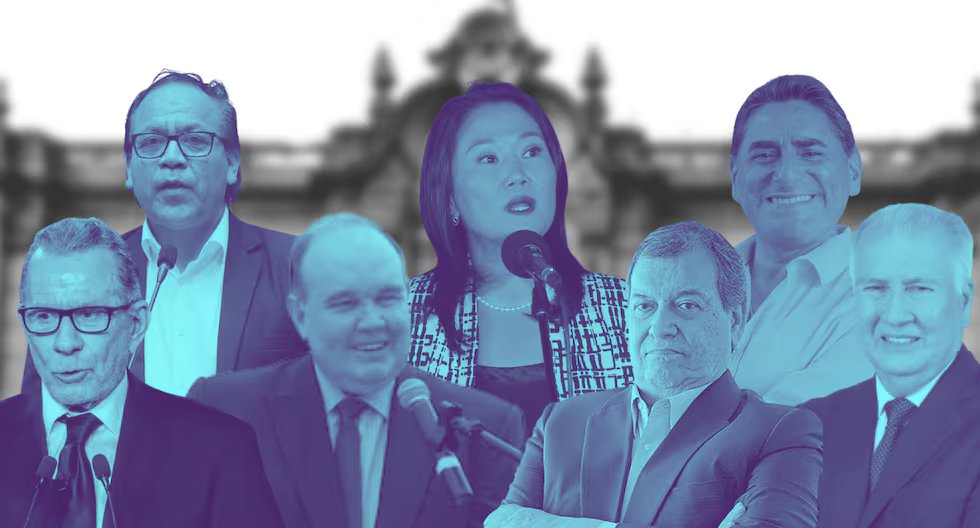
The next president of the republicwho will take over the reins of the country from July for the next five years, will have among his main challenges reducing the current social gapssecurity, and address the growing infrastructure deficit basic that the country faces.
Although since 2024 the Peruvian economy has registered growth rates above 3% (and according to the BCR this year it would expand by up to 3.2%), this factor would still not be enough to accelerate poverty reduction. During 2024 (latest figure available), 27.8% of Peruvians (9.6 million) could not afford the basic consumer basket, while 5.5% of the population is in extreme poverty.
The incidence of the pandemic and the economic recession of 2023 returned this indicator to levels similar to those of 2011, at the beginning of the last decade. However, as in previous years, this scourge continues to be concentrated in a greater proportion in regions such as Cajamarca, the southern regions and Loreto (see graph). Only in Lima and Callao, this indicator is at its highest level since 2006 (when it affected 32% of the population), as is Callao (when it affected 37.7% of the population).
Schools in poor condition
A pending challenge for the next government will be focused on recovering the quality of educational infrastructure, especially in the rural sector. According to a report published by ECData, 57% of rural schools need to be completely replaced, while for schools in this area to have basic conditions, S/99 billion will have to be invested.
Rural schools concentrate nearly two million students. Cajamarca, Loreto, Piura, La Libertad and Cusco concentrate the largest school population in this area. Four out of every 10 students live and receive classes in these departments
Delay in health facilities
First-level establishments, which according to the WHO should focus attention on 80% of health demand, do not have the minimum level of quality to guarantee their operations. According to the document titled: “Diagnosis of Gaps in infrastructure or access to services in the Health Sector 2027-2029,” there are currently 9,200 first-level health centers, but another 861 remain to be implemented.
Karla Gaviño, specialist in public management, pointed out in interview with ECData that the constant political crises have affected the focus of authorities and public officials on addressing the main citizen needs.
“There is a very important issue related to providing political solvency, legal stability that really allows for more investments that allow public resources to be used in a better way, with correct planning and distribution to make efficient use of them”held.
Gaviño highlighted that the current government has been developing different aspects of public policy, such as the National Infrastructure Plan, but none of the candidates have addressed it in their proposals.
“We do not know, to date, if this is even going to be taken into account or continued by the new authorities, even though it is a national infrastructure plan and has a horizon of five years”he added.
Less security
The escalation of violence in the streets has acquired greater importance in recent months, despite the constant call for states of emergency in Lima and Callao. According to figures from the Police Complaints Computer System (Sidpol), during the first two months of the year, 196 firearm homicides were recorded in the country. In February alone (the latest monthly figure available), 106 murders by this modality were recorded, the highest number since the 115 homicides by firearm recorded in October 2025.
To the rising wave of insecurity Added to this is the reduction in confidence in police activity on the part of citizens, which has been in clear decline. Between July and December 2025 it reached only 13.4%, a figure lower than the 18% registered in the same period last year.
53.7% of Peruvians identified crime as the country’s main problem, ranked only below corruption, which had 60% of the mentions.