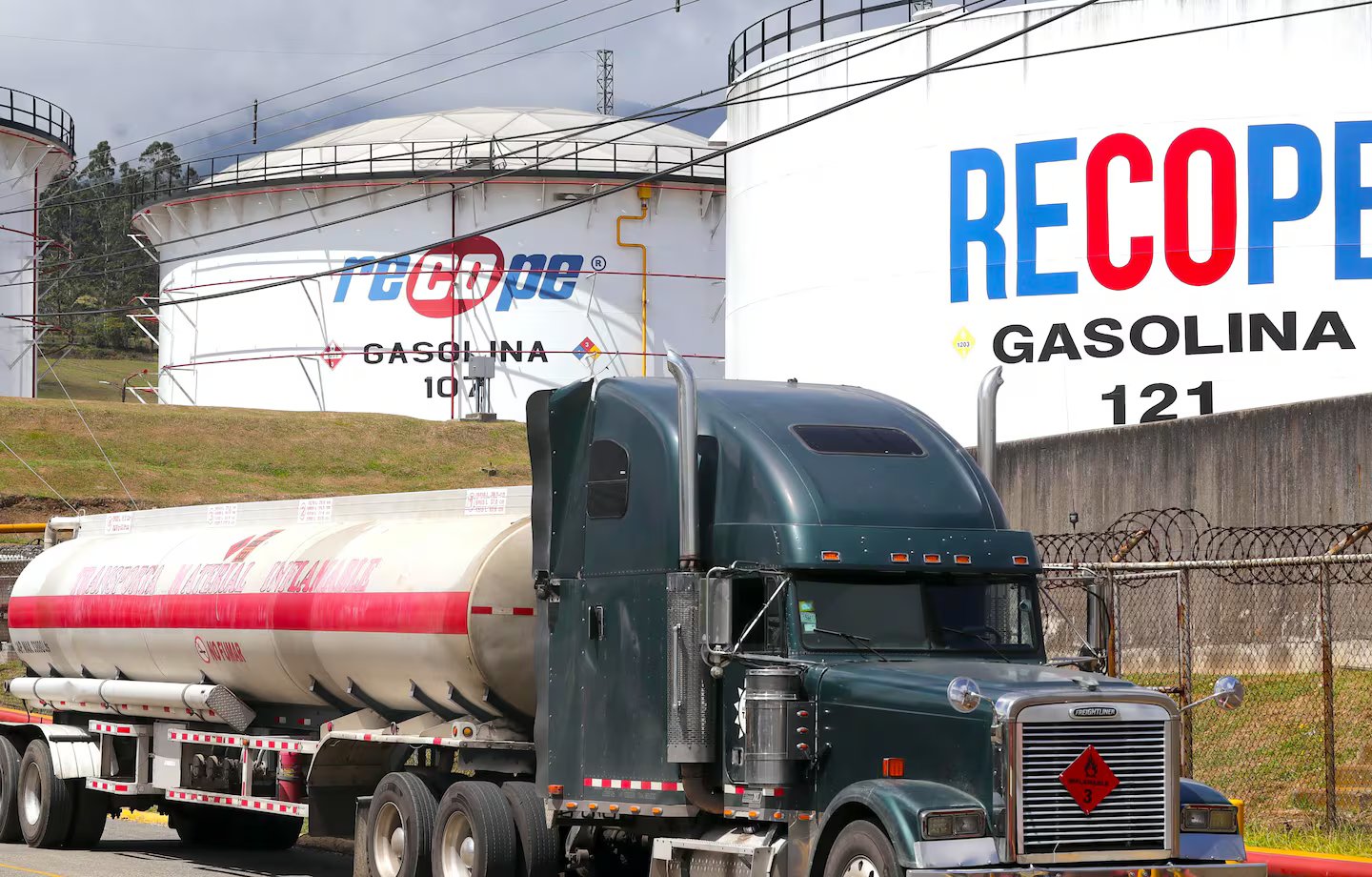
The Costa Rica oil bill It would rise by at least $600 million during 2026, as a result of the rise in oil prices caused by the conflict in the Middle East.
This increase would raise the need for dollars to buy hydrocarbons to $2.5 billion this year. This is a value similar to that of 2022, when the war between Ukraine and Russia began, and when the price of the US currency it touched ¢700 in the country.
The increase in the cost of importing hydrocarbons will have an effect on the dollar exchange rate and in inflation, which has remained negative since May of last year, according to the Central Bank of Costa Rica (BCCR).
Róger Madrigal, president of the issuing entity, explained to The Nation that the Bank increased its forecast of demand for dollars to pay the oil bill in 2026.
The leader assured that this greater demand for foreign currency by the non-banking public sector (SPNB) will be reflected, to the extent possible, contemporaneously in the exchange market.
Róger Madrigal, president of the Central Bank
“The (Central) Bank has an estimated minimum of $600 million more this year just for the oil bill (…). As far as possible, we take it to the (exchange) market,” Madrigal commented.
In the Monetary Policy Report (MPI) published last January, the Central Bank projected that the import of hydrocarbons would cost $1,879 million this year, slightly below the $1,976 million estimated for 2025.
However, this figure does not take into account the impact of the conflict in the Middle East, which escalated in February.
If the increase is realized, the oil bill would fluctuate at $2.5 billion in 2026, a value similar to that of 2022, when the war between Ukraine and Russia skyrocketed the prices of oil and other raw materials.
The Costa Rican Petroleum Refinery (Recope) and the Costa Rican Electricity Institute (ICE) are the main demanders of dollars to acquire hydrocarbons. The first entity requires them to supply the local market and the second, for thermal generation.
Conflict in Iran
Federico Quesada, director of the School of Administration Sciences (ECA), of the State Distance University (UNED), said that the interruption of the passage through the Strait of Hormuzderived from the conflict in the Middle East, reduced the world supply of crude oil and skyrocketed international prices. 20% of the world’s oil and gas trade usually passes through this route.
Oil prices resumed their upward trend this Monday, although they closed below $100, driven by the US blockade of Iran’s ports.
The barrel of West Texas Intermediate (WTI), for delivery in May, gained 2.60%, reaching $99.08. During January, the average price of that same product was $60.26.
“The effect of that inflationary shock (rise in the price of crude oil) that comes from abroad has not been felt, but it will be felt.”
— Róger Madrigal, president of the Central Bank
As of last March, Recope reported the import of 6.58 million barrels, which includes different types of fuels, for a value of $567 million.
The average value per barrel in the first three months of the year was $86.12, while the average for all of 2025 was $82.04, as $2,005 million were allocated to purchase 24.44 million barrels.
Exchange rate and inflation
The president of the Central Bank indicated that this upward trend in crude oil prices and the uncertainty generated by the conflict in the Middle East may have an impact on the price of the dollar, which currently remains at historic lows.
“The effect of that inflationary shock that comes from abroad has not been felt, but it will be felt. What the forecast of the forces of supply and demand says is that there are forces for less supply and forces for greater demand. That is going to have an exchange rate manifestation,” Madrigal explained.
The leader added that there are factors that have influenced a greater abundance of foreign currency in recent years, but he also assured that the increase in the cost of oil will pressure the demand for foreign currency.
Since 2015, the BCCR adopted a managed floating exchange rate scheme. The price is determined by market forces, that is, by supply and demand. The BCCR can intervene to avoid abrupt price movements, as well as to acquire foreign currency for its reserves and for the public sector.
Given the greater supply of foreign currency, the pressure on the price of the dollar is downward; while, if demand increases, the price tends to rise. This Monday, the currency closed at ¢460.59, a new historical low in the Foreign Currency Market (Monex).
Madrigal explained that these shocks are called compound, since they also generate an inflationary effect. “We are still below the (Ukraine) scenario, but look at the uncertainty. The markets react to that,” he added.
The worsening of the conflict in the Middle East generated increases in the international prices of raw materials, including oil and basic grains. This dynamic has subsequent effects on the prices of other goods and services, according to the Central Bank.
In the statement in which the issuing entity announced that it kept its monetary policy rate (MPR) unchanged, they noted that the duration and intensity of the conflict is uncertain, which affects the prospects for global growth and accelerates inflation.
Given this, the issuing entity highlighted at the end of March that general inflation would enter the tolerance range in the last quarter of this year, two periods earlier than expected in the January WPI.
Quesada pointed out that the new levels of crude oil prices inevitably translate into internal prices, generating pressures on inflation and logistical costs that affect both families and productive sectors.
Price rise in May
On April 8, Recope announced an upward adjustment in fuel prices, which will take effect from May, as a result of the impact on oil prices due to the conflict in the Middle East.
Super gasoline will register an estimated increase of ¢83 per liter, from ¢633 to ¢715, and regular gasoline of ¢67, from ¢628 to ¢695. Diesel will have the sharpest increase, with ¢136 per liter, from ¢565 to ¢701. The information takes April 8 at noon as a cut-off, so prices could vary, Recope said.
The institution highlighted that the national supply is guaranteed and there is no risk of shortages, since the weekly arrivals of ships with product are maintained, which allows the continuity of the service to be maintained.
The company explained that it makes its fuel purchases in dollars, so the exchange rate is a determining factor in shaping prices. He highlighted that the low price of the dollar helps moderate part of the international impact.