After more than two years of obstacles and long procedures, Bogotá has already officially started one of the most important transformations in terms of mobility, infrastructure and even environmental development: the expansion of the North Highway. It will be four and a half years of works for the face of this road corridor, now collapsed, to change.
READ ALSO
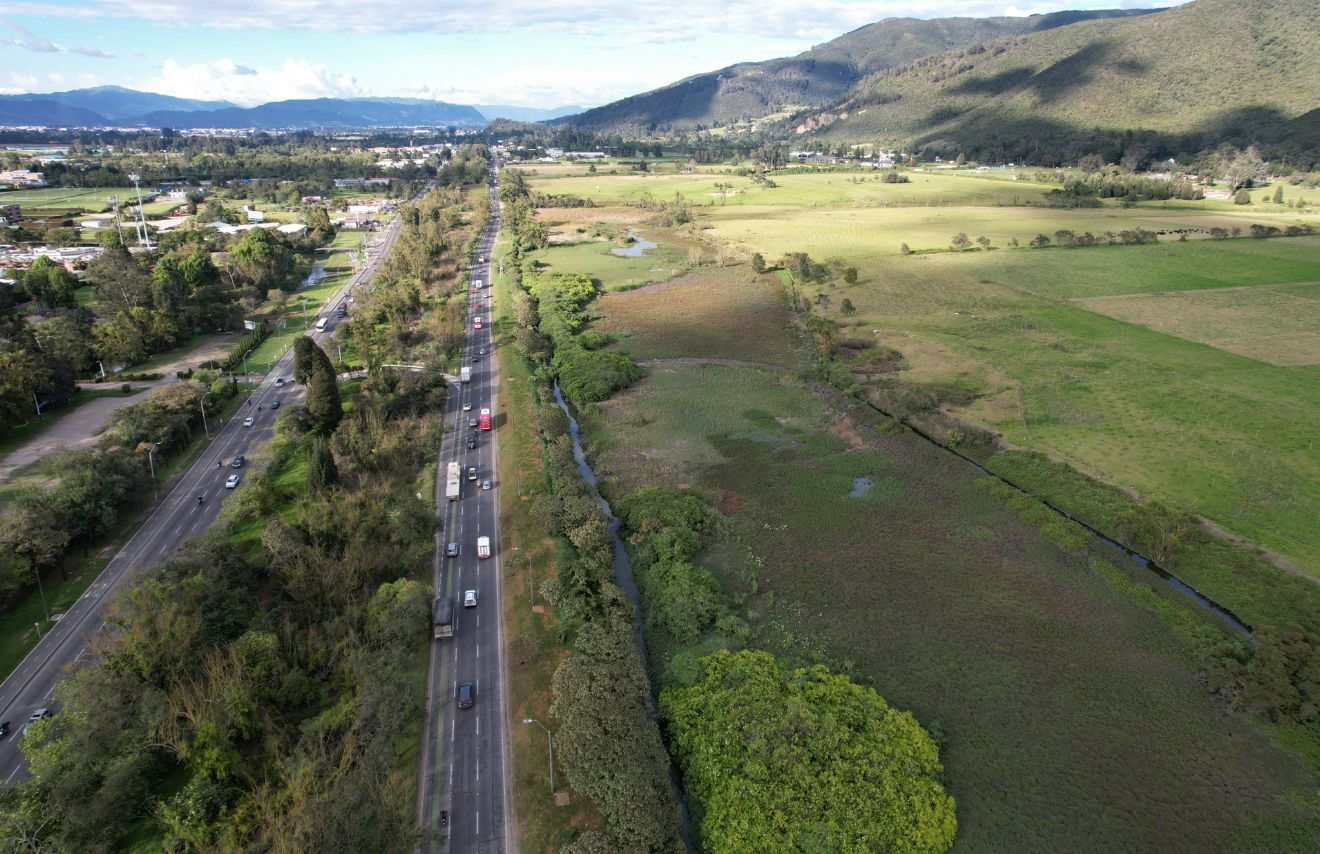
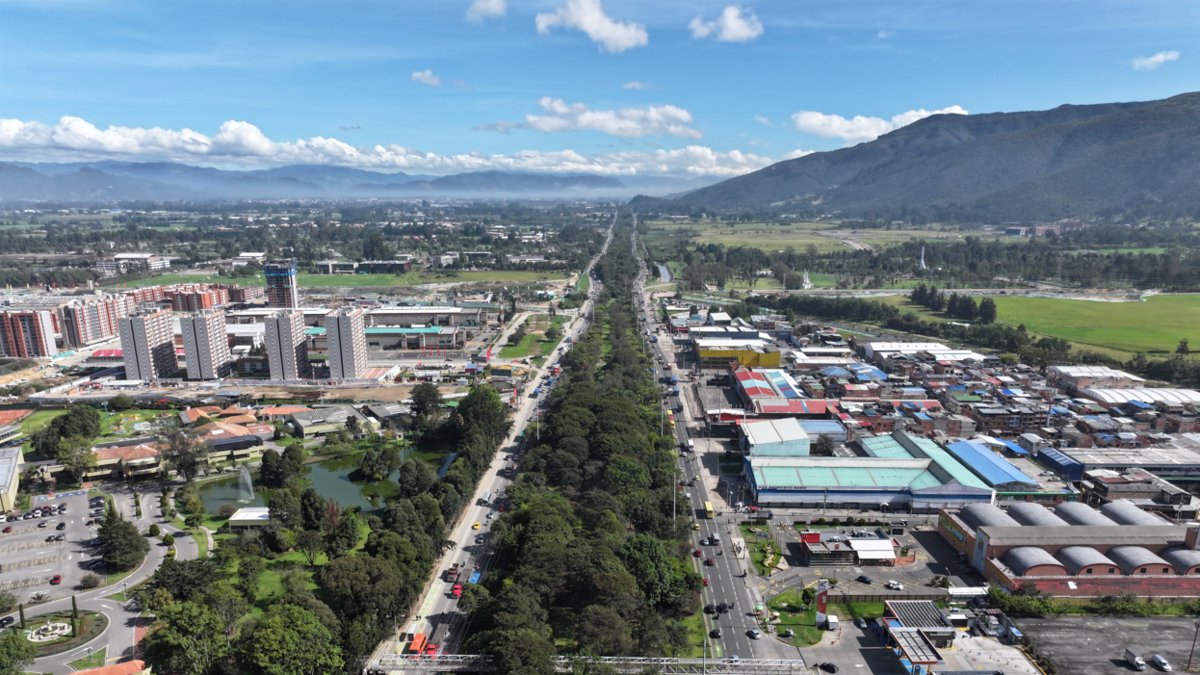
With a total investment of 1.8 billion pesos, sseeks to expand 5.8 km of the North Highway between streets 191 and 245 towards the central separator and not towards the natural edge, going from 6 to 12 lanes: each side will have 5 mixed lanes and one exclusive for TransMilenio buses.
Two uneven returns will also be built at streets 235 and 242 and an intersection at street 201 to connect with the Lagos de Torca sector. In addition, there will be cycle paths and three-meter platforms on each side and six TransMilenio stations, each with pedestrian bridges for access.
North Highway Expansion Photo:North Bogotá Route
Between streets 191 and 235, the highway will have a width of 27.5 meters and at its northernmost point, between streets 235 and 245, it will have a road width of 23.7 meters. The new highway will be raised in some points by up to 4.4 meters, to avoid flooding in this infrastructure that crosses the Torca and Guaymaral wetlands.
Furthermore, through some 10 meter long concrete structures, called box culvertconnection will be made to the fauna and flora of this sector, thus integrating the ecosystems of the Andes mountain range with wetlands, the Bogotá River and the Thomas van der Hammen reserve.
North Highway Expansion Photo:North Bogotá Route
The key step was taken last Monday at 8 in the morning, when the National Infrastructure Agency (ANI) and the concessionaire Ruta Bogotá Norte They signed the act of commencement of works, with which the construction stage of the project begins.
Citizens will not yet see yellow machinery in the sector, But the firm has already begun preliminary work, which includes topography and definitive forest inventories.
These activities began on the eastern road at 245th Street, in a south-north direction. There, a diagnosis of the trees that should be cut down or moved began and bird scaring exercises were carried out. to clear work areas.
Bogotá North Highway Photo:North Bogotá Route
As the weeks go by, other work fronts will be installed at the ends, to gradually get closer to the center of the highway.right where the main structure of the Torca and Guaymaral wetlands is.
This section is one of the most careful and that is precisely why the works will not yet reach the sector, since A fundamental approval is required from the National Environmental License Authority (Anla).
It is worth remembering that Last January the authority granted the environmental license to the project, but established some environmental conditions that had to be corrected by the concessionaire.
Bogotá North Highway Photo:ANI
After almost three months of rigorous study, Ruta Bogotá Norte went to the Anla offices, just before signing the initiation document with the ANI, to file the requested adjustments. EL TIEMPO was able to learn that, among other things, a new hydraulic model for construction was presented.
This had been one of those conditions requested by the environmental authority when it gave the endorsement, since, expressly, He requested that the execution of the project should have a green infrastructure approach, with strict protection of the Torca-Guaymaral wetlands, hydraulic control, rigorous waste management and permanent environmental monitoring.
So things are, The ball was left in Anla’s court, which must approve these adjustments so that the concessionaire can begin work on the wetlands. Meanwhile, progress will be made in the other activities that are already enabled.
READ ALSO
“On the calendar, we have 77 days for preliminary activities. On Monday we delivered the additional information to Anla and we are awaiting its evaluation and ruling to intervene in the area adjacent to the wetlands,” explained Juan Manuel Mariño, general manager of the Ruta Bogotá Norte concessionaire, in an interview with EL TIEMPO.
One of the main headaches for citizens will be mobility. In a city with more than 1,000 construction sites, drivers have become accustomed to living among shadows, briefcases and detours that clog traffic, a panorama that can be taken by the North Highway.
Although the concessionaire recognizes that it will be a challenge to maintain operations in this corridor through which more than 50,000 vehicles move per day, drivers will be able to pass through the highway as they currently do; There will be no lane closures while the expansion is being built.
Juan Manuel Mariño, manager of Ruta Bogotá Norte Photo:North Bogotá Route
“Mobility is one of the most complex parts of this work. But in the contract there was a condition that the three lanes must always be maintained.”Mariño said.
In addition, the passage of machinery will be controlled by schedules, so that they do not share the road with cars and can be located on the central separator, isolated from traffic.
Section of the North Highway. Photo:North Access
For now, No changes have been announced in zonal or feeder routes of the Integrated Public Transport System (Sitp) that currently cover the sector.
If things go as planned, Bogota residents will be able to count on a new Northern Highway in four and a half years. For their part, Carrera 7 and the Sopó variant, which are also part of the project carried out by the concessionaire, will begin last and the entire work will be delivered in five years.
ANLA approved modification of the environmental license for the Sopó Bypass Photo:ANLA
“The contractual construction period is five and a half years to carry out the three scopes: the expansion of the North Highway, the second carriageway of Carrera 7, between streets 201 and 245, and the construction of a 7.2 km bypass in the municipality of Sopó. For these three large scopes we have five and a half years. Only the section of the highway we hope to deliver at the end of 2030. It will no longer flood and will have a safe space for pedestrians and cyclists. that does not exist today, and will have twice as many lanes for vehicles, which we do not have today either,” Mariño explained.
NICOLAS DÍAZ MALPICA
Bogotá Editorial