It should be said that what we call Trumpism is not only a North American phenomenon, but a populist form of government that has emerged in various latitudes and that in the United States, as in all places where it appears, is conditioned by the presence of a movementist and presidential leader at the same time. Leaders, in general, format movements according to national and local characteristics. A Trump, as a political character, is very American, in the same way that a Milei is very Argentine, and a Putin, excessively Russian.
Seen this way, what we call Trumpism can be understood as the North American expression of phenomena with universal connotations, and has largely to do with the decline of the so-called industrial society (Touraine) and the transition that it leads towards post-industrial society at a global level. To a large extent it is an intermediate period in which the new socioeconomic order has not yet been established and the old order can no longer continue (Gramsci).
At similar crossroads (transition from class society (Weber) to mass society, for example) political phenomena such as fascism and communism emerged, whose differences have been widely analyzed, but their evident similarities, very little. Today, in order not to talk about neo-fascism (fascism arose under different conditions, I reiterate) we have used, in an indirect but premeditated analogy with national socialism, the concept of national populism.
Under the term national-populism I understand the new connection that is occurring between socially disintegrated masses (anomic according to Durkheim) and messianic leaders, whether they are from the right or the left. What is not new either: leaders like Mussolini and Hitler considered themselves leftist, but in contrast to the internationalism of the USSR, they defined themselves as nationalists. The same thing is happening today.
National-populism, of which, we repeat, Trump is only its North American expression, integrates within itself topics that were typical of 20th century fascism, but under conditions determined by the globalization and digitalization of the 21st century. Just as original fascism can be considered a modern reaction against modernity, national-populist movements – of which Trump and Putin seem to be the most important – can be seen as postmodern reactions against postmodernity.
In the same way as the fascism of the 20th century, the national-populist movements, parties and governments of our time have an extraordinary capacity to integrate objectively contradictory elements into their discourses. For example, calling themselves nationalists, they are more internationalist than the socialist movements of the 20th century. The ideological and economic dependence on the leaders of national populism in powerful countries is almost total. The European Putinists follow Putin’s dictates to the letter and the Trumpists subordinate themselves to Trump’s word with the same submission as yesterday the words of a Hitler or a Stalin were obeyed.
As we have said, Trumpism is very North American, but a continuator of a national populism that had occurred much earlier in European countries, represented in parties such as Le Pen’s National Rally and Alice Weidel’s Alternative for Germany, or in governments such as those of Orban in Hungary, Fico in Slovakia, Erdogan in Turkey, and of course, in the Russia of Yelzin and Putin. However, since the US is not just any country, the fact that it appeared in the form of Trumpism made it possible for the US to become a point of irradiation of global national populism.
German national socialism was not the first European fascism either but, given the international importance of Germany, it became a point of concentration and irradiation of European fascism. Today we see how two empires led by national populist leaders, such as Putin and Trump, converge in Hungary defending Orbán’s national-populism against his electoral enemies. History does not repeat itself, but it rhymes. In that sense, it should not be too surprising that the Trumpist phenomenon has also appeared in Latin America with an intensity not imagined until recently.
We say Trumpist, and not simply right-wing, and this is important. We say this, because in the national-populist phenomenon the remains of what yesterday was the conservative right, defender of traditions, confessionally Catholic and of undeniable agrarian origins, converge with large movements of passionate masses that until recently followed left-wing leaders and governments.
By the way, the Trumpist parties take on some connotations of the old right but integrated into a populist framework. For example: it has been said, and not without reason, that a character like Milei is the Perón of the right, but for the same reason, he is not only from the right, in the same way that Perón was not only from the left. Milei’s is a mass movement whose nationalist purpose is “to make Argentina great again.”
In the neighboring country, Chile, José Antonio Kast is also trying to achieve national unity but using the traditional packaging of the most conservative right in his country. However, he is followed by a politically inflamed plebeian mass, one that he shares with his former competitor, the extremist JohannesKaiser Barents-Von Hohenhagen, in indirect ideological agreement. It even shows in the language. Kast’s is ultramontane. Kaiser’s is a commoner. But not one or the other. Both are the wings of Chilean national-populism (or Trumpism).
We could affirm then that in both Argentina and Chile there has been an alliance between far-right elites with disintegrated masses that yesterday tended to follow left-wing parties, populist or not. But at the same time, while this mass is present with greater intensity in the bizarre figure of a Milei, the traditional Chilean elite is more present in the traditionalist figure of a Kast. Both, at the same time, are and declare themselves open followers of Trump, that is, members of the international movement of national populism. The presidents of various Latin American countries are oriented along the same lines.
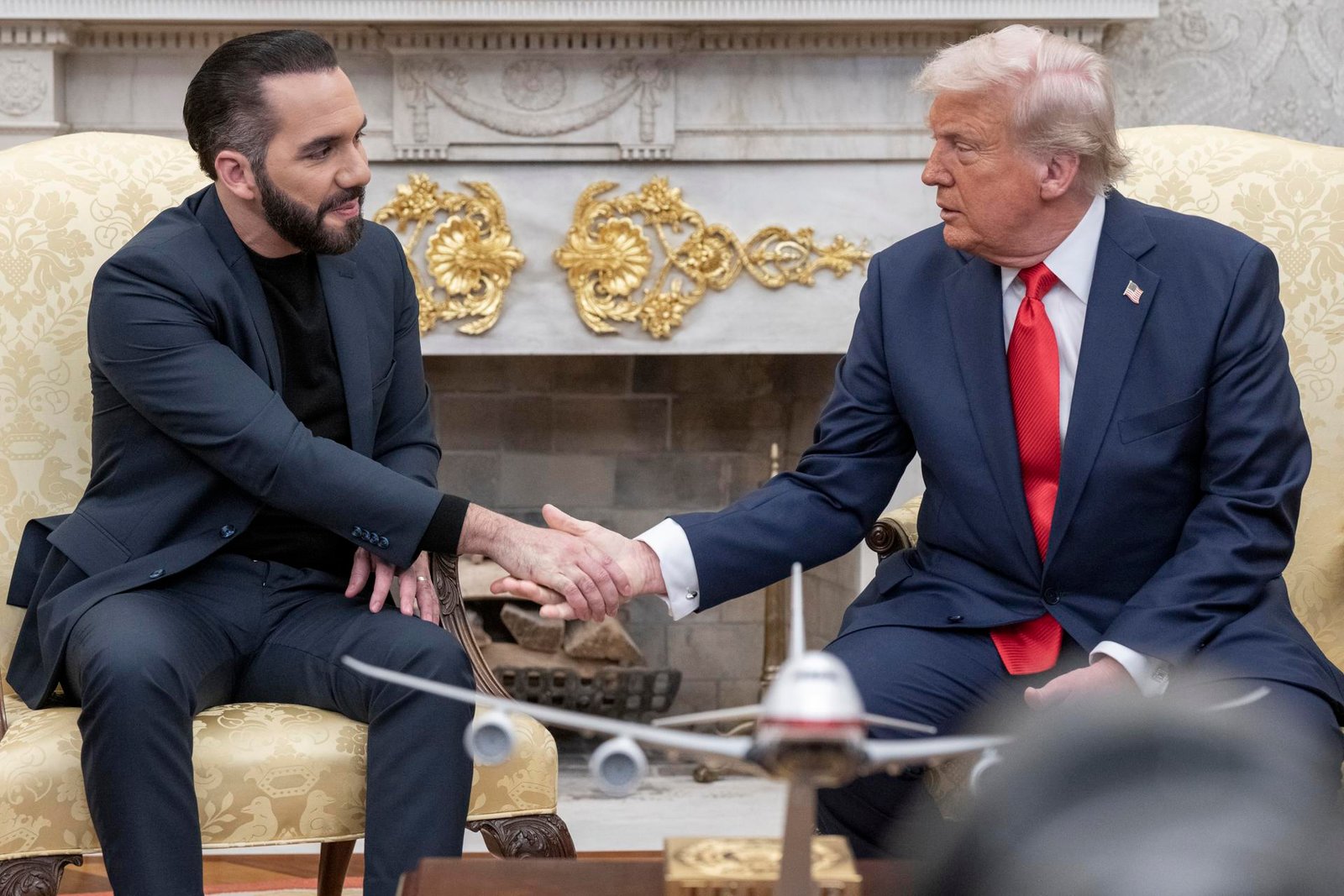
Santiago Peña of the Colorado Party in Paraguay, Nayib Bukele in El Salvador, José Raúl Mulino in Panama, Laura Fernández in Costa Rica, Rodrigo Paz in Bolivia, Nasry Asfura in Honduras, can be classified as open Trumpist rulers. Daniel Noboa, from Ecuador, joins this trend, trying to maintain positions that still, with difficulty, link him to the center.
In consequence: to control the Western Hemisphere to which Latin America belongs, Donald Trump has not had to work too hard. In fact, the Latin American Creole forces are taking power in favor of Trump, requiring much less North American attention than what Europe currently provides, where, in his expansion project, Trump is obliged to share with Putin. Latin American Trumpism It is, so to speak, more endogenous than exogenous.
Only in Argentina has Trump had to intervene electorally, helping Milei, and in Venezuela militarily, by removing Maduro. He will also have to do it in Cuba although he doesn’t really know how. Nicaragua, it seems, does not interest him too much. The new Central American Trumpist governments will probably be in charge of Ortega-Murillo.
The news that reaches Trump from the polls in Colombia and Brazil tends to favor the options of the right, yesterday traditional, today national-populist. In Venezuela Trump even has the pleasure of having two Trumpist options. The insurrectional one represented by María Corina Machado and the governmental one represented by Delcy Rodriguez. Congenital the first, induced the second. Until now it has pragmatically taken sides with the second because it guarantees the order and stability that the first does not guarantee. Trump, like Xi, does not care about the color of the cat. The important thing is that it catches mice.
In short, with respect to Latin America, Trump can breathe easy. Perhaps he is the only American president who has enjoyed that security. Even more so if, observing the behavior of some Latin American governments, we see that several of them are, or have become, more Trumpist than Trump. Which shouldn’t be too surprising. While in the US Trump must impose himself against the current of the nation’s democratic structure, in Latin America he only needs to adapt to autocratic and authoritarian tendencies that prevailed before the national-populist governments came to power. Is that why Trump’s political visions fit so well with the autocratic structure inherited by Delcy Rodríguez from Chavismo? And there seems to be the real question: What is the reason that explains the appearance of so many national-populist governments in Latin America?
Perhaps it is necessary to pick up a thread here: that of the disintegration of the traditional industrial order and that of the transition towards a digital economic order.
You don’t need to be a Marxist to know that the transition from one mode of production to another involves the ruination of traditional forms of production, especially in industrial circuits. In cruder words, it involves the unemployment of the labor force not automatically absorbed by new forms of production. Sociological studies had been insisting on this phenomenon since the end of the 20th century. Under these circumstances, what ancient Latin American sociologists (Prebisch, Sunke, Cardoso eo) called “structural dualism” tends to (re)appear, a process that leads not only to the diversification of work but also to its precariousness.
Work in post-industrial society is an occasional and precarious activity. The era of permanent contracts no longer exists, or only exists for very privileged groups. This produces, within each nation, an increase in what Marx called “relative overpopulation,” which is forced to seek basic forms of subsistence, or to emigrate, either from the countryside to the city, or from one nation to another. That commodity called work also belongs to the world market. This forces each government to permanently confront internal and external migrations.
Latin America is not excluded from this global phenomenon. Hence, each government is faced with the alternative of: either creating forms of protection against precarious migrant masses or creating forms of protection against the established social labor sector. Trumpism, whether North American or Latin American, has decided on the second option. To protect the liberality of the established labor trade he must create a government that is politically i-liberal (to put it in Orbán’s words) or simply autocratic. That means confronting masses excluded from the production process police and militarily and thus maintaining the security of those included, under the pretext of reducing crime, closing the way to migrations that come from poorer or impoverished countries.
Under all North American governments there have been deportations, especially of “Latinos,” but no one had exhibited them as a mass spectacle like Trump has done. There are prisons everywhere, but no one like Bukele had presented them as a political solution to the phenomenon of unemployment which, among other ways, leads to crime.
In Chile, Kast has ordered deep ditches to be dug to “solve” the problem of Peruvian and Bolivian migration. At the same time, he tries to create, together with Milei, a “humanitarian corridor” to deport Venezuelans without papers (that is, without work). Afterwards Kast prays with his wife and Milei sings and dances with I don’t know who. In the brave new world of South American Trumpism, those inside worship their leaders with religious devotion. And those who stayed outside do not understand what is happening, in the same way that in other places they do not understand the invasion wars unleashed by their presidents, whether they are called Trump or Putin.
Those, those who were not lucky, only understand that in this world there are two worlds: that of those who have the right to life and that of those who are, still alive, dying.
*This article was originally published in the POLIS blog: Politics and culture.