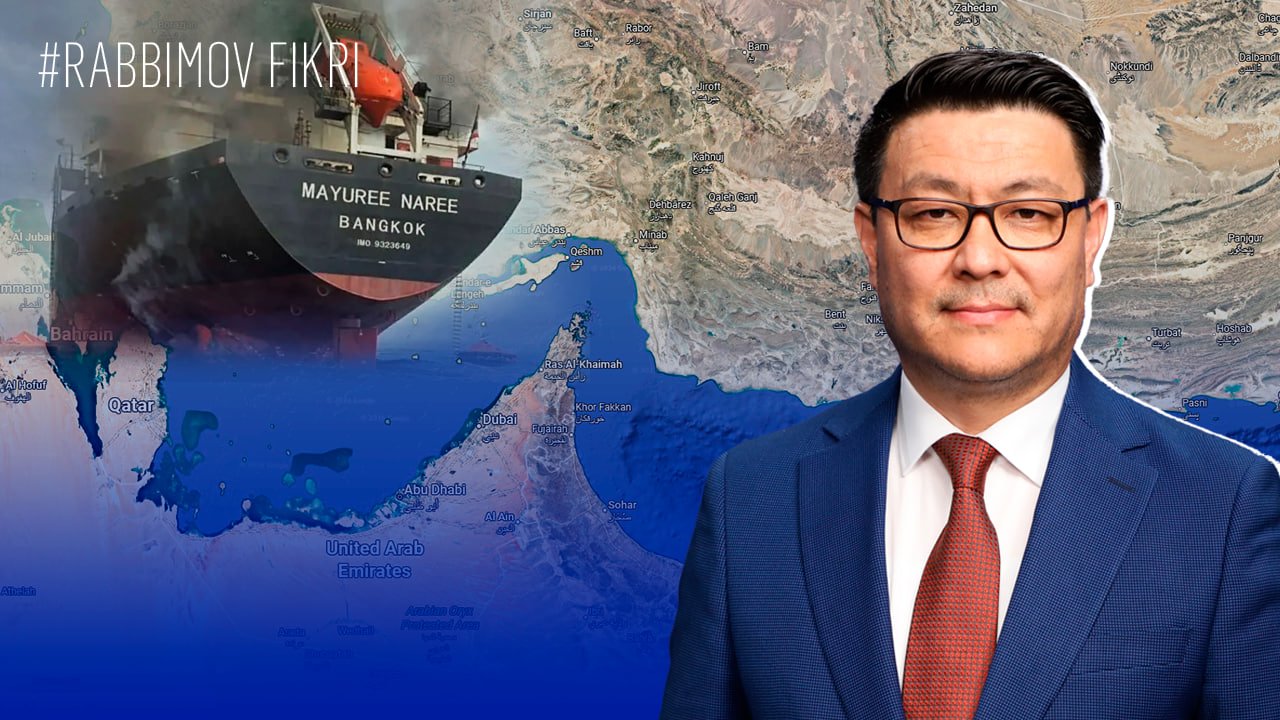
Blockade… Siege… In the past, this concept was used a lot in the military and political lexicon. In the Middle Ages, capturing a city by siege was the most common tactic. Even in the 20th century, there are many vivid examples of the blockade that have remained in the memory of humanity.
During World War II, when Hitler’s Germany invaded the former USSR, it besieged the second largest city in the former Soviet Union, Leningrad (now Saint Petersburg), from September 1941 to January 1944, for a total of 872 days. The purpose of this was to exhaust the population of Leningrad and make them surrender by starving, and as a result, it was intended to give a psychological blow to the USSR.
The people of Leningrad suffer a lot, hunger reaches such a level that cases of cannibalism – eating the flesh of the dead – are often observed. However, the people of Leningrad will not give up. Hitler’s policy of blockade of Leningrad did not produce the result he wanted. In the end, the Führer was defeated in this war of aggression.
Another example is the Cuban blockade. At the height of the Cold War. The former USSR and the socialist camp led by it, on the one hand, and the US and the capitalist world led by it, on the other hand, are systematically fighting all over our planet. This is the peak of the Cold War – the Caribbean crisis. In 1962, the Soviet Union placed strategic weapons in Cuba, threatening the United States, and in response, the United States blockaded Cuba. At that time, the United States blockaded the island of Cuba with more than 238 ships, including 8 aircraft carriers, and allowed only food products to enter.
The purpose of this blockade was to prevent the strategic weapons of the USSR from entering Cuba. With the two sides so close to a nuclear conflict, the possibility of human extinction was increasing. Fearing such a scenario, the parties agree to de-escalate, and soon the blockade of Cuba ends.
Today, the world is worried about the blockade of Hormuz. Today, the Strait of Hormuz is under a double blockade. As a result of the US and Israeli attack on Iran on February 28, Iran blocked the Strait of Hormuz: thereby putting pressure on the US and the world economy.
Now the USA is entering the third stage in this war. At the first stage, it was planned to decapitate and thereby collapse the Iranian political system, but it did not happen. Then, it moved to the second phase: a long-term bombardment that would debilitate Iran, eventually derailing the state’s institutions. It didn’t look like it either.
Meanwhile, Iran’s blockade of the Strait of Hormuz had a great impact on the US and the world economy. As a result, President Trump began to seek a deal with Iran.
In the next week, the US and Iran are holding peace talks mediated by Pakistan. Against this background, Trump also announced the blockade of the Strait of Hormuz. His position is simple: “No to me, no to you!” Today, about 15 US ships are monitoring every incoming and outgoing ship from Hormuz to the Indian Ocean. If the cargoes belong to Iran, or are coming out at the expense of Iran, the US intends to turn these ships back.
The purpose of the US blockade of Hormuz is to put pressure on Iran in the context of negotiations in Pakistan, and to persuade the US to terms faster and easier. However, most likely, the US blockade will not seriously affect the thinking and mood of Iran. Because blockades only work under very long-term pressure. Iran also has alternative transport and logistics channels. Moreover, Iranians have become accustomed to difficulties and pressures over the years.
But there are also problems on the other side: today a gallon of gasoline costs more than five dollars in the United States alone. 2 months ago, its price was on average 3-3.5 dollars.
After all, there will be mid-term elections in the United States next November. Until then, the Hormuz blockade may not produce the results Trump wants. And the social mood inside the USA is already sending negative news for Trump.