 7 minutes reading‘
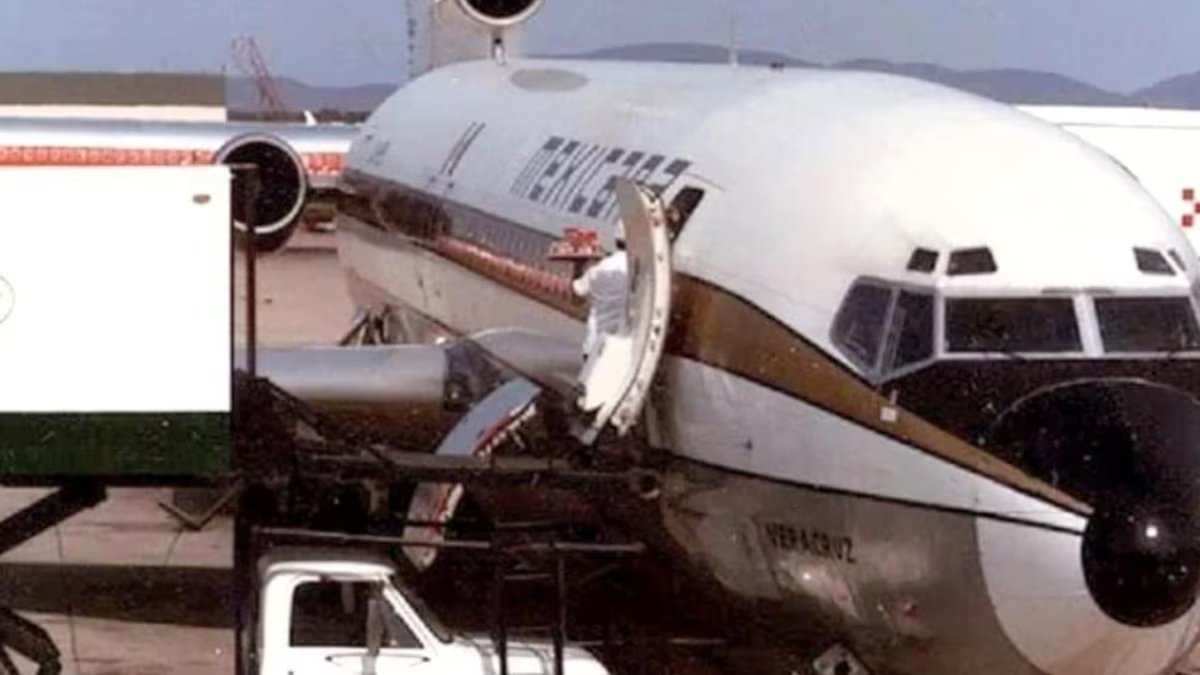
40 years ago, at the Mexico City International Airport, Mexicana de Aviación flight 940 was preparing to take off for Los Angeles.
There were 167 people on board the Boeing 727. At 8:50 in the morning, the captain received permission to take off and the ship began to rise over the Mexican capital heading north.
For the first few minutes everything seemed normal. But suddenly, an unexpected alarm began to sound in the cabin. Air traffic controllers received an urgent message from the aircraft. Seconds later, the radar lost contact. At some point along the route, over the mountains of Mexico, Flight 940 disappeared.
Typically, Mexicana de Aviación flight 940 covered the route between Mexico City and Los Angeles, with stops in Puerto Vallarta and Mazatlán. During the 1980s, the airline operated a large fleet of Boeing 727 aircraft.
The aircraft, with registration
In command of the aircraft was Captain Carlos Alberto Guadarrama Sixtos, 36 years old, a pilot with extensive experience who had joined Mexicana de Aviación in 1971 and accumulated more than six thousand flight hours. Accompanying him in the cockpit were first officer Philip Louis Piaget Rhorer, 34, who had been part of the airline since 1980, and second officer Ángel Carlos Peñasco Espinoza, who joined the company in 1982. Both also had experience in flight operations.
That morning, there were 167 people on board the Boeing 727: 159 passengers and eight crew members. Among them was the family of Captain Guadarrama Sixtos himself: his wife, Graciela Flores, a former stewardess, and their children. The family planned, after landing in Los Angeles, to travel around the United States.
Also among the passengers was Guillermo Sánchez, the cousin of former Mexican soccer player Hugo Sánchez. Also traveling were the Mexican art director Agustín Ytuarte and the location director Federico Ysunza, who were participating in the filming of the film Predator, starring Arnold Schwarzenegger, which the following year would become a global phenomenon.
Curiously, American tennis player Derrick Rostagno was scheduled to board the flight, but decided to stay in Mexico City to play a match. That decision, almost at random, ended up saving his life.
That morning, the aircraft had arrived in Mexico City from Chicago. The operation was carried out without incident and, after the usual ground tasks, the plane was prepared to cover flight 940.
Fifteen minutes after takeoff, when the plane was climbing to about 29,000 feet and was still in the climb phase, the situation suddenly changed: an explosion shook the structure of the plane.
The detonation damaged the lower part of the fuselage and caused rapid depressurization in the cabin. Within seconds, the oxygen masks fell onto the seats and alarms began to sound.
In the cockpit, the pilots began the descent and reported the emergency to the air traffic controllers. Moments later, a flight attendant reported that there was smoke inside the plane.
The last communications between the crew and the tower were brief and confusing. The pilots reported serious problems on board, but contact was lost shortly after.
Meanwhile, about 80 kilometers from the Mexican capital, residents of rural communities in the state of Michoacán reported something unusual in the sky. Some reported hearing a loud explosion; others claimed to have seen fragments falling between the mountains.
Hours later, rescue teams located the remains of the plane scattered in a mountainous area near Maravatío, in the state of Michoacán, on the slopes of Cerro El Carbón. The tragedy was total: there were no survivors.
The accident of flight 940 was the most serious air disaster that occurred in Mexican territory.
After the discovery of the remains, the aeronautical authorities began an investigation to determine what had happened in the minutes after takeoff. Specialists analyzed the aircraft fragments, reviewed maintenance records and reconstructed the crew’s last communications.
In the first days, the violence of the explosion and the fact that the plane had disintegrated in the air led some investigators to consider the hypothesis of a bomb on board. At that time, the possibility of an attack did not seem far-fetched.
Just a few days after the crash of Flight 940, a bomb exploded aboard a Trans World Airlines Boeing 727 during Flight 840, as the aircraft approached Athens. The detonation opened a hole in the fuselage and four passengers were sucked out of the plane, although the crew managed to make an emergency landing.
However, in the case of Flight 940, the investigation found no evidence of explosives and that hypothesis was ruled out.
The investigation’s conclusions began to reveal a chain of failures that had begun shortly after takeoff. According to investigators, one of the tires on the left main landing gear had been inflated with compressed air instead of nitrogen, the gas commonly used in aviation to reduce the risk of explosions at high temperatures.
During the takeoff roll, one of the landing gear brakes overheated, causing the tire to reach extreme temperatures. When the train was retracted, heat was trapped in the compartment where the wheels are housed.
Minutes later, the tire burst inside the airframe. The explosion damaged vital systems, including hydraulic lines, electrical cables and fuel lines. Fuel began to leak and caught fire quickly.
The fire spread to the underside of the aircraft and caused serious structural damage. Shortly after, the plane lost control and ended up disintegrating in the air before hitting the mountains.
The accident of flight 940 deeply marked Mexican aviation. The investigation not only allowed us to reconstruct what happened that morning in March 1986, but also highlighted a risk that for years had gone unnoticed in the industry: the use of compressed air in aircraft tires, when nitrogen – an inert gas – offered greater safety against extreme temperatures.
Following the accident, aeronautical authorities reinforced maintenance procedures and rules on tire inflation. In less than a year, the US Federal Aviation Administration established that transport aircraft tires must be inflated exclusively with dry nitrogen or another inert gas, a measure intended to reduce the risk of explosions.
Forty years later, Flight 940 remains the plane crash with the most victims that occurred in Mexico. The tragedy revealed a chain of failures that led to reinforced aviation safety standards.