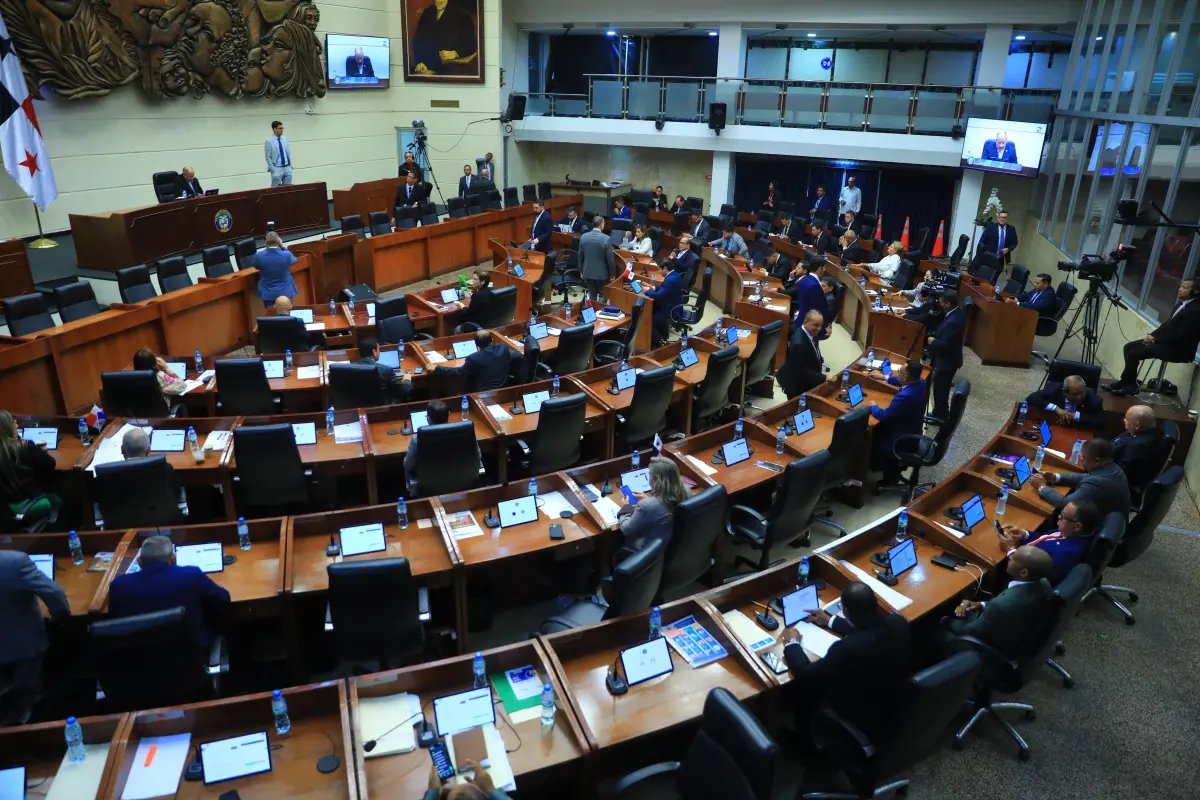
Just days before concluding the second period of ordinary sessions, the National Assembly enters the final stretch with a loaded agenda and several key projects still pending discussion. With just 12 days of legislative work before the closing of April 30, reforms to the internal regulations, the elimination of the Ministry of Women, the selection of a new magistrate of the Electoral Tribunal (TE) and the bioethanol law concentrate the attention of the plenary session.
One of the most significant advances occurred with the approval in the Credentials Commission of the draft reforms to the Organic Regulations of the Internal Regime, after a prolonged debate that concluded on April 9. The proposal now reaches the plenary session with little room for final discussion.
The package includes 37 articles and proposes changes aimed at transparency and legislative efficiency. These include the prohibition of naming relatives up to the fourth degree of consanguinity, the extension of debate times, the mandatory transmission of sessions and the requirement that the Budget Commission always meet publicly.
A maximum period of three days is also set to elect the board of directors at the beginning of each legislature, with the aim of avoiding paralysis like the one that occurred in the previous period. The initiative has been celebrated by the Vamos coalition, while other deputies have shown reservations about the scope of the reforms.
In parallel, the project that eliminates the Ministry of Women still does not advance to a second debate. The Executive’s proposal, approved in the first debate in February, seeks to restore the National Women’s Institute (Inamu) as an autonomous entity. The initiative has generated rejection from feminist organizations, while pro-government deputies maintain that the change would allow an institution with greater resources and capacity for impact.
Another key issue is the opening of the process to elect the new TE magistrate, after the expiration of Alfredo Juncá’s term. The Assembly must receive applications, evaluate the profiles in the Credentials Commission and make the final decision in the plenary session. The position requires the same requirements as a judge of the Supreme Court of Justice (CSJ) and has a duration of ten years, which makes the process a decision with high institutional impact.
The agenda is completed with the bill that establishes the mandatory mixture of 10% bioethanol in fuel. Although the initiative seeks to generate rural employment, it faces criticism for possible increases in the price of fuel, doubts about its impact on the logistics chain and constitutional questions due to its mandatory nature.