San Pedro Sula, Honduras.
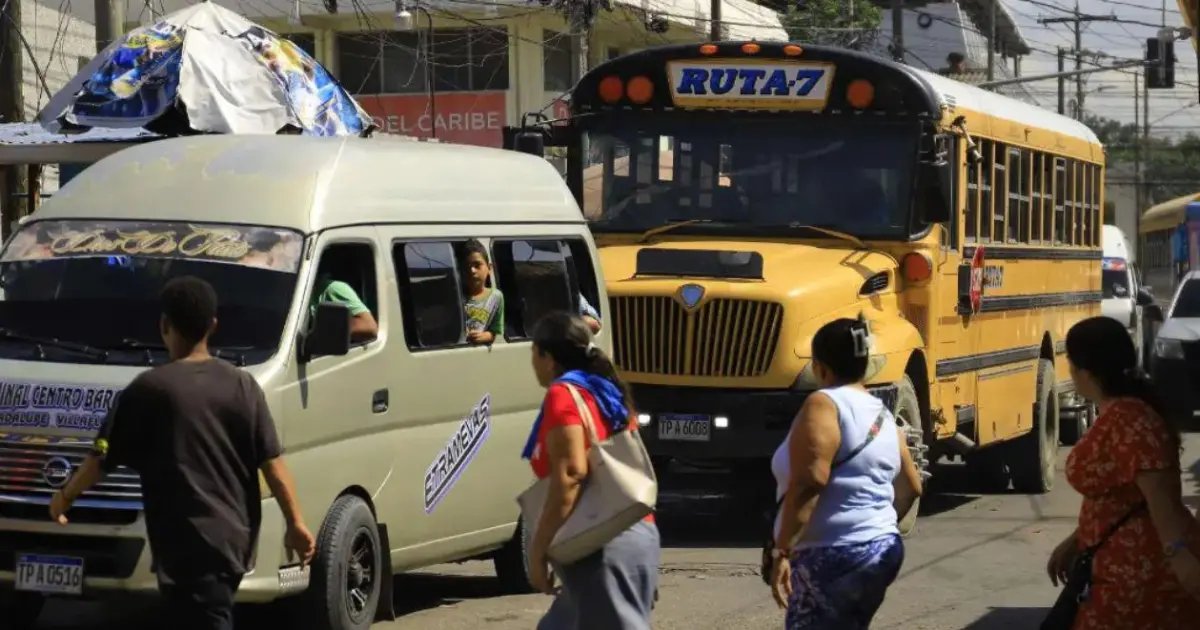
The city of San Pedro Sula, considered the industrial capital of the country, continues to operate normally in its transportation system. public transport, despite the protests and threats of strikes that are registered in other regions of Honduras by the transportation sector.
Although in different areas of the country transporters have announced suspensions of work due to the sustained increase in fuel pricesIn San Pedro Sula, a similar measure is not contemplated for now.
They are more than 1,500 units of urban transportation that continue to circulate regularly, providing service to thousands of users who depend on this system daily.
Representatives of the sector in the northern zone have confirmed that there is a current commitment to the Government to avoid affecting the population with increases in the rate, while joint solutions are sought to the crisis facing the sector.
Nelson Fernández, a transporter from the northern zone, explained that they are currently holding working groups with the authorities, which will take place throughout the month of April. As detailed, these meetings seek to find alternatives that allow operations to be sustained without transferring the economic impact to users.
The leader pointed out that one of the main points under discussion is the payment of subsidies pending by the Government. He indicated that one month corresponding to last year and three months of this year are still owed, which has generated financial pressure on the transporters.
Fernández assured that the authorities have committed to managing the necessary funds to pay off part of that debt in an approximate period of 15 to 20 days, starting with the payment of two months and later completing the rest.
Furthermore, he mentioned the implementation of a emerging bonus as a temporary measure to avoid increases in the fare. This subsidy would partially cover the gap between the real cost of the service and what users currently pay.
According to the carrier, the real cost of the ticket, considering the current price of fuel, would be around 23 lempiras. However, the rate remains between 13 and 15 lempiraswhich represents a significant difference that is being absorbed in part by the operators and, eventually, by the state subsidy.
This week the price of a gallon of diesel for San Pedro Sula and surrounding areas is quoted at L124.35 and in the country’s capital at L128.42. And the government maintains a 50% subsidy for increases. Diesel is used in industry and the transportation sector.
“The commitment is not to increase the passage“We are doing our part as a sector to not affect the user at this difficult time,” said Fernández.
Likewise, he clarified that this agreement not only applies to San Pedro Sula, but also to other cities such as Tegucigalpa, Choluteca, La Ceiba and Santa Barbara, where rate increases are not expected as long as government support is maintained.
In the midst of this panorama, public transportation users in San Pedro Sula expressed their relief at the decision not to increase the fare, since many depend on this service to travel daily to their destinations. jobs and study centers.
“If they raise the fare, it no longer fits you. Everything is expensive, the mealthe light… at least the transportation has been maintained,” commented María López, a frequent passenger in the downtown area.
For his part, Carlos Mejía, another user, expressed that although the service has some deficiencies, he considers it positive that the operation has not been stopped or increased. fee. “The important thing is that the buses continue working, because if not, how do you move?” he said.