Modernization
The project concerns preparatory work linked to the establishment of the high level of service bus network (BHNS) in the Rabat-Salé-Témara conurbation. It includes in particular the redevelopment of public lighting and traffic lights on the axes concerned. This program is part of a strategy to modernize urban transport via a structured dedicated transport network (TCSP), intended to improve mobility and service to dense areas. Four lines are planned (B1, B2, B3 and B4), notably linking Témara, Rabat and Salé, with connections to existing tram lines and the main districts of the city.
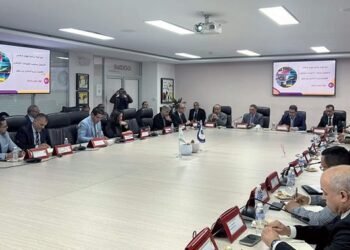
The construction of public transport lines in the Rabat-Salé-Temara region is accelerating. Indeed, the Rabat Région Mobilité Company is working on carrying out preparatory work aimed at the redevelopment of the public lighting network as well as the three-color signaling. These interventions are accompanied by technical studies and maintenance of the tracks concerned by the establishment of lines B1, B2, B3 and B4 of the future high level of service bus network (BHNS) in the conurbation concerned. This project is part of an overall dynamic of modernization of urban transport, through the implementation of a dedicated public transport system (TCSP). This involves offering an efficient, structured and hierarchical public transport network, capable of effectively serving the densest urban areas thanks to dedicated bus lines with a high level of service. Thus, the future BHLS network will include four main lines.
The BHNS1 (B1) line will connect the terminus of the T1 tram line at Al Irfane to the city of Témara, over a distance of 9 km. The BHNS2 (B2) line will also serve Témara from the terminus of the T2 tram line in Al Kifah, over a 10.8 km route. Lines B1 and B2 will share a common section of 4.9 km. The BHNS3 (B3) line will connect the district of Youssoufia to the Agdal and Yacoub Al Mansour districts in Rabat, over a distance of 10 km, while the BHNS4 (B4) line will connect the district of Laayayda to Sala Al Jadida as well as to Technopolis, in Salé, over an operating length of 18.5 km. Thus, all of the planned work covers all lines of the BHLS network, including their zones of influence. “The agglomeration of Rabat-Salé-Témara constitutes an important region in the Kingdom of Morocco. Indeed, it enjoys a privileged political and functional location as the capital of the Kingdom and has a diversified natural wealth and an important historical architectural heritage. These assets make it a space for concentrating important demographic, economic, administrative and cultural flows.
Like developing metropolises, the agglomeration is subject to a process of accelerated spatial extension. The dynamics of urban development observed over the last 20 years have reinforced its multipolar character,” indicates the Rabat Région Mobilité Company. In terms of population, its increase will continue at an average annual rate of 1.33% by 2040 which will see the total number of inhabitants of the conurbation approach 3 million, a gain of 38% since 2014. “1/3 of this growth will be absorbed by the prefecture of Témara whose population should double by 2040”, explains the same source noting that this demographic growth is to put into perspective the evolution of the mobility of residents in the agglomeration which today has around 6.5 million trips per day, likely to exceed 9 million daily trips by 2040 in a trend scenario.
To respond to the various changes that the region is experiencing, a massive investment has been made over the last two decades, both in terms of economic resources and human resources, to give the conurbation a transport network that reflects its place in the Kingdom. It is in this sense that the tramway has been in place since 2011. “With the aim of maintaining a balance between demand and supply of mobility, while integrating the issues of social equity, environmental protection and ecological transition, the Sustainable Urban Mobility Plan (UNDP) adopted a strategy for 2040 which aims to meet the needs of the conurbation by relying on an efficient public transport network, covering the entire territory and serving the city centers of the different prefectures,” explains the same source. And added: “In line with this vision, an action plan has been defined, based in particular on the promotion of an efficient and hierarchical structuring public transport network. On-site public transport (TCSP) constitutes the central element, providing the main framework of the mobility system.
Through its ability to guarantee speed, reliability and a high level of service, it effectively structures travel across the city while meeting the requirements of ecological transition. Its strategic deployment will make it possible to connect the main urban centers and strengthen the attractiveness of public transport.
Note that the institutional and technical partners of this project include local authorities and their associations, the wilaya of Rabat-Salé-Kénitra and the prefectures of Témara, donors (FART, national and international financing organizations) and network concessionaires (REDAL, SRM, ONEE, Telecom, DGSN, etc.). The list of technical partners also includes all public entities intervening in the public space and programming works interfacing with the project.